Key facts
- Carney said the meeting is part of a normalization of the Canada-China economic relationship that began when he took office.
- The Shenzhen meeting will be Carney's third with Xi since he became prime minister.
- Canada has exported 2.8 million metric tons of canola seed to China so far in 2026.
- Shipments of Canadian crude oil to China rose about 37% in 2026, per a Reuters calculation based on LSEG data.
- Trump has threatened to raise tariffs on Canadian cars, trucks and auto parts to 50% from 25% on January 1.
- Vina Nadjibulla of the Centre for Strategic Statecraft said Canada must balance economic engagement with national security.
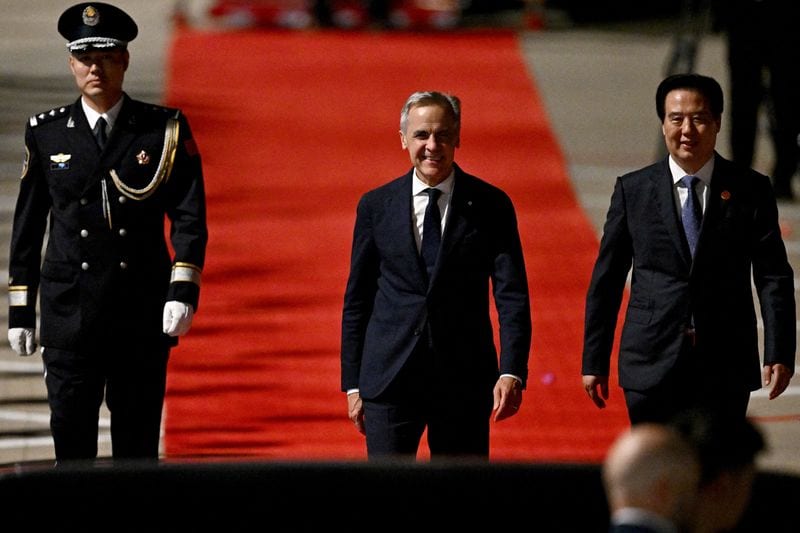
Canada's Prime Minister Mark Carney will meet Chinese President Xi Jinping in Shenzhen on November 17, 2026, ahead of the Asia-Pacific Economic Cooperation meeting, to discuss food, energy and financial services. Carney landed in Shenzhen on November 16 and is scheduled to meet Xi at 10:30 a.m. on November 17 (0230 GMT).
Carney said on November 15, speaking from Cambodia, that the discussion would also cover the evolution of China's role in the international system. He described the meeting as part of a process of normalization of the economic relationship between Canada and China that began when he came into government, alluding to the fractious relationship under previous Prime Minister Justin Trudeau. Carney became the first Canadian prime minister to visit China in nearly a decade in January 2026, a plank of his strategy to reduce Canada's economic reliance on the United States. The Shenzhen meeting will be his third with Xi since becoming prime minister; he also met Xi on the sidelines of last year's APEC meeting in South Korea.
China lowered tariffs on Canadian canola seed after Carney's January visit and recently extended tariff relief for canola meal, lobsters, crabs and peas for two more years. Canada has exported 2.8 million metric tons of canola seed to China so far in 2026, and Canadian farmers hope China will reduce a 25% tariff on Canadian pork and related products. Shipments of Canadian crude oil to China rose about 37% in 2026, according to a Reuters calculation based on LSEG data.
Chinese automakers BYD, Geely and Chery have taken steps to enter the Canadian market since Canada approved imports of 49,000 cars annually at a low tariff rate of 6.1%, a quota set to rise to 70,000 cars over five years. Carney said US trade actions have complicated the previously integrated North American autos market and that discussions with Trump and his administration are under way to resolve those issues. Trump has threatened to raise tariffs on Canadian cars, trucks and auto parts to 50% from 25% on January 1.