Key facts
- Bunge Brasil is the first company to certify soybeans for sustainable aviation fuel (SAF) under the ISCC CORSIA Plus protocol.
- The certification was granted by SCS Global Services to Bunge's Rondonópolis unit in Mato Grosso.
- The certification includes the ISCC CORSIA Plus Low-LUC label, confirming a low risk of indirect land-use change.
- The ISCC CORSIA Plus certification aligns with the International Civil Aviation Organization's (ICAO) Carbon Offsetting and Reduction Scheme for International Aviation (CORSIA).
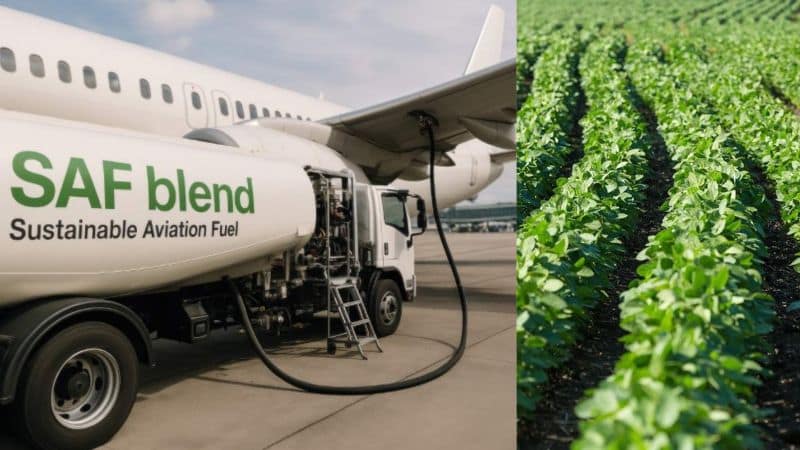
Bunge Brasil has achieved a significant milestone by becoming the first company to certify soybeans for the production of sustainable aviation fuel (SAF) under the international ISCC CORSIA Plus protocol. This certification, recognized by the International Civil Aviation Organization, was awarded to the company's Rondonópolis unit in Mato Grosso by SCS Global Services.
The certification also carries the ISCC CORSIA Plus Low-LUC (land-use change) label, which verifies that the soybeans have a low risk of indirect land-use change, meaning they are not associated with new agricultural expansion. This rigorous process involves detailed technical criteria, audits, and a focus on the producer's management practices to ensure traceability and sustainability.
Pamela Moreira, Bunge's director of sustainability for South America, stated that the certification demonstrates the possibility of sustainably producing soybeans with low emissions, meeting demanding international standards. She highlighted Brazil's potential to contribute to the energy transition through its productive capacity and advanced agricultural techniques, reinforcing that sustainably grown soybeans can be part of the solution for advancing SAF.
The ISCC CORSIA Plus certification is a component of the ICAO's CORSIA program, designed to promote the use of renewable fuels in global air transport. Bunge views this achievement as a fundamental step in expanding the availability of soybean raw material for the growing SAF market, despite acknowledging the challenges in scaling the certification.