

Key facts
- The doctor tested positive for Ebola while working on the epidemic in the Democratic Republic of the Congo.
- The Department of Health and Social Care said the doctor was transported home on a medical evacuation flight.
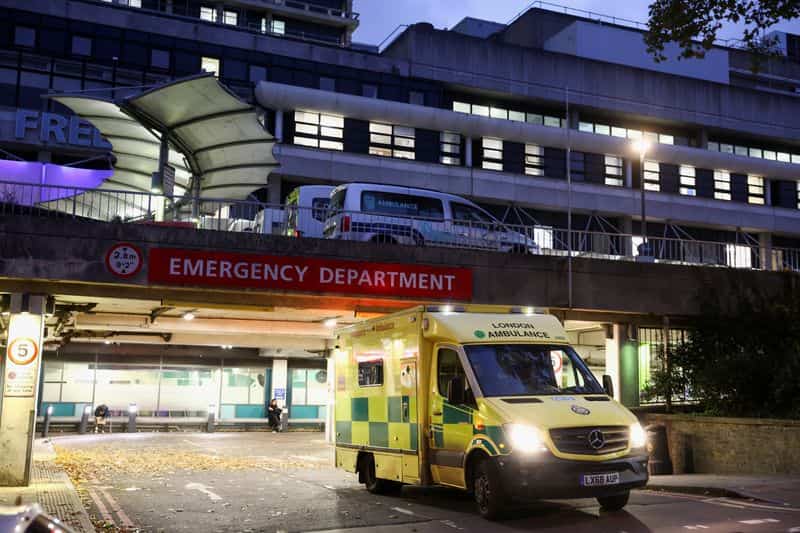
- The doctor is in a high-level isolation unit at the Royal Free hospital in Hampstead, north London.
- UKHSA's Dr Renu Bindra said the risk to the wider public remains low.
- The current outbreak has surpassed 10,000 cases and 5,000 deaths, per the report.
A British doctor who tested positive for Ebola while working in the Democratic Republic of the Congo has returned to the UK for specialist treatment, the Department of Health and Social Care said on Thursday. The patient, whose identity is unknown, was transported home on a medical evacuation flight.
The doctor is being cared for in a specialised high-level isolation unit at the Royal Free hospital in Hampstead, north London. The unit has strict protocols in place to prevent the patient coming into contact with any members of the public, and all staff treating the patient are equipped with the necessary personal protective equipment alongside other measures to prevent transmission.
Dr Renu Bindra, the deputy director for all-hazards public health response at the UK Health Security Agency, said: "UKHSA and the NHS have well-established and robust infection prevention and control protocols to limit the risk of onward transmission, and the risk to the wider public remains low."
A humanitarian organisation sent the doctor to DR Congo to help in the response to the outbreak, which is the second largest on record. It is the first case involving a British national contracting Ebola in the current outbreak.
Ebola is a highly contagious, severe and often fatal illness spread through direct contact with body fluids such as the blood or vomit of infected people, or dead bodies. People with the disease tend to fall ill two to 21 days after contact with an orthoebolavirus. Initial symptoms include fever, aches, pains, and fatigue, but can then progress to diarrhoea, vomiting and unexplained bleeding.
The current outbreak, declared in May by DR Congo's health ministry, has surpassed 10,000 cases and 5,000 deaths. It has spread to Kenya and Uganda in east Africa, and last month Nigeria confirmed a case in its capital, Abuja.
There have only been four confirmed cases of the virus in the UK previously. A case in 1976 was from a laboratory needle incident, and the three others involved health workers who were responding to an outbreak in West Africa between 2014 and 2015.