All NewsEducationTVBrokers
Equities & FundsCrypto & Digital AssetsAI & TechnologyBusiness & CorporateUS Politics & PolicyGeopolitics & Global RiskMacro, Rates & FXCommodities & EnergyEuropean Politics & MarketsAsia-PacificReal Estate & Property
All NewsHome
← Back to Business & Corporate

BP refinery lockout signals shift in Big Oil labor tactics

Created at 3 Sep · 10:08 AM1 source↑ Market-relevant
IN SHORT

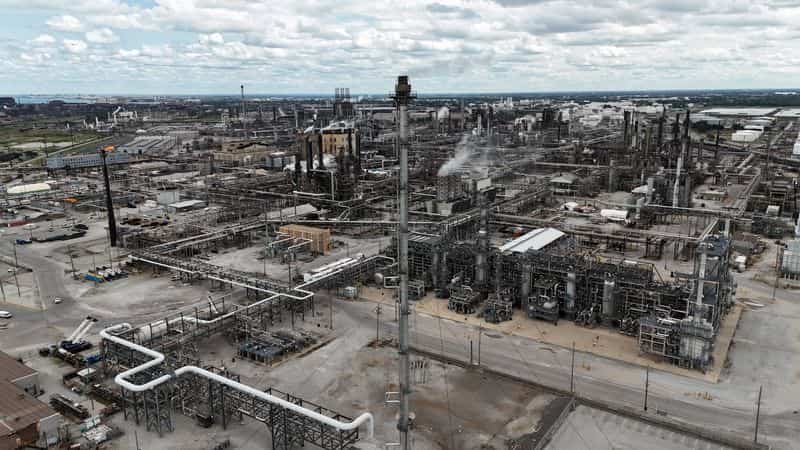
BP's lockout of 800 workers at its Whiting, Indiana refinery is a critical test of Big Oil's power over organized labor. The company seeks concessions on pay, staffing, and automation, mirroring tactics used by Exxon and Marathon, potentially setting a new standard for industry labor talks.

Key Numbers

800workers locked out at BP's Whiting refinery
March 19date BP initiated lockout
440,000barrel-per-day capacity of Whiting refinery
15%wage increase in national bargaining pattern deal
10-monthduration of Exxon's 2021 lockout

Who's Involved

Don Skalka
operations specialist locked out from BP's Whiting refinery
BP
oil company implementing refinery lockout
United Steelworkers union
union representing locked-out refinery workers
Robert Bruno
Director of the Labor Studies Program at the University of Illinois
Chris DellaFranco
Vice President of Refining at BP's Whiting plant
Exxon
oil company that previously used a refinery lockout
Marathon
oil company that has weathered strikes at its plants
Donald Trump
President criticizing refiners for high profits
Eric Schultz
President of United Steelworkers Local 7-1
Jordan Marcks
former Exxon management official and lead negotiator for BP
Joe Trevino
Whiting refinery worker affected by lockout
Renee Pleitner
Whiting refinery worker affected by lockout
BP refinery lockout signals shift in Big Oil labor tactics

↳ Why This Matters

This labor dispute at BP's Whiting refinery could set a precedent for future contract negotiations in the oil and gas sector, potentially weakening union bargaining power and impacting worker compensation and job security across the industry.

Key facts

  • BP locked out 800 union workers at its Whiting, Indiana refinery on March 19.
  • The dispute centers on BP's demand for concessions on pay, staffing, automation, and strike rights, breaking from the industry's national bargaining pattern.
  • BP is using supervisors, contractors, and replacement workers to maintain refinery operations.
  • Similar hardline tactics have been employed by Exxon and Marathon in recent years.
  • Union leaders warn that replacing experienced labor with contractors poses safety and operational risks.

BP's decision to lock out approximately 800 workers at its Whiting, Indiana refinery in March signals a potentially significant shift in labor relations within the oil and gas industry. The dispute, which has left workers like Don Skalka without pay for months, centers on BP's pursuit of concessions regarding wages, staffing levels, automation, and operational flexibility. This hardline approach deviates from the established national bargaining pattern for the industry, which typically involves a 15% wage increase over four years, as seen in a recent deal between the United Steelworkers (USW) and Marathon.

Labor experts and union representatives view the standoff as a crucial test of power between major oil companies and organized labor. If BP can successfully operate the refinery for an extended period using supervisors, contractors, and replacement workers, it could undermine a key union argument that experienced workers are essential for safe and efficient operations. This strategy mirrors actions taken by other major players, including Exxon, which enacted a 10-month lockout at its Beaumont, Texas plant in 2021, ultimately leading the union to accept many of its contract terms. Marathon has also faced and weathered strikes at its facilities.

BP states its actions are necessary to ensure the Whiting refinery remains competitive in the market, arguing that a lack of competitiveness puts jobs at risk. However, union leaders, such as Eric Schultz of USW Local 7-1, contend that BP is employing a strategy similar to Exxon's, even hiring Jordan Marcks, the former Exxon official who led the Beaumont lockout, as its lead negotiator. Union representatives also express concerns that replacing experienced workers with contractors could compromise refinery safety and operational integrity, pointing to at least two operational issues at the Whiting plant since the lockout began, though BP maintains these were unrelated to the labor dispute.

The Whiting facility, BP's last unionized plant in the U.S., is a significant economic anchor for northwest Indiana, processing 440,000 barrels of oil daily and supplying about a quarter of the Midwest's fuel. Workers like Joe Trevino and Renee Pleitner face financial hardship, with some relying on union funds and donated groceries while others dip into savings and retirement accounts to endure the prolonged standoff. The situation unfolds against a backdrop of high oil company profits, which have drawn criticism from President Donald Trump amid elevated consumer fuel prices.

Frequently asked questions

The dispute centers on BP's demand for concessions on wages, staffing, automation, and operational flexibility, which deviates from the industry's national bargaining pattern.

It is seen as a crucial test of power between Big Oil and organized labor, potentially setting new standards for labor negotiations in the industry if BP can maintain operations without its unionized workforce.

BP has locked out its unionized workers and is using supervisors, contractors, and replacement workers to keep the refinery operational.

Yes, Exxon used a similar 10-month lockout in 2021, and Marathon has experienced strikes at its plants since 2024.

What Happens Next

01The outcome of the contract negotiations will determine the future labor standards at the Whiting refinery.
02Further operational issues or safety incidents at the refinery could influence public and regulatory opinion.
03The success or failure of BP's strategy may inform how other major oil companies approach labor disputes.

How It Developed

BP locked out 800 workers at its Whiting, Indiana refinery in March over contract disputes.
Workers like Don Skalka have been without pay since the lockout began.
BP aims to maintain operations using supervisors, contractors, and replacement workers.
Exxon previously used a 10-month lockout at its Beaumont, Texas plant in 2021.
Marathon has experienced strikes at its plants since 2024.
BP is seeking concessions on pay, staffing, and automation, deviating from the industry's national bargaining pattern.
BP hired a former Exxon negotiator who oversaw the Beaumont lockout.
Union representatives argue lockouts pose safety and operational risks.

Sources

T1
Big Oil’s new playbook: How BP's US refinery lockout signals a shift in corporate labor battlesReuters

Related Stories

Office security workers for OpenAI, Anthropic, and other tech firms authorize a strike
3 Sep · 10:31 AM
South Korean Financial Union to Strike Over Relocation Plan
3 Sep · 7:21 AM
Southwest Airlines to Launch First Airport Lounges
2 Sep · 3:26 PM
Polestar Cuts Delivery Forecast After US Ban
3 Sep · 11:04 AM
American Airlines adds premium seats to Boeing 777 jets
2 Sep · 2:04 PM