Key facts
- Boeing displayed its Ghost Bat drone at the Farnborough Airshow.
- BAE Systems revealed its new unmanned fighter jet, Brontanax, at the Farnborough Airshow.
- Brontanax is designed to be about the size of a Hawk trainer and could start flight testing next year.
- BAE Systems has invested heavily in its CCA project without government co-investment.
- BAE expects Brontanax to offer more stealth than rivals and cost under 25% of a traditional fighter jet.
- Britain plans to launch its own sovereign CCA program, Storm Fighter, with an initial £300 million investment.
- The U.S. Air Force has awarded production contracts for its Collaborative Combat Aircraft (CCA) program to General Atomics and Anduril Industries.
- The U.S. Air Force aims to procure over 150 combat-capable CCAs by the end of the decade.
The defense industry is witnessing intense competition in the development of autonomous fighter jets, often referred to as Collaborative Combat Aircraft (CCA) or 'loyal wingmen.' At the Farnborough Airshow, Boeing showcased its MQ-28 Ghost Bat drone, which has already begun flight testing and is slated for potential deployment with the Australian Defence Force by 2028.
BAE Systems has entered the fray with its new unmanned fighter jet, Brontanax, derived from ancient Greek words for thunder and king. The company has invested heavily in the project, aiming for flight testing to commence next year and potential service entry by 2030. BAE claims Brontanax will offer superior stealth capabilities and cost significantly less than traditional fighter jets, with a target of 70-80% of a fighter's capabilities at under 25% of the price.
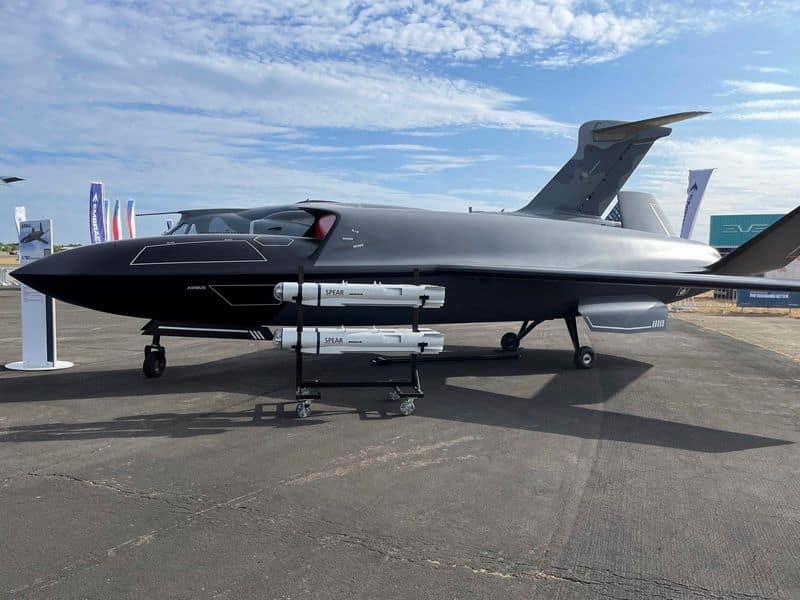
Britain has also announced a sovereign CCA program named Storm Fighter, backed by an initial £300 million investment. The market is increasingly crowded, with companies like Airbus, General Atomics, and Anduril Industries also developing competing autonomous aircraft. The U.S. Air Force is a major player, having awarded production contracts to General Atomics and Anduril for its CCA program, with a goal to procure over 150 combat-capable aircraft by the end of the decade. Lockheed Martin is also developing its own uncrewed combat aircraft, expected to fly next year, while Airbus has unveiled its U760 Ravenstorm, anticipating operational status in the early 2030s.