Key facts
- Hernández de Cos is general manager of the Bank for International Settlements and a former governor of the Bank of Spain.
- The FT reported he is expected to replace Lagarde on February 7, subject to formal approval by eurozone governments.
- The Dutch government withdrew support for rival candidate Klaas Knot, a former Dutch central bank governor, per the FT.
- At Jackson Hole in August, Hernández de Cos said stablecoins were not a credible means of payment at scale.
- In a 2023 speech he said a digital euro could promote payments innovation and safeguard monetary sovereignty.
- The ECB has a digital euro pilot planned for 2027 and a potential launch in 2029, subject to legislative approval.
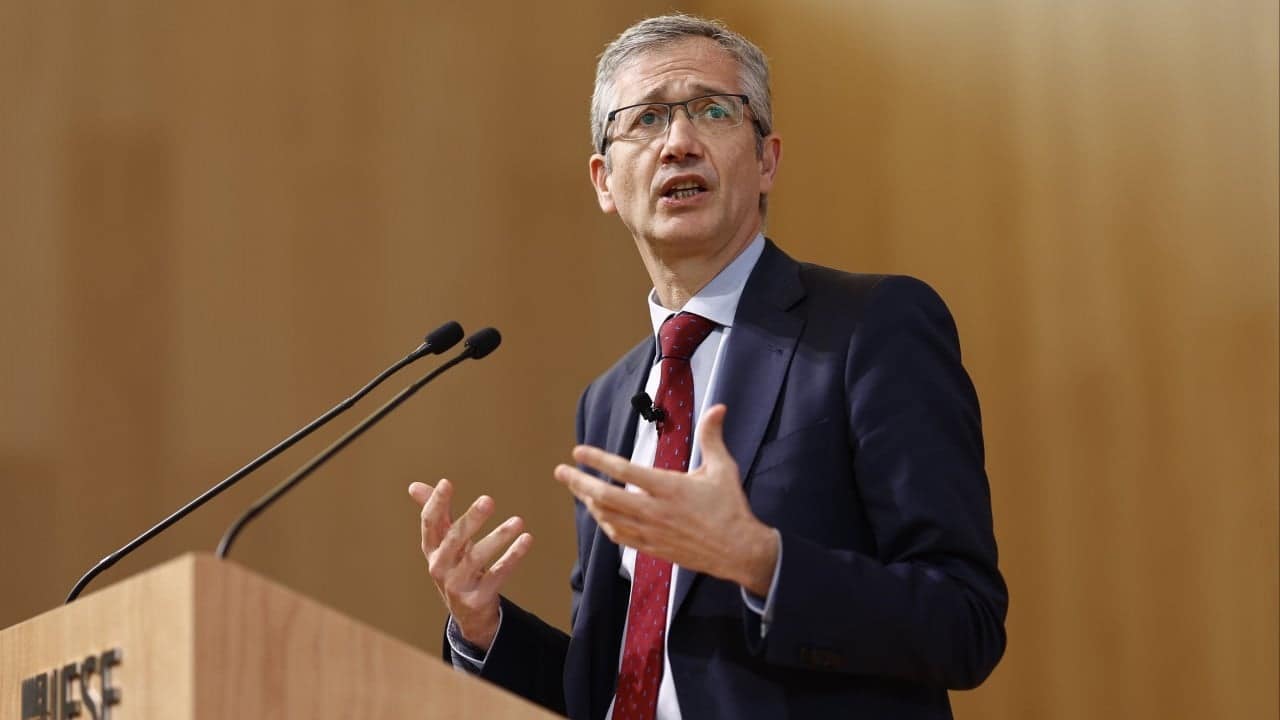
Pablo Hernández de Cos, general manager of the Bank for International Settlements and a former governor of Spain's central bank, is set to succeed Christine Lagarde as president of the European Central Bank after securing the backing of a majority of eurozone governments, the Financial Times reported on November 26, citing people familiar with the matter.
He is expected to replace Lagarde on February 7, the FT reported, after the Dutch government withdrew its support for rival candidate Klaas Knot, a former governor of the Dutch central bank. The appointment remains subject to formal approval.
Hernández de Cos has publicly questioned stablecoins. Speaking at the Jackson Hole Economic Symposium in August, he argued that stablecoins in their current form were not a credible means of payment at scale, favoring tokenized bank deposits for everyday payments and wholesale settlement. He acknowledged some specialized uses for stablecoins but warned that widespread adoption of US dollar-backed stablecoins abroad could undermine monetary sovereignty and weaken domestic monetary policy transmission, while a shift away from bank deposits could increase bank funding costs.
He has been more receptive to central bank digital currencies. In a 2023 speech, he said a digital euro could promote innovation in payments and safeguard Europe's monetary sovereignty. He is now poised to lead the ECB as it advances its digital euro project, with a pilot planned for 2027 and a potential launch in 2029, subject to legislative approval.