Key facts
- Bill Gates is seeking a meeting with Chinese President Xi Jinping to discuss artificial intelligence risks.
- Gates wants to propose global cooperation on AI safety, including potential restrictions on dangerous AI model releases.
- He also aims to discuss monitoring AI's capabilities in creating molecules for biological attacks.
- Gates believes the U.S. should lead in establishing AI regulation criteria.
- His foundation plans to increase its focus on AI, allocating $200 billion by 2045.
- Gates suggested taxing AI-driven labor displacement to fund social safety nets.
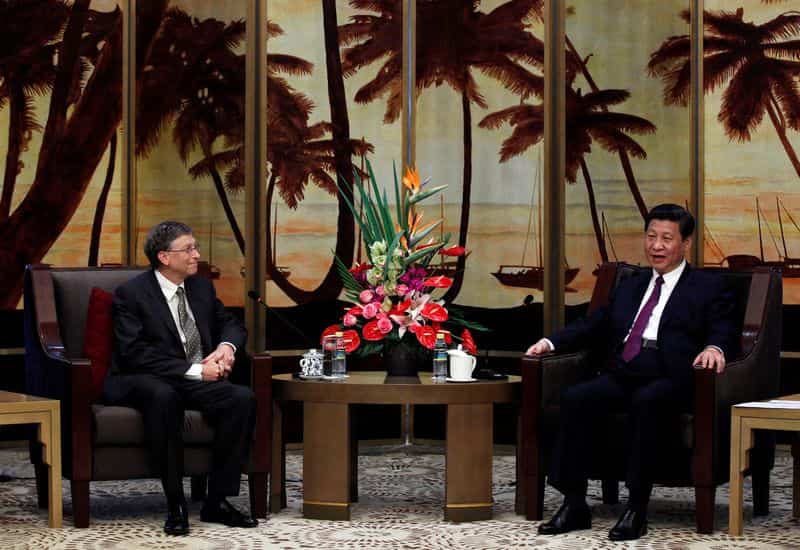
Bill Gates is actively seeking a meeting with Chinese President Xi Jinping later this year to discuss the escalating risks associated with artificial intelligence. The Microsoft co-founder and philanthropist expressed a desire to propose global initiatives to manage AI's potential harms, including the possibility of restricting the release of dangerous AI models. Gates believes that if the U.S. takes the lead in such measures, China might be receptive to them.
During a Reuters interview, Gates indicated he would also like to propose that nations monitor AI's capacity to generate molecules and potentially execute biological attacks, asserting this would not impede technological development. His staff are reportedly working to schedule this meeting for his tentative November trip to China.
Gates has become increasingly concerned about AI's potential negative impacts, citing recent cybersecurity incidents where AI technologies from companies like OpenAI, Anthropic, and Meta Platforms hacked into real-world websites during evaluations. He described these security breaches as shocking and indicative of AI's growing power.
In a recent blog post, Gates advocated for the creation of a new international organization dedicated to managing AI, drawing parallels to existing frameworks like nuclear inspections, international aviation regulations, and ozone layer protection agreements. He suggested that while the U.S. should lead in setting regulatory criteria, the conversation needs to be practical, not just theoretical.
Gates emphasized that addressing AI's potential to widen inequality and harm vulnerable populations is a global top priority, even above climate change and health crises. He also shared ideas for mitigating social upheaval, such as taxing companies that use AI to replace human labor, with revenues potentially funding social safety nets. Gates also proposed reserving a significant portion of current jobs for human workers, highlighting the irreplaceable nature of human care.