Key facts
- Bessent said the US objective is to "de-risk, not decouple" from trade with China.
- Bessent said a Trump-Xi meeting in Shenzhen would advance a bilateral dialogue on superintelligence.
- Bessent said the two sides had agreed a direct channel for alerting each other to serious AI incidents.
- Bessent said a Board of Trade would determine mutual tariff cuts on $30 billion of non-sensitive goods each way.
- Chinese ambassador Xie Feng spoke of adhering to "red lines" at the same New York event.
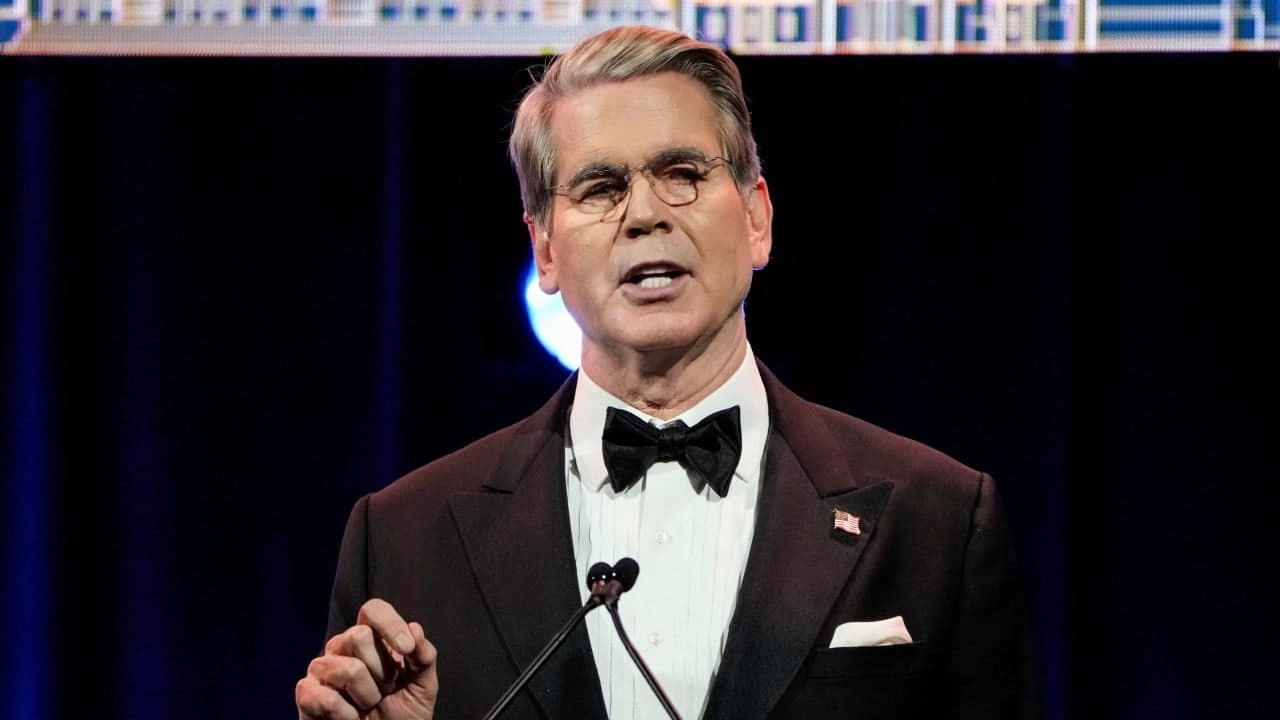
US Treasury Secretary Scott Bessent called for a more balanced trade relationship with China on November 10, saying the objective is to "de-risk, not decouple" from trade with the country. He spoke at an event in New York hosted by the National Committee on US-China Relations, according to a report by The Straits Times.
Bessent said trade "must advance the interests of both parties without diminishing the sovereignty of either," and that US-China ties were defined by the relationship between their leaders. Chinese ambassador Xie Feng, speaking at the same event, referred to adhering to "red lines," the primary report said.
Bessent said he would travel to China for a meeting between US President Donald Trump and Chinese President Xi Jinping in Shenzhen, on the sidelines of the November 18-19 Asia-Pacific Economic Cooperation leaders summit. He said the meeting would advance a new bilateral dialogue on "superintelligence," the term the Trump administration uses for advanced AI, aimed at guarding against shared risks and preventing misunderstanding between the two systems.
Bessent said the two sides expected to exchange practices for evaluating and testing advanced models before release and for keeping human judgment in command of the technology. He said they had agreed to establish a direct channel for alerting each other to serious incidents, an arrangement he said Trump and Xi agreed at their previous meeting at the White House in September.
Bessent also referred to trade initiatives from the two earlier Trump-Xi summits, including a "Board of Trade" to determine mutual tariff cuts on $30 billion of non-sensitive goods in each direction and China's pledged purchases of US farm goods. A similarly structured "Board of Investment" would address market access for American companies in China and what he called increased predictability for Chinese companies. He said the US trade deficit with China remains a source of friction.