Key facts
- The Army said it destroyed 68 barrels, or nearly 10,000 pounds (4,536 kg), of lead azide in the controlled detonation.
- The Army said it found in March that the stockpile had crystallized and become unstable, and that moving it risked an uncontrolled blast.
- The EPA said its air monitors reported zero detection of airborne lead throughout the region after the detonation.
- Army Colonel Aaron Teller, who oversaw the operation, said all lead azide barrels were definitively removed.
- The Army projected lead dust could settle as far as 40 miles (64 km) southwest of the site, into northern Missouri.
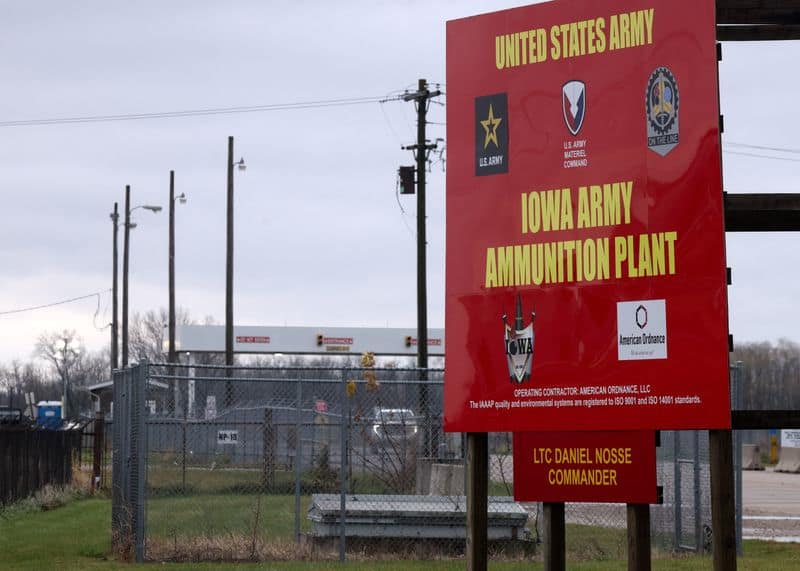
The US Army said it destroyed 68 barrels, or nearly 10,000 pounds (4,536 kg), of a deteriorating lead compound used in explosives, in a controlled detonation at the Iowa Army Ammunition Plant in Middletown, Iowa, on Wednesday. The detonation followed a week of public outcry and legal wrangling, with many residents worried the blast could release a plume of toxic lead dust over homes, crops and livestock.
Lead azide is an explosive chemical once used to detonate military munitions and now largely obsolete. US officials said at a Tuesday news conference that stockpiles from military bases around the country had been moved to the Iowa plant in 2009 for long-term storage. The Army said that in March it discovered the stockpile had undergone crystallization, making it unstable and certain to eventually explode, and that chemically neutralizing or relocating the drums would have triggered an uncontrolled blast.
Hours before the blast, the Army released projections showing lead dust could settle on surfaces as far as 40 miles (64 km) southwest of the site, through southeastern Iowa into northern Missouri, while airborne particles could travel nearly 100 miles within eight hours. The EPA said in a statement after the detonation that its air monitors were reporting zero detection of airborne lead throughout the region. EPA Administrator Lee Zeldin said 300 employees and contractors pre-positioned on the ground would conduct monitoring, take samples of air, land and water, and deploy remediation if necessary.
Patrick O'Shaughnessy, a public health professor at the University of Iowa, said immediate risks from inhaling lead particles would likely be mitigated if people sheltered from the dust plume, but longer-term risks come from lead dust settling on homes, farms and the environment. The Iowa Department of Health and Human Services recommended residents in affected areas keep windows and doors closed for 24 to 48 hours after the detonation, shut off heating and cooling systems that draw in outside air, clean surfaces and consult healthcare providers about blood testing for lead. In a Tuesday briefing, Sean Kaufman, an official with the US Department of Health and Human Services, said pregnant women, children and people with chronic diseases "definitely want to be out of" affected areas.
In a videotaped public service message posted afterward, Army Colonel Aaron Teller, a munitions specialist who oversaw the operation, said the demolition worked, as did the safety measures to muffle the blast and limit emissions. "All of the lead azide barrels were definitively removed," Teller said. He said the last detonation of a large amount of lead azide was in 1977, when 7,000 pounds (3,175 kg) were detonated in the open air in Colorado with no mitigation and 75% of the lead particulate was contained, without giving other details. Some residents told Reuters they had gathered their own soil samples to be tested independently.