Key facts
- Armenia and Azerbaijan discussed intensifying cooperation on finding missing persons from past conflicts.
- Azerbaijan provided a list of 834 citizens missing from the 1990s Karabakh war.
- Armenia shared DNA profiles of 50 missing ethnic Armenians in January.
- A US-brokered peace agreement commits both sides to exchanging information and searching for remains.
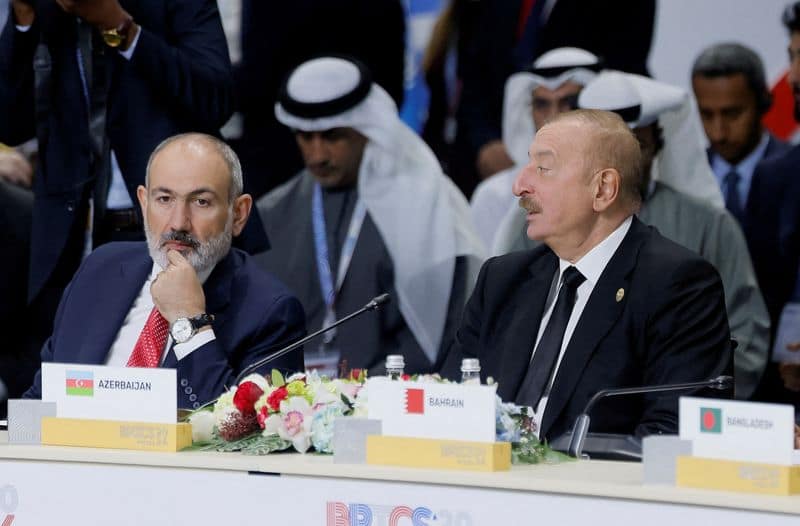
Armenian Prime Minister Nikol Pashinyan stated on Thursday that he had discussed with Azerbaijani President Ilham Aliyev the need to intensify efforts to locate individuals missing from decades of conflict. These discussions took place as a conference in Baku concluded, where Azerbaijan provided details on its exchanges of information with Yerevan regarding the missing.
Pashinyan indicated that the two leaders had conferred on enhancing collaboration between their respective commissions responsible for missing persons, though he did not specify the exact timing of this discussion. "This issue can be resolved through cooperation," Pashinyan told reporters, affirming Armenia's readiness to work with Azerbaijan to determine the fate of those unaccounted for.
The statements were made on the final day of a conference held in Baku. During the event, Azerbaijan reported that the commissions from both nations have been in direct contact since February 2025, actively exchanging information concerning missing individuals.
Ali Nagiyev, head of Azerbaijan's State Commission on Prisoners of War, Hostages and Missing Persons, noted that Armenia had supplied DNA profiles for 50 missing ethnic Armenians in January. However, he stated that none of these matched human remains recovered by Azerbaijani authorities. Nagiyev also mentioned that Azerbaijan had presented Armenia with a list of 834 of its citizens whom Azerbaijan believes were captured or held hostage during the first Karabakh war in the 1990s, including comprehensive details for 104 of them.
The resolution of the fate of missing persons is one of the humanitarian issues addressed within a peace agreement brokered by the United States, which was initialed by both countries in Washington in August 2025. Article 9 of this agreement obligates both parties to share available information, search for and return remains, and investigate disappearances as part of broader confidence-building and reconciliation efforts.
In a message to the conference, Aliyev emphasized that resolving the fate of missing persons is crucial for fostering trust and achieving enduring peace. Pashinyan urged Armenia to provide information regarding missing Azerbaijanis and potential burial sites, and to grant access to relevant archives.
Azerbaijan asserts that 4,010 of its citizens remain missing as a result of the conflicts, with 782 of them being civilians. The two neighboring South Caucasus nations have engaged in two major wars over Karabakh, a territory internationally recognized as part of Azerbaijan. Baku regained complete control of the region in 2023, which led to the displacement of over 100,000 ethnic Armenians. Despite the initialing of a peace agreement last year, it has not yet been formally signed.