Key facts
- Merrill Hale, diagnosed with ALS, uses technology including eye gaze to communicate and manage his care.
- Home Instead, acquired by Honor Technology, uses AI algorithms to match caregivers with clients based on various data points.
- Honor's AI analyzes caregiver availability, personality, skills, and client history to optimize matches.
- The AI system aims to reduce caregiver turnover, with Home Instead reporting a 30% annual churn rate compared to the industry average of 80%.
- CEO Seth Sternberg highlighted that AI helps streamline care coordination and improve client satisfaction.
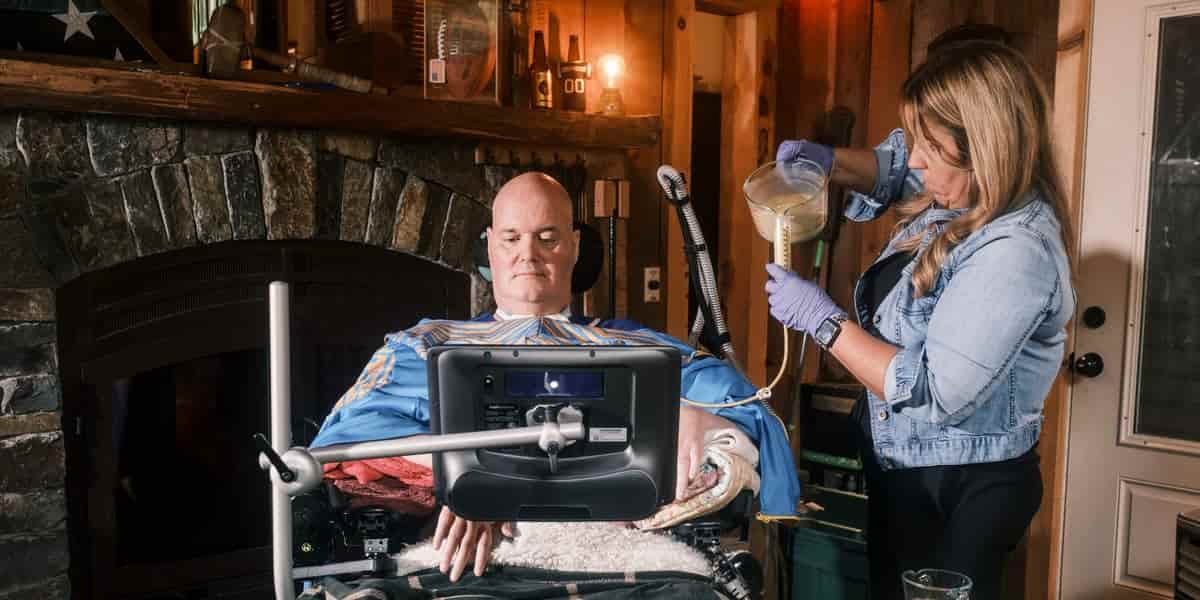
Merrill Hale, who has ALS, relies on advanced technology, including eye gaze systems, to communicate and manage his daily life. His caregiver, Christina Evers, was matched with him through Home Instead, a home healthcare service that utilizes AI algorithms developed by its parent company, Honor Technology. This AI-driven matching process analyzes a wide range of data points, including caregiver availability, personality traits, skill sets, and previous client interactions, to create optimal pairings.
Honor's technology aims to improve the efficiency and effectiveness of caregiving by identifying patterns in caregiver work habits and even predicting potential issues like missed shifts. Hale expressed gratitude for the match, stating, "I was lucky to have found her." His mother, Judy, also noted the strong bond formed between Hale and Evers.
Hale, a former engineer and musician, was diagnosed with ALS about a decade ago, leading to a progressive loss of motor function. His wife, Karen, who works full-time, noted the difficult role reversal from being equals to a caregiver-recipient dynamic. Hale recently underwent a tracheostomy to stabilize his condition and ease caregiving responsibilities.
Seth Sternberg, CEO of Honor Technology, explained that their AI algorithms generate summaries of client needs based on service history, facilitating smoother communication and agreement among caregivers. He acknowledged that AI, like humans, can make mistakes but emphasized its ability to learn from feedback. Sternberg also highlighted that the AI matching system contributes to reduced staff turnover, with Home Instead experiencing a 30% annual churn rate, significantly lower than the industry average of 80%. The technology also helps reassign visits and identify areas where caregivers might need further training.