By Laila Kearney and Nathan Crooks
HOUSTON/NEW YORK, Nov 4 (Reuters) - Texas' red-hot data center industry has been plunged into uncertainty by governor-elect Gina Hinojosa's pledge to crack down on the rapid growth of server warehouse projects.
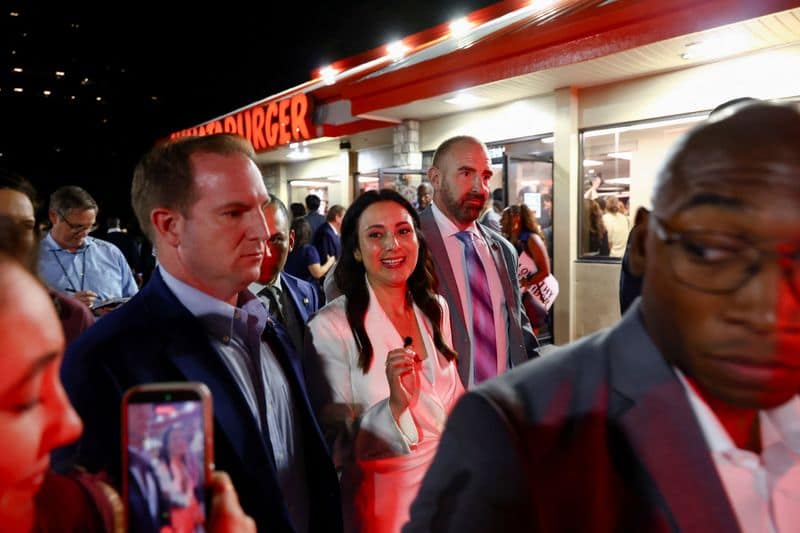
Hinojosa, who ousted Republican Greg Abbott in a dramatic upset on Tuesday, hammered that message in the final weeks of her campaign, calling for a statewide moratorium and vowing days before the vote to “stop the data center takeover.”
With plentiful energy supplies, relatively cheap land and a pro-business policy, Texas has become one of the hottest regions for data center development in recent years. Big Tech companies including Meta, Google and Microsoft have announced major data center projects in the state over the past two years.
But growing opposition from rural communities and a surge in requests to connect to the state’s power grid had pushed even the Republican governor, Abbott, to order a pause on data center permits earlier this year.
Before the election, Hinojosa said she would take the crackdown on data centers a step further by banning all data center approvals until the state legislature passes laws "to protect Texans, so that Texans have a seat at the table to decide if and how data centers come into our community."
The data center industry had already come under pressure before the midterms. On August 3, Abbott became one of the first Republican governors in the US to halt the connection of new data centers to the state's electric grid. He also ordered a comprehensive audit of the projects, with a focus on power demand, environmental impacts and tax breaks given to developers.
The move represented a dramatic shift in Abbott's approach to data centers, which he had supported just months earlier. By the time Texas halted data centers connecting to its grid, state grid operator ERCOT said it was tracking more than 400 gigawatts of data center projects -- roughly equivalent to what it would take to power the entire US South -- seeking to connect to the grid.
Abbott's about-face also threw tens of billions of dollars of data center projects planned in Texas into jeopardy and raised doubts over whether hundreds of millions in grid deposits paid by data centers seeking to connect to the grid would be returned.
Since ordering the audit, Abbott has also taken actions to penalize data center water violations retroactively and temporarily banned the state from issuing air permits for the projects.
Abbott, however, did not issue a formal moratorium on data centers, which Hinojosa has vowed to do. Certain measures by Abbott also had a near-term expiration date, like the air permit ban and the audit, which was expected to conclude at the end of 2026.
“The data centers connect economic development to everyday concerns,” University of Houston political scientist Brandon Rottinghaus said a day before the vote, citing electricity bills, water supplies and property rights.
Polling showed rural voters, who are “at the epicenter of so many of these fights,” were unhappy with the spread of data centers heading into the election, he said.
Some 42% of registered voters in a Reuters/Ipsos poll published this week said limiting the construction of data centers used to power AI was very important or the most important issue for them.
Some 76% of voters nationwide said they opposed the construction of a new data center in their community, according to an NBC and SSRS exit poll. Ahead of the vote, a University of Houston poll in October found that 79% of likely Texas voters supported limits on the number of data centers that can be built in the state.
"Data centers in space looking pretty appealing right now," Elon Musk, who supported Abbott in the election and had spent $158 million to promote Texas Republican Senate candidate Ken Paxton alone, wrote early Wednesday on X.
(Reporting by Laila Kearney in New York and Nathan Crooks in Houston, with additional reporting from Sheila Dang in Houston, editing by Deepa Babington)