By Julie Zhu
SINGAPORE, Nov 6 (Reuters) - Singapore Airlines, long a benchmark for premium travel, is spending more than S$2 billion ($1.6 billion) to upgrade long-haul seats and provide larger double-bed suites to compete with rivals that are pouring money into high-end cabins.
The airline on Friday unveiled new cabins in all four travel classes in the biggest and most comprehensive overhaul in its history, with the new seats due from the second half of 2027.
In first class, centre seats convert into what Singapore Airlines calls the largest double bed in commercial aviation. Business class gets sliding privacy doors for the first time on the airline, alongside a fully flat bed.
The launch comes as carriers globally such as Air France, British Airways and United Airlines pour billions into premium travel despite industry-wide delays in production and certification of new seats.
Surging fuel costs have squeezed margins and pushed up fares, deterring some more cost-conscious economy passengers, although premium travel has remained relatively resilient.
The investment "underpins our long-standing commitment to continually raise the bar of premium air travel," Yeoh Phee Teik, Singapore Airlines' senior vice president customer experience, said at a briefing on Wednesday.
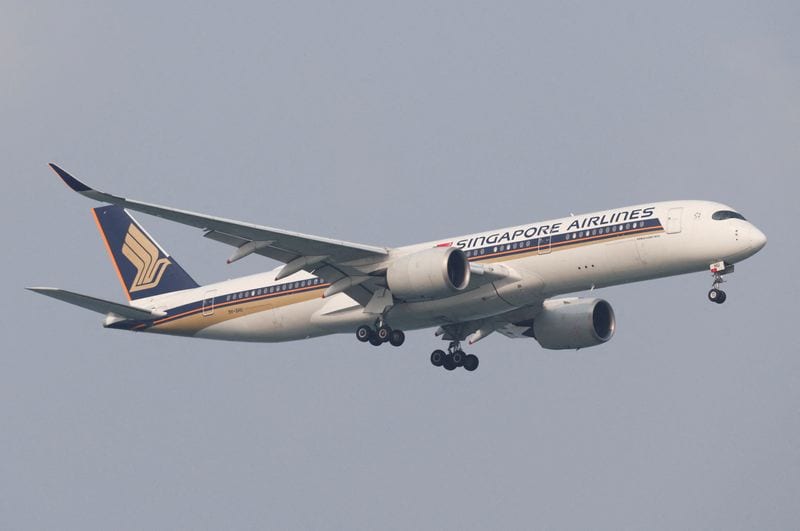
The Singapore Airlines programme covers 72 aircraft, a mix of Airbus A350-900s being retrofitted and Boeing 777-9 jets on order that together will comprise the majority of its long-haul fleet.
The cabins were originally designed for the 777-9, which is expected to become Singapore Airlines' new long-haul flagship as the A380, which offers smaller double beds, eventually retires.
But the 777-9's entry into service has slipped for years, which Singapore Airlines Chief Commercial Officer Lee Lik Hsin told Reuters had led the carrier to widen the programme to its A350s.
He said the S$2 billion-plus investment included a S$1.1 billion A350 refurbishment plan announced in 2024 and was funded from the airline's strong cash balance, which stood at S$9.1 billion as of end-June.
Most of the investment goes to premium cabins because business and first-class seats cost far more per unit than economy seats, Lee said, with the carrier setting no spending ceiling and planning to keep investing when appropriate to maintain its market leadership.
"Our competitive advantage doesn't derive from aircraft cabin product alone," he said. "It is the hard product, the soft service, the operational excellence. And...it is our people."
David Flynn, editor-in-chief of industry publication Executive Traveller, said the new first class with a unique curved cabin design that borrowed space from the aisles to add personal space to each suite ranked among the world's best.
"Business class represent a solid and much-needed catch up to the competition, rather than a mighty leap ahead," he said. "It's hard to top Qatar's business class Qsuite, let alone the next-gen version coming in 2027, but in features and usability, Singapore Airlines looks to have Emirates and arguably Cathay beat here."
DELAYS AND CERTIFICATION
The unveiling arrives against a backdrop of persistent delays. Boeing first targeted 777-9 deliveries around 2020 but repeated certification setbacks, engine issues, the pandemic and tighter oversight by the US Federal Aviation Administration have pushed that to 2027, with Lufthansa expected to be the launch operator.
Lee said slippage on its A350 refurbishment plan and the 777-9 seating were both driven by certification issues.
"The seats are certified on the 777-9, but the 777-9 aeroplane itself is not certified, and the seats have not yet been certified on the A350," he said.
The A350 certification delay had pushed back their introduction by about half a year, he added.
As airlines design more premium offerings with bespoke features that regulators need to ensure meet stringent crash-safety standards, seat certification has become a bottleneck across the industry.
Boeing CEO Kelly Ortberg last week told investors that deliveries of its 787 Dreamliners had been affected by seat certification challenges.
($1 = 1.2762 Singapore dollars)
(Reporting by Julie Zhu; Editing by Jamie Freed)