By William James and Ezgi Erkoyun
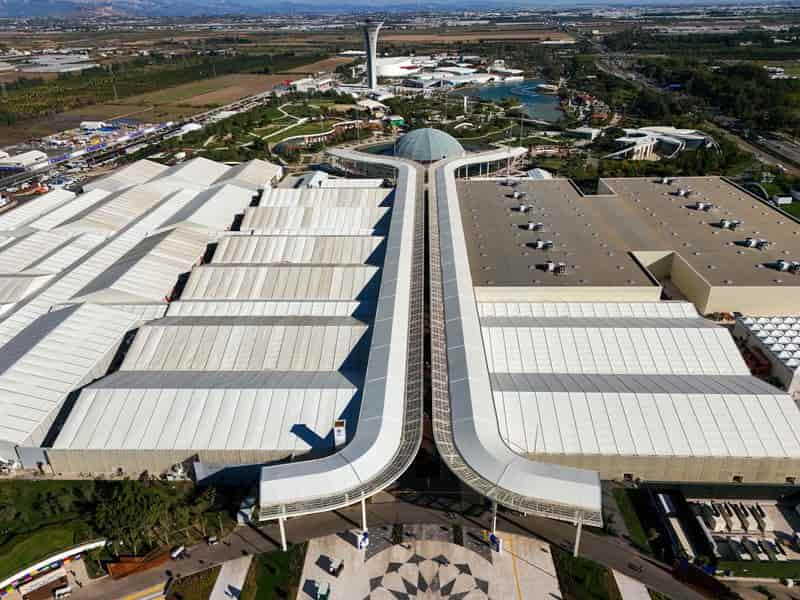
ANTALYA, Turkey, Nov 10 (Reuters) - United Nations Secretary-General Antonio Guterres took aim at oil companies making billions of dollars in profits while families, businesses and governments suffer, as he used the COP31 climate conference to criticise fossil fuel dependency.
Tayyip Erdogan, president of the talks' host nation Turkey, meanwhile welcomed an oil discovery in the Turkish mountains, and the country's climate negotiators pushed governments to sign a pledge to electrify their economies. The pledge does not specify whether the electricity involved would be renewable or from fossil fuels.
Taken together, the discourse on Tuesday, the second day of the two-week UN conference in Antalya, highlights a tension at the heart of the climate debate: fossil fuels underpin the global economy, but also hurt it through costly climate damage and often-volatile energy prices.
A UN report last month showed the world is poised to warm well beyond the 1.5 degrees Celsius (2.7 degrees Fahrenheit) threshold scientists say could unleash the worst consequences of climate change, as greenhouse gas emissions continue to grow.
While many people endure the impact of inflation, oil companies have largely benefited from a rise in fossil fuel prices since the US-Israeli war on Iran disrupted energy shipments from the Middle East.
"Fossil fuels are not only driving the climate crisis. Dependence on them carries a steep economic and security price – as the crisis in the Middle East has laid bare," Guterres, who will step down at the end of the year, said.
"Families, businesses and governments are paying the price. Meanwhile, nine oil companies are on track to rake in more than $95 billion in just three months. That is more than one billion dollars a day."
Guterres did not name the companies. Exxon Mobil, Chevron Corp, BP and Shell have reported windfall earnings since the Iran war began at the end of February.
ELECTRIFICATION AMBITION, BUT WILL IT BE GREEN?
Earlier, COP31 host Turkey urged countries to sign up to a goal to increase the share of electricity in global energy use to 35% by 2035 — up from around a fifth today.
Turkey is seeking to incorporate that electrification goal into the formal outcome of the talks, according to a person familiar with the matter.
COP31 President Murat Kurum told a press conference in Antalya that the goal was a way to cut emissions, drive economic growth and ensure long-term energy security.
Climate advocates have criticised the pledge because it does not require that the additional electricity come from low-carbon sources — something Kurum said was not required.
"I put forth a target for electrification. An exit from fossil fuels has already been put forth in previous COPs. You have a path ahead of you today, one is becoming more costly, and one is becoming cheaper. Which one would you prefer?" he said.
The target is meant to help reduce planet-warming emissions by speeding the global shift away from fossil fuel-powered vehicles, furnaces, boilers, cooking stoves, and other greenhouse gas-emitting equipment.
TURKEY AND AUSTRALIA RELY ON COAL
The previous COP in Brazil was unable to reach consensus on the need for a global plan to reduce dependency on fossil fuels, but the COP presidency has in recent weeks published a roadmap aimed at keeping that idea at the centre of the climate negotiations. The roadmap asks countries to first plan and assess their energy systems by 2028, then work together to reduce fossil fuel supply from 2031.
Turkey, the conference host, and Australia, which is leading the negotiations, both rely on fossil fuels for electricity.
Coal generated about a third of Turkey's electricity last year and more than 40% of Australia's, according to government data.
Speaking alongside the Brazilian team at an event in Turkey, former US secretary of state and climate envoy John Kerry said that despite previous COPs having agreed on the need to transition away from fossil fuels, investment poured into new oil and gas fields.
"The hard truth is that fossil fuels story is still moving in the wrong direction," he said. "We don't need more promises. We need plans."
Erdogan on Monday had cheered a rise in crude oil production from Turkey.
"Good news keeps coming from the mountains of Gabar," he said following a cabinet meeting, after announcing that oil production from the Gabar fields in the country's southeast would exceed 100,000 barrels per day in the second half of 2027.
Climate activist Greta Thunberg, attending her first COP talks in five years, said the UN process was failing to deliver enough action to match the severity of the crisis.
"These COPs have become greenwash circuses, that is the reality," she told reporters.
"Of course it is absolutely crucial that we still do everything we possibly can because this is an opportunity to mobilise people and to say that the people in power do not have the situation under control."
(Reporting by Simon Jessop, Tuvan Gumrukcu, Ezgi Erkoyun, and William James in Antalya and Sergio Goncalves in Lisbon; Writing by Richard Valdmanis; editing by Barbara Lewis)