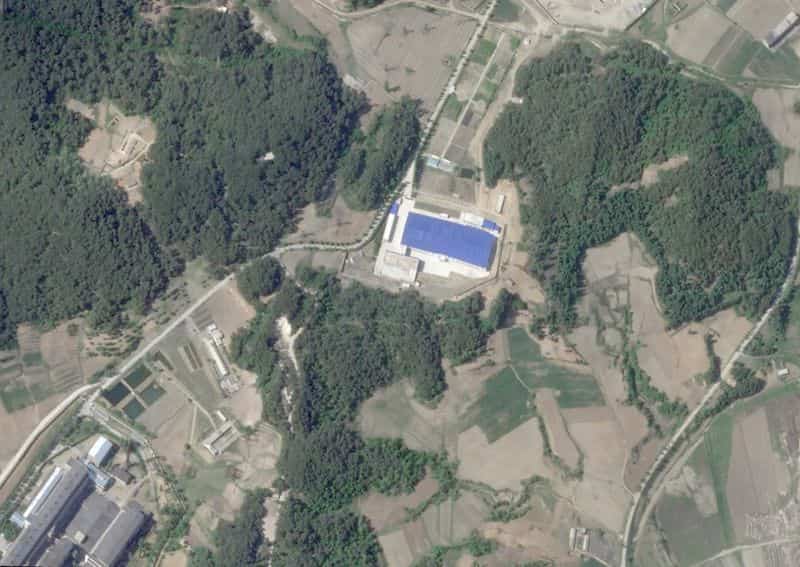
VIENNA, Nov 18 (Reuters) - North Korea has built an extension to its original uranium-enrichment plant at its Yongbyon nuclear complex as it continues to expand its production of weapons-grade material, UN nuclear watchdog chief Rafael Grossi said on Wednesday.
The International Atomic Energy Agency (IAEA) has not had access to North Korea since Pyongyang expelled its inspectors in 2009. The agency now observes the country mainly using satellite imagery.
North Korea, formally known as the Democratic People's Republic of Korea (DPRK), has carried out several nuclear tests and appears to continue to produce the two materials with which one can make the core of a nuclear weapon - highly enriched uranium and plutonium.
"Previously, I have reported to you about the ongoing operation of enrichment facilities at Kangson and Yongbyon, the construction of an additional enrichment facility at Yongbyon, and the reported further expansion of the DPRK's production of weapons-grade nuclear material," Grossi said in a statement to a quarterly meeting of the IAEA's 35-nation Board of Governors.
Kangson is just outside Pyongyang to the southwest, while the much larger site at Yongbyon is further away from the capital to the north.
"Since mid-September 2026, a further extension to the original Yongbyon enrichment facility has been under construction with the new extension externally complete by late October 2026," he said, without elaborating.
"The ongoing expansion of the DPRK's uranium enrichment programme remains a cause for serious concern," he added.
Grossi said the IAEA has also "observed indications" that the 5-megawatt nuclear reactor at Yongbyon that North Korea uses to produce plutonium from spent fuel probably continues to operate and is in its seventh irradiation cycle, after which the spent fuel would be removed for reprocessing.
Another, light-water reactor at Yongbyon has been operating since April of this year, he added.
(Reporting by Francois MurphyEditing by Ros Russell)