By Emmanuel Bruce and Christian Akorlie
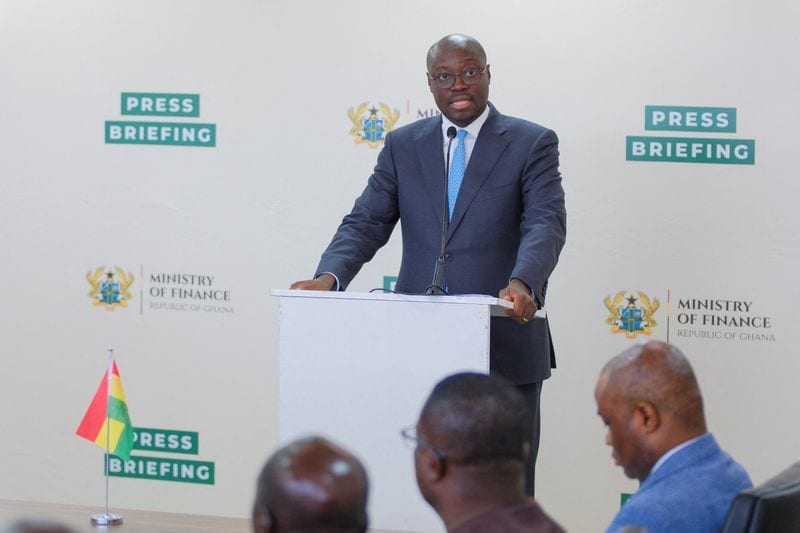
ACCRA, Nov 12 (Reuters) - Ghana will invest $10 billion over four years from 2027 in a domestically funded "New Economy" programme to boost output, exports and jobs, Finance Minister Cassiel Ato Forson said late on Thursday as he presented the 2027 budget.
The programme will target commercial agriculture, energy infrastructure, technology, textiles and garments, critical minerals value addition, amongst others, Forson told parliament.
"Government will preserve stability, provide strategic infrastructure, prepare bankable projects and create predictable conditions for enterprise," he promised.
The budget projects gross domestic product growth of 5.2% next year, up from 4.8% in 2026, and a fiscal deficit on a cash basis of 3.6% of GDP, down from 4% this year. The government also plans to maintain inflation within a band of 8%, plus or minus 2 percentage points.
It is the first budget since Ghana completed a $3 billion IMF support programme, under which the economy improved markedly.
The oil, gold and cocoa producer sought IMF support in 2022 after its debt-servicing costs soared in the wake of years of overspending, the COVID-19 pandemic, Russia's invasion of Ukraine and high global interest rates.
Inflation, which peaked at 54.1% in December 2022, slowed sharply over the three-year programme, falling to a low of 3.2% in March this year, though it has edged up slightly since.
Forson said the government will redeem GH¢29 billion ($2.48 billion) of Domestic Debt Exchange Programme bonds due in February 2027 ahead of schedule, with the repayment taking effect immediately.
He also announced that the government plans to repay by December 31 the second Eurobond restructured in 2024 and due to mature in January 2027.
The government expects the early redemptions to retire more than GH¢36 billion of debt ahead of schedule.
The West African nation is still collaborating closely with the IMF via a three-year Policy Coordination Instrument, an arrangement that does not involve funding but includes regular IMF reviews and can help signal commitment to reforms and reassure investors.
($1 = 11.6800 Ghanaian cedi)
(Reporting by Emmanuel Bruce and Christian Akorlie in Accra; Additional reporting by Amindeh Blaise Atabong; Editing by Alexander Winning and Matthew Lewis)