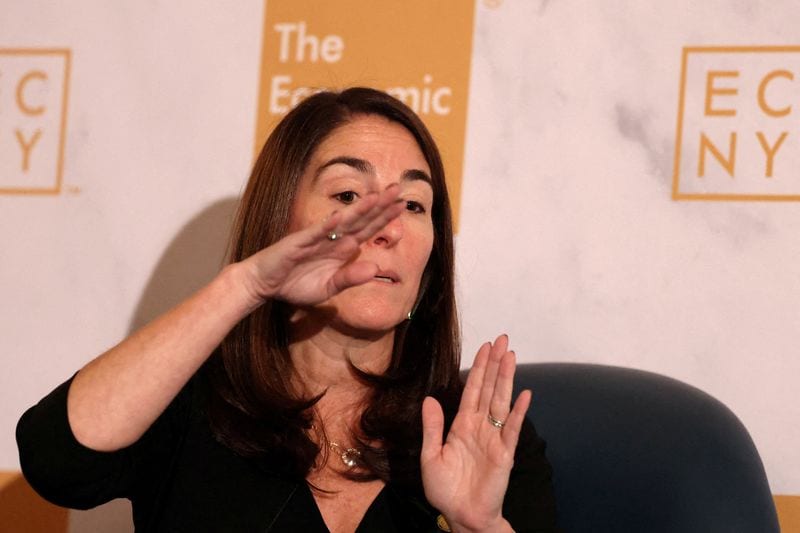
Nov 17 (Reuters) - The US central bank should start preparing principles now for potential temporary and targeted interventions in the Treasury market in times of market stress that threatens to bleed over into the economy, Cleveland Federal Reserve President Beth Hammack said on Tuesday.
It is time to learn from two recent market upheavals — in March 2020 at the onset of the COVID-19 pandemic and in April 2025 after the announcement of an aggressive tariff regime by President Donald Trump — with the goal of preventing the next one, Hammack said in remarks prepared for an event at the Brookings Institution in Washington.
Hammack did not address the economic or monetary policy outlook in her prepared remarks.
"When stress hits, there may be very little time to decide what principles to operate under or how to communicate them," Hammack said. "It is better to identify the exit routes when you first enter the building than it is to draw up an evacuation plan as the building is filling with smoke."
The Fed needs a clear understanding of when it will and will not intervene, she said.
In cases where officials assess that market dysfunction could spill into the economy and Fed actions could resolve the issue, "intervention should be considered," Hammack said. But "when poor liquidity conditions in volatile markets reflect fundamentals, it is not a problem the Fed can or should try to solve," she added.
Hammack said she supports enhancements to the Fed's Standing Repo Facility, which provides liquidity to financial institutions in exchange for Treasuries. In its current form, it might not have been sufficient to address the market dislocations witnessed at the start of the pandemic, she said.
"I doubt repos would have been enough in 2020," Hammack said. "Thus, it may make sense to consider Treasury purchases if repo operations prove insufficient."
In instances where outright Treasury purchases may be required, the Fed should approach them with clear communication distinguishing the action from any monetary policy actions and should also have an exit plan, she said.
"The presumption should be that the action is temporary and targeted, ideally with an exit strategy built in from the start," Hammack said.
Hammack's comments on the Fed's market stabilization role largely dovetail with remarks last week from Dallas Fed President Lorie Logan.
(Reporting by Dan Burns; Editing by Paul Simao)