By Jan Lopatka
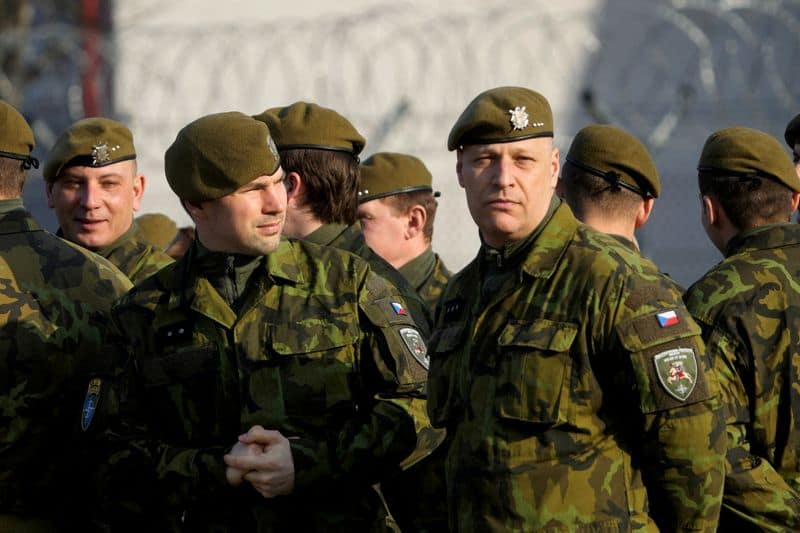
PRAGUE, Nov 3 (Reuters) - The Czech army is not meeting NATO capability targets, is short of personnel and materials, and improvement in the coming years will be slow despite a worsening security environment, a new army development strategy released on Tuesday showed.
The Czech Republic has been spending under the NATO minimum of 2% of gross domestic product on defence in recent years, and the current government does not plan any increase beyond the 2% level in 2027-2029.
The Czech approach is in contrast to NATO countries such as the Baltic states, Poland or Germany, which have been beefing up defence spending in response to Russia's war in Ukraine.
The strategy said an attack by Russia on NATO and EU countries was increasingly likely.
"The Czech Republic is not meeting 70% of NATO capability targets buildup, while in those that require the most resources it lags by 5 to 10 years," said the strategy, approved by the government on Monday.
"This deficit limits the Czech army's ability to meet collective defence tasks," it said.
ACCELERATED SPENDING LATER
The strategy spelled out needs to beef up personnel, though just to 32,000 by 2030 from the current around 26,000, expand air and anti-drone defence, speed up technological adaptation and strengthen the ability to defend territory.
NATO agreed last year to raise annual spending by members on core defence to 3.5% of GDP, plus an additional 1.5% on infrastructure by 2035, but the Czech government's plan does not reflect increases until the end of its term in 2029, and foresees the rise to 3.5% to come only in 2030-2035.
Until 2030, funding would go almost exclusively to already approved projects such as purchases of 24 F-35 fighters, Leopard tanks and short- to medium-range air defence, slowing the buildup of a medium brigade, unmanned systems and anti-drone defence, the strategy said.
Prime Minister Andrej Babis' government has faced criticism on defence spending since taking power, including from the US ambassador to NATO, Matthew Whitaker, who said in September it was disappointing not to see more progress.
President Petr Pavel, a former general and NATO official, criticised the outlook as insufficient.
"The strategy ... does not meet these fundamental aims even in this relatively long horizon," Pavel told reporters in a live television briefing on Monday.
Prime Minister Andrej Babis said on Monday that the key for him was recruiting troops faster and focusing on air and anti-drone defence.
(Reporting by Jan Lopatka; Editing by Xevi Fontdegloria)