Key facts
- 52 of California's 177 cities with at least 50,000 residents shrank every year between 2021 and 2025.
California's suburbs are experiencing significant population decline, with 52 cities shrinking annually between 2021 and 2025. This trend, particularly affecting working-class and immigrant-anchored communities, suggests a deeper demographic shift driven by the housing affordability crisis and could impact the state's workforce and political clout.
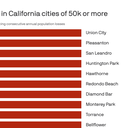
California's population decline in its suburbs risks eroding its diverse workforce and shifting political power to other states, while also impacting local tax bases and schools due to the concentration of losses in established, expensive inner suburbs.
An analysis of U.S. Census Bureau estimates from 2021 to 2025 reveals that 52 of California's cities with populations of at least 50,000 residents have experienced shrinking populations each year. This trend is particularly pronounced in suburban areas, with seven of the top ten fastest-shrinking cities located in Los Angeles County, and three in the Bay Area: Union City, Pleasanton, and San Leandro. San Francisco has also seen a significant decline, losing over 52,000 residents since 2020. While the census does not specify reasons for these moves, the geography and demographics of the affected areas, which include large Latino and Asian American populations in working-class, immigrant-anchored communities, point towards the housing affordability crisis as a primary driver. This demographic shift contrasts with national trends where outer-ring suburbs are growing, and suggests potential consequences for California's economy, labor markets, and political representation. However, some inland areas like Lathrop and Manteca continue to attract residents, indicating that growth is still occurring in specific regions of the state.