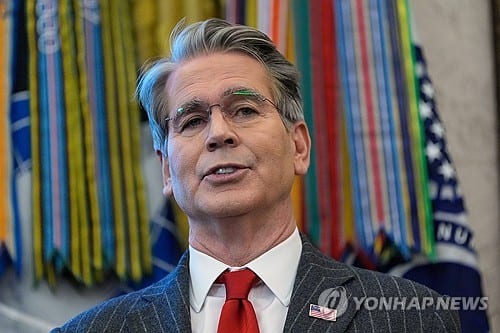
U.S. Treasury Secretary Scott Bessent announced on Tuesday that the United States and Iran are nearing a potential deal that could reopen the Strait of Hormuz this week. Bessent stated in a CNBC interview that the agreement would focus on ensuring 'freedom of movement' through the critical waterway, which has experienced disruptions due to ongoing conflict in the Middle East.
Bessent indicated that the reopening of the strait could lead to a significant decrease in oil prices, as well as lower costs for other commodities like natural gas and refined products. He noted that hundreds of ships currently stranded in the Persian Gulf could be able to depart.
This development follows President Donald Trump's statement on Monday that Washington and Tehran were engaged in discussions to reopen the Strait of Hormuz, describing it as a 'first phase' of broader negotiations that would also include Iran's nuclear program.
Earlier in the week, Bessent had also commented on currency volatility, describing the South Korean won as experiencing 'excess volatility' and emphasizing the importance of a stable Japanese yen for regional economic stability. He cited the 1990s Asian financial crisis, which he attributed in part to an 'overly weak' yen, and predicted the continuation of the yen carry trade due to Japan's extensive overseas asset accumulation.