Key facts
- Japan and the United States will conduct joint intervention again if the yen resumes its downtrend, according to former central bank official Atsushi Takeuchi.
- The two countries recently launched a rare joint yen-buying intervention to combat the currency's sell-off.
- Takeuchi believes the US backing removes constraints for Japanese intervention and has significant symbolic meaning.
- He forecasts the yen to trade between 155 and 162 per dollar in the near term.
- The former official suggested that fiscal policy perceptions and the Bank of Japan's interest rate stance are crucial for a lasting yen boost.
- Rising Japanese government bond yields may have prompted the US to join intervention efforts due to fears of broader contagion.
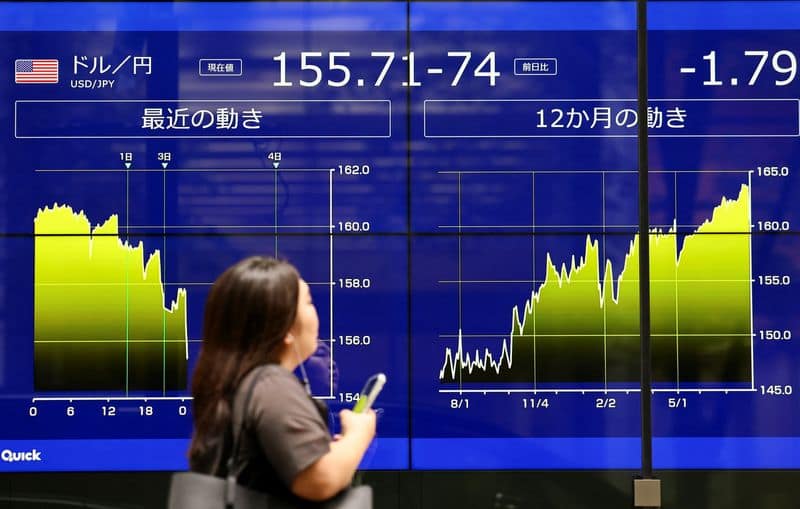
Japan and the United States are prepared to intervene jointly again if the yen's downtrend resumes, according to Atsushi Takeuchi, a former central bank official who participated in market operations over a decade ago. The yen held its gains above recent 40-year lows on Monday following a rare joint yen-buying intervention by the two nations, signaling a determination to counter the currency's sell-off.
Takeuchi stated that the recent joint action was highly effective in shaping market perceptions that a one-way weakening of the yen will not persist. He emphasized the symbolic significance of the United States backing Japan's intervention efforts, suggesting it removes effective constraints on Japanese authorities. He advised hedge funds against betting on dollar-yen at this juncture.
For the time being, Takeuchi anticipates the yen will trade within a range of 155 to 162 per dollar. He believes that if the yen remains stronger than 160 per dollar for approximately another week, markets will likely view this as a near-term bottom and begin to push the currency higher. The yen stood at 157.60 on Tuesday, a notable recovery from its 40-year low near 164 reached last month.
Takeuchi noted that the United States risks its credibility if it allows the yen to weaken significantly again after its deep involvement in Japan's efforts. He also pointed out that intervention alone may not provide a lasting boost to the yen unless Prime Minister Sanae Takaichi's administration shifts perceptions away from expansionary fiscal policies and towards supporting the Bank of Japan's interest rate hikes. The 10-year Japanese government bond yield's jump to a 30-year high last month, interpreted as a focus on spending and potential monetary policy influence, likely contributed to the US joining the intervention efforts. Takeuchi suggested that the US, facing its own fiscal deterioration, feared broader contagion from rising Japanese yields.