Key facts
- Analysts now expect Argentina's economy to grow 2.7% in 2026, down from previous estimates.
- Inflation is projected to end 2026 at 29.8%, a slight decrease from prior forecasts.
- Goldman Sachs revised its 2026 growth forecast for Argentina to 2.7% from 3.0%.
- The revisions are attributed to weaker-than-expected economic activity data and concerns about price stability.
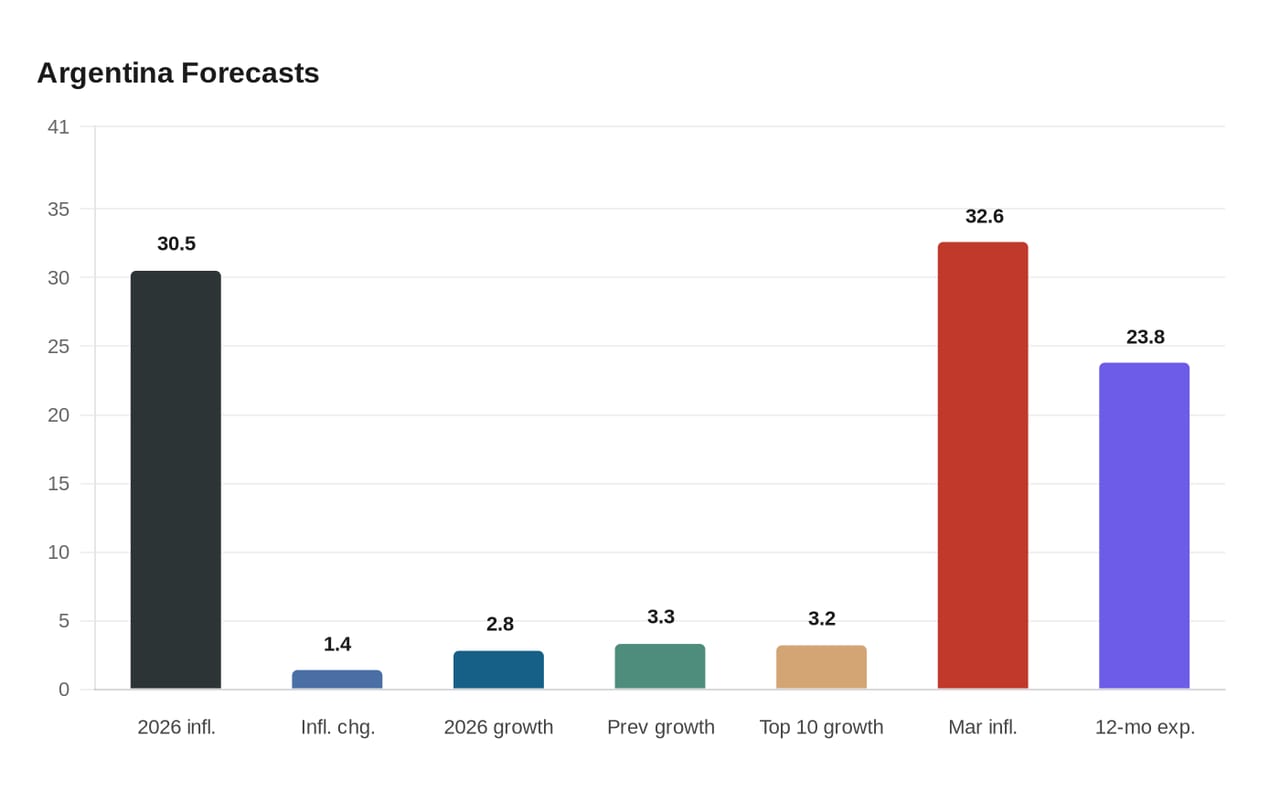
Analysts have revised down their economic growth forecast for Argentina in 2026, while also lowering inflation expectations, according to a central bank survey. The latest projections from the Banco Central de la República Argentina's Market Expectations Survey (REM) indicate an expected economic growth of 2.7% for 2026, a decrease of 0.4 percentage points from the previous estimate. Inflation is now projected to end the year at 29.8%, a slight reduction of 0.2 percentage points from the prior forecast.
Goldman Sachs also adjusted its outlook, lowering its 2026 growth estimate for Argentina to 2.7% from 3.0%. This revision was prompted by weaker-than-expected monthly economic activity data for April and May. The investment bank anticipates a gradual disinflation path, projecting 2026 inflation at around 29%. Goldman Sachs cautioned about a narrow margin for error, citing exchange-rate pressures and political challenges ahead of the 2027 elections.
The shift in forecasts suggests a slower and more complex adjustment process for Argentina's economy than President Javier Milei's reforms might have initially promised. Persistent inflation, even with a downward trend, continues to erode wages and influence household spending patterns. For investors, the data signals that price stability remains fragile and confidence in the government's policy direction is not yet fully established.