Key facts
- The US and Iran have reached a memorandum of understanding to end a conflict.
- The conflict had closed the Strait of Hormuz.
- The agreement includes an immediate halt to military operations.
- The US has lifted its blockade of Iranian ports.
- Frozen Iranian assets are to be released.
- A 60-day period is set for further negotiations.
- Negotiations will cover sanctions relief and Iran's nuclear program.
- Talks were held in Switzerland.
- A technical fault at Zurich airport disrupted talks.
- President Donald Trump threatened renewed US attacks if Hezbollah causes trouble.
- Mediators Qatar and Pakistan announced a de-confliction cell for Lebanon.
- Turkey warned Israel might attempt to derail the deal.
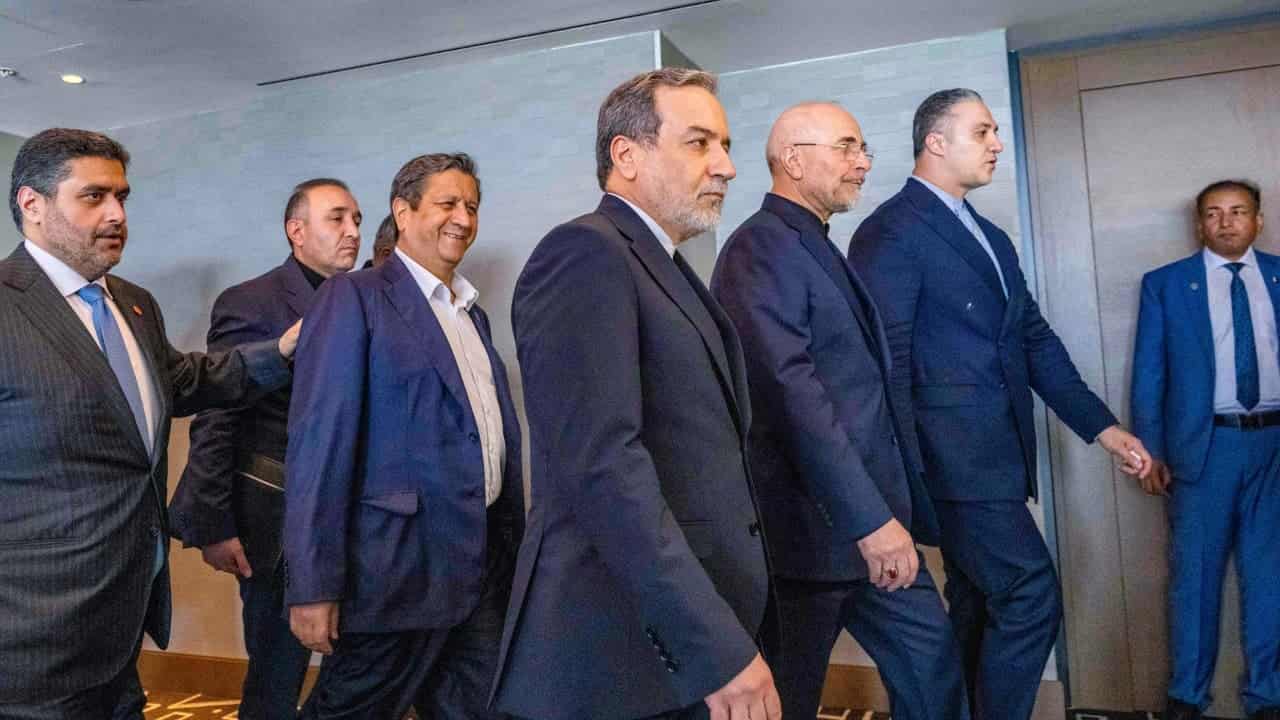
The United States and Iran have finalized a memorandum of understanding to end a conflict that had closed the Strait of Hormuz and threatened regional stability. This initial pact includes an immediate halt to military operations, the lifting of the U.S. blockade on Iranian ports, and the release of frozen Iranian assets. The agreement sets a 60-day period for further negotiations on critical issues such as sanctions relief and Iran's nuclear program, with the ultimate goal of establishing a permanent peace deal.
Diplomatic efforts, however, have encountered several disruptions. High-level talks in Switzerland were overshadowed by a technical glitch at Zurich airport, caused by security measures for the negotiations, which led to flight cancellations and delays. U.S. Special Envoy for Iran Rob Malley expressed hope for transforming the Middle East through these discussions, which also aim to potentially revive the 2015 nuclear deal. Despite progress reported by negotiators on nuclear issues and sanctions waivers, President Donald Trump issued a 'threatening statement' that paused talks. Trump threatened to resume U.S. attacks on Iran if it does not restrain Hezbollah allies from causing violence, prompting Iran's chief negotiator to warn the U.S. to be careful and stating Iran's armed forces are ready to respond. Gold prices fell amid these escalating tensions.
In parallel developments, mediators Qatar and Pakistan announced that a de-confliction cell will be created to stop fighting in Lebanon, ensuring adherence to the termination of military operations there. Iran also announced significant advancements in its diplomatic efforts to conclude the conflict in Lebanon. Meanwhile, Turkish Foreign Minister Hakan Fidan expressed concern that technical issues could stall the U.S.-Iran memorandum of understanding and warned that Israel might attempt to derail the process. Iran's oil minister, Mohsen Paknejad, stated that the country's oil industry will serve as a key test of any future agreement, indicating potential for significant investment if diplomatic progress continues. The negotiations are also complicated by Iran's previous announcement of a Strait of Hormuz closure threat and President Trump's renewed warnings. The RMB's exchange rate and ASML chip technology reaching China are also noted as key topics in related U.S.-Europe discussions.