Key facts
- The United States and Iran agreed to a 60-day roadmap for a peace deal.
- The agreement includes lifting port blockades and releasing frozen assets.
- Sanctions waivers for oil and petrochemical exports are part of the deal.
- The talks aimed to end conflict and reopen the Strait of Hormuz.
- A memorandum of understanding was finalized, with a final deal to be discussed within 60 days.
- A de-confliction cell will be created to stop fighting in Lebanon.
- Emerging market stocks reached a record high due to the peace deal progress.
- Malaysia plans to cut subsidized diesel prices following the diplomatic developments.
- Talks paused after President Trump issued a "threatening statement."
- Turkey warned of potential Israeli sabotage of the US-Iran deal.
- Iran warned of 'humiliation and defeat' if Israel does not withdraw from a security zone in southern Lebanon.
- Israel may partially withdraw from parts of southern Lebanon.
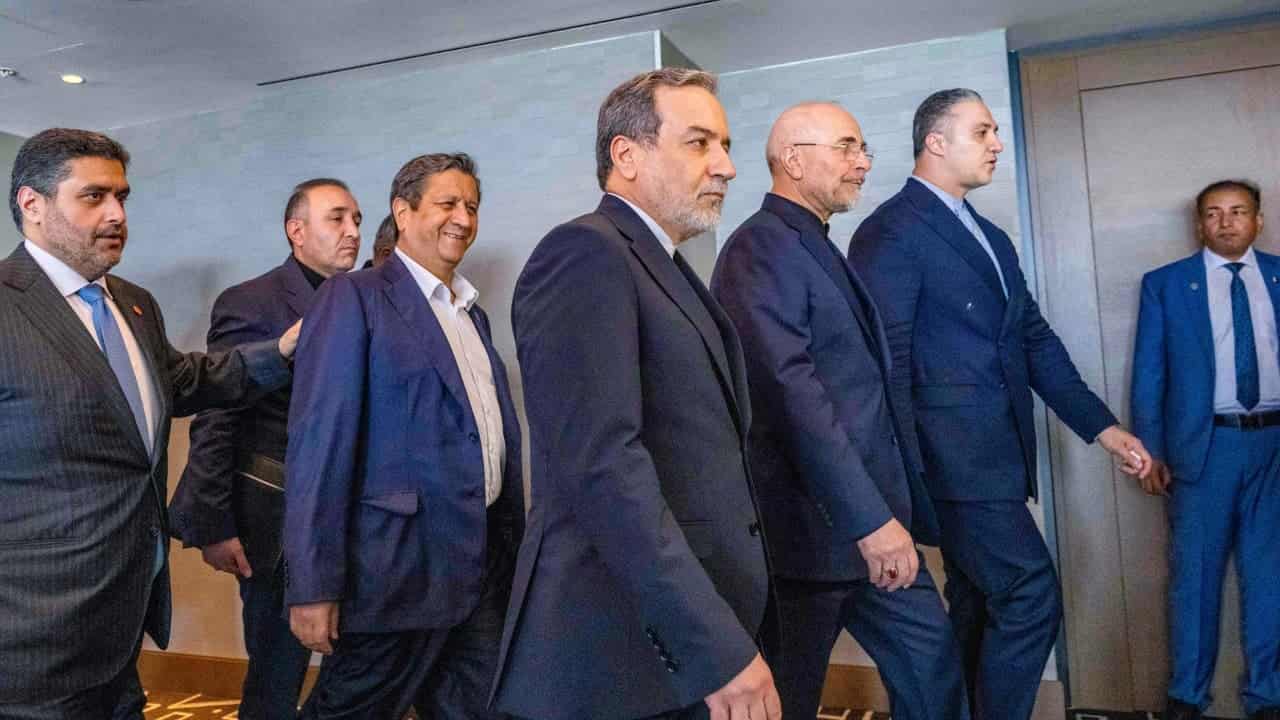
The United States and Iran have established a 60-day roadmap for a peace deal, emerging from talks held in Switzerland. This agreement encompasses the lifting of blockades on Iranian ports, the release of frozen assets, and the provision of sanctions waivers for oil and petrochemical exports. The pact aims to end a conflict that had led to the closure of the Strait of Hormuz, with an immediate halt to military operations and a 60-day negotiation period for sanctions relief and Iran's nuclear program. Mediators Qatar and Pakistan announced the creation of a de-confliction cell to cease fighting in Lebanon, ensuring adherence to the termination of military operations.
Progress in these negotiations has had significant economic repercussions. Emerging market stocks reached a new record high following the announcement of the roadmap for a final peace deal. Malaysia plans to lower subsidized diesel prices, citing confidence in diplomatic efforts to ease Middle East tensions and stabilize energy markets, with Prime Minister Anwar Ibrahim referencing Pakistani Prime Minister Shehbaz Sharif's optimism. Brent crude futures saw a rise of over $1 to $81.66 a barrel amid the talks, which were complicated by Iran's reported closure of the Strait of Hormuz and President Trump's threats.
Despite the progress, the talks have encountered obstacles. U.S. and Iran negotiators paused discussions after President Trump issued a "threatening statement," though Iran's nuclear program was not part of these specific discussions. Technical teams are slated to handle the implementation of a memorandum of understanding. Turkish Foreign Minister Hakan Fidan expressed concerns that technical issues could stall the memorandum of understanding and warned of potential Israeli attempts to derail the process. Meanwhile, Israeli Defense Minister Israel Katz stated that troops would not withdraw from a security zone in southern Lebanon, including Beaufort Castle, prompting a warning from Iran's IRGC commander of "humiliation and defeat" if Israel does not pull out. There are indications that Israel may partially withdraw from parts of southern Lebanon as part of ongoing diplomatic efforts, with discussions expected regarding areas to be transferred to the Lebanese army under U.S. supervision.
President Donald Trump renewed threats to strike Iran if its allies, Hezbollah, continue to cause violence, adding another layer of complexity to the ongoing peace talks. Iran's chief negotiator cautioned the U.S. to exercise care, asserting that Iran's armed forces are prepared to respond. The U.S. Special Envoy Rob Malley expressed hope for transforming the Middle East, with the ultimate aim of potentially reviving the 2015 nuclear agreement. Discussions between the U.S. and Europe also involve the RMB's exchange rate and concerns over advanced chip technology reaching China, separate from the direct U.S.-Iran negotiations.