Key facts
- Iran's IRGC states the Strait of Hormuz will reopen if the U.S. accepts Tehran's conditions.
- The IRGC's decision is separate from ongoing talks with Oman.
- The UAE condemned an Iranian missile attack on an ADNOC-linked vessel in the Strait of Hormuz.
- The UAE accused Tehran of piracy and violating UN resolutions.
- ADNOC reported 15 vessel attacks since the conflict began.
- The vessel attacks resulted in one fatality and 20 injuries.
- U.S. Chairman of the Joint Chiefs General Dan Caine seeks an "off-ramp" from the war with Iran.
- General Caine fears current military options could backfire.
- Iranian President Masoud Pezeshkian stated Tehran is ready for dialogue.
- President Pezeshkian warned against U.S. and Israeli efforts to create divisions.
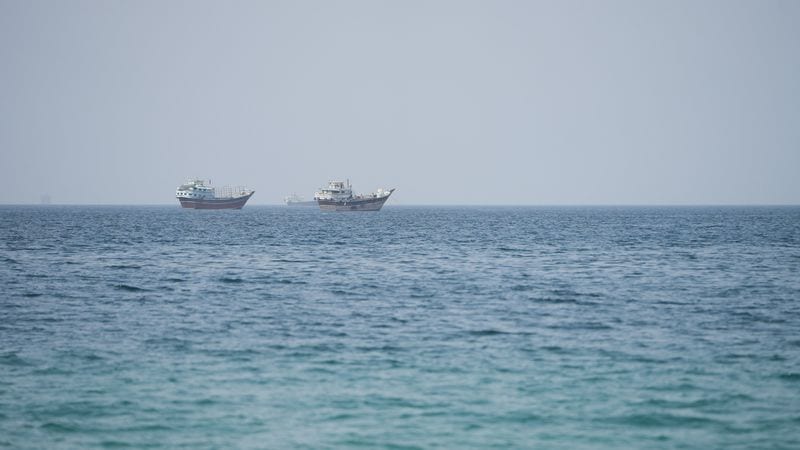
- Maritime traffic in the Strait of Hormuz was subdued on August 7.
- Eight confirmed crossings were recorded in the Strait of Hormuz on August 7.
Iran's Islamic Revolutionary Guard Corps (IRGC) has stated that the Strait of Hormuz will only be reopened if the United States accepts Tehran's conditions. This declaration is separate from ongoing discussions with Oman and highlights the waterway's significance as a part of Iran's strategic power. The UAE has condemned an Iranian missile attack on an ADNOC-linked vessel in the Strait of Hormuz, accusing Tehran of piracy and violating UN resolutions. ADNOC reported that 15 vessel attacks have occurred since the conflict began, resulting in one fatality and 20 injuries.
Privately, U.S. Chairman of the Joint Chiefs General Dan Caine has expressed to Trump administration officials that the U.S. needs an "off-ramp" from the war with Iran. He fears that current military options could backfire and that airpower alone may not achieve objectives. Iranian President Masoud Pezeshkian stated that Tehran is ready for dialogue to protect national interests but will not compromise on sovereignty or defense capabilities. He emphasized improved relations with neighbors and warned against U.S. and Israeli efforts to create divisions.
Maritime traffic through the Strait of Hormuz was subdued on August 7, with eight confirmed crossings, representing a 33% decrease from the previous day. In contrast, traffic through the Bab el-Mandeb strait increased by 18% to 26 confirmed crossings.