Key facts
- Iran's IRGC claimed coordinated drone and missile attacks on U.S. military bases in Kuwait and Bahrain.
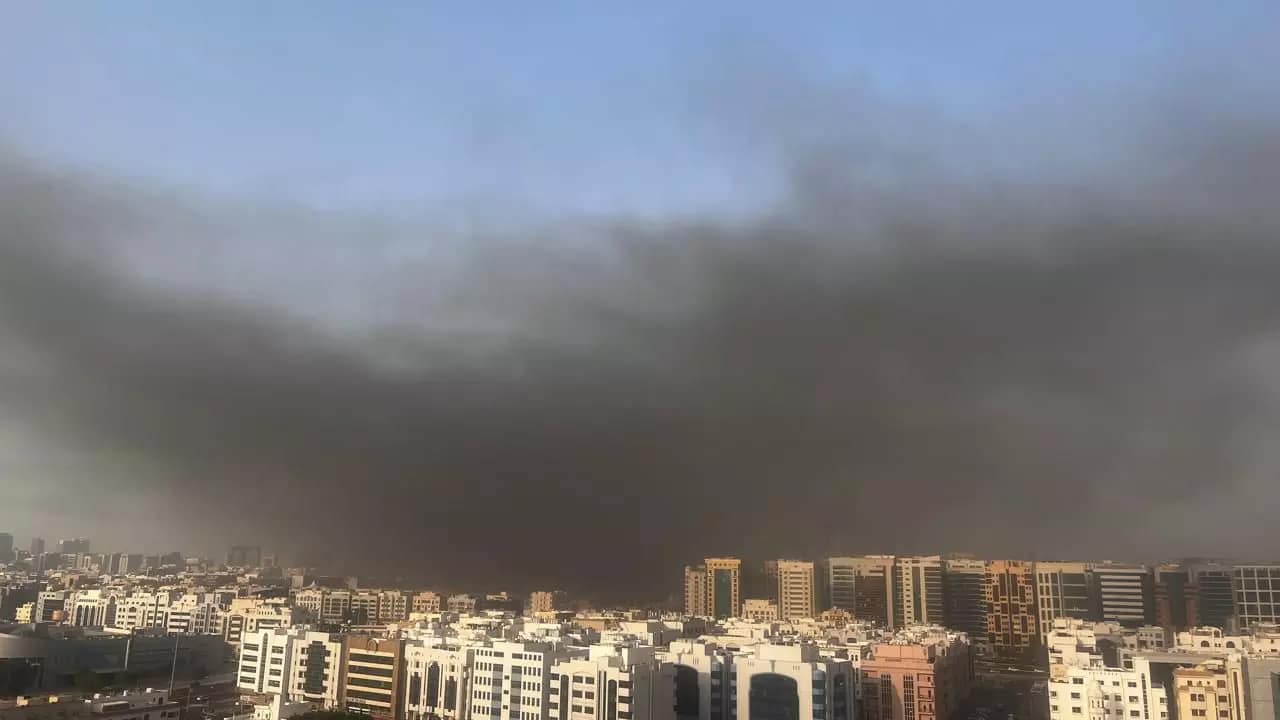
- Kuwait reported sirens and fires, while Jordan intercepted Iranian missiles and drones.
- The U.S. military denied Iranian claims of destroyed aircraft and vessels.
- Multiple drone attacks were reported across Iraq's Kurdistan Region, including Erbil, Sulaymaniyah, and Dohuk.
- Iraq's government denied knowledge of U.S. and Saudi strikes on its territory.
- The U.S. Treasury sanctioned six entities and individuals for supporting Iran's Mahan Air.
- Iran's Foreign Minister Abbas Araqchi warned Bulgaria and Cyprus over the use of their bases by the U.S.
- Bulgaria approved temporary deployment of U.S. aircraft and personnel at Bezmer Air Base.
- Families of Indian seafarers killed in attacks around the Strait of Hormuz are demanding $5 million compensation from the U.S. and Iran.
- The IRGC intercepted and destroyed a hostile drone over Bandar Imam Khomeini.
Iran's Islamic Revolutionary Guard Corps (IRGC) has claimed responsibility for coordinated drone and missile attacks targeting multiple U.S. military bases in Kuwait and Bahrain. The IRGC stated the operation, named 'eye-for-an-eye,' was in retaliation for recent U.S. strikes on Iran and resulted in the destruction of infrastructure, including air defense systems and fuel tanks. Kuwait reported sirens and fires, while Jordan confirmed intercepting Iranian missiles and drones. The U.S. military, however, denied Iranian claims of destroyed aircraft and vessels, and U.S. Central Command refuted reports of a commercial vessel breaking a U.S. blockade.
Further complicating the regional tensions, multiple drone attacks were reported across Iraq's Kurdistan Region, hitting Erbil, Sulaymaniyah, and Dohuk. Coalition air defenses intercepted several drones over Erbil, and explosions occurred at arm warehouses and near the U.S. Consulate. Iraq's government stated it neither approved nor had prior knowledge of U.S. and Saudi strikes against Iran-backed groups within its territory, which were reportedly in response to drone attacks on Saudi oil facilities. In a separate development, the U.S. Treasury sanctioned six entities and individuals for supporting Iran's Mahan Air, which is accused of transporting military assets, following a drone strike on gas vessels near Egypt's Suez Canal, heightening concerns over shipping route security.
Amidst these escalating events, Iran's Foreign Minister Abbas Araqchi urged Bulgaria and Cyprus to prevent their bases from supporting U.S. operations against Iran, warning of consequences. Bulgaria had approved the temporary deployment of U.S. aircraft and personnel at Bezmer Air Base. Separately, Iran's army and IRGC claimed drone and missile attacks on multiple U.S. military sites in Kuwait and Jordan, though these claims remain unverified. The IRGC also announced it intercepted and destroyed a hostile drone over Bandar Imam Khomeini, with debris falling on a residential property without causing casualties. Families of Indian seafarers killed in attacks around the Strait of Hormuz during the U.S.-Iran conflict are demanding $5 million in compensation from both Washington and Tehran for each deceased seafarer and are urging the Indian government to file a petition with the United Nations for accountability.