Key facts
- Palestinian technocrats met with advisors from Donald Trump's 'Board of Peace' in Cyprus.
- Talks in Cyprus focused on Gaza's reconstruction, security, and governance.
- The Tony Blair Institute was involved in the Cyprus discussions.
- The aim of the Cyprus talks was to relieve civilian suffering and ensure donor transparency.
- A Palestinian committee described the Cyprus talks as 'highly productive'.
- Lebanese President Joseph Aoun defended a framework agreement with Israel.
- The agreement with Israel was brokered by the U.S.
- The U.S.-brokered agreement aims for lasting peace and security.
- Hezbollah criticized the agreement with Israel.
- Concerns were raised over displaced residents regarding the agreement with Israel.
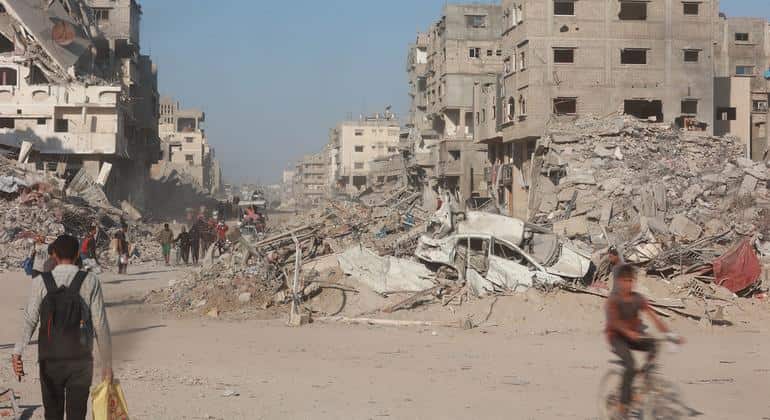
Palestinian technocrats met with advisors from Donald Trump's 'Board of Peace' in Cyprus for discussions centered on Gaza's reconstruction, security, and governance. These meetings, described as 'highly productive' by a Palestinian committee, also involved the Tony Blair Institute. The primary objectives were to address the ongoing humanitarian crisis, relieve civilian suffering, and establish transparency for international donors contributing to Gaza's rebuilding efforts.
Separately, Lebanese President Joseph Aoun is defending a recently signed framework agreement with Israel. He asserts that the deal prioritizes diplomacy over conflict and does not compromise Lebanese sovereignty. This U.S.-brokered agreement seeks to establish lasting peace and security. However, it has drawn criticism from Hezbollah and raised concerns among residents displaced by the conflict.
The discussions in Cyprus highlight a push for a structured approach to post-conflict Gaza, focusing on the practicalities of rebuilding and establishing stable governance. The involvement of various international and Palestinian entities underscores the complexity of the situation and the multi-faceted efforts required to address the humanitarian and security challenges in the region. The Lebanese situation illustrates the delicate balance of diplomatic efforts in the broader Middle East, where agreements aimed at peace face significant internal and external pressures.