HomeEverything
Equities & FundsCrypto & Digital AssetsAI & TechnologyBusiness & CorporateUS Politics & PolicyGeopolitics & Global RiskMacro, Rates & FXCommodities & EnergyEuropean Politics & MarketsAsia-PacificReal Estate & Property
← All Stories

Lebanon President Defends Israel Framework Deal Amid Protests

Created at 1 Jul · 7:35 PM1 source↑ Market-relevant
IN SHORT

Lebanese President Joseph Aoun defended a recently signed framework agreement with Israel, emphasizing diplomacy over war and rejecting claims it undermines sovereignty. The deal, brokered by the U.S., aims for lasting peace and security, but faces criticism from Hezbollah and concerns over displaced residents.

✉Newsletter

PiQ Daily

Pick your topics. Get only what matters, on your cadence.

Key Numbers

14-pointframework agreement
61,000+housing units destroyed or damaged
134,800displaced people remain in shelters

Who's Involved

Joseph Aoun
Lebanese President defending the framework agreement with Israel
Marco Rubio
US Secretary of State who stated the agreement will begin to put in place a framework for lasting peace and security
Hezbollah
Iranian-backed group protesting the agreement and not party to it
Benjamin Netanyahu
Israeli Prime Minister reiterating forces will remain until Hezbollah disarms
Lebanon President Defends Israel Framework Deal Amid Protests

↳ Why This Matters

The framework agreement represents a significant diplomatic effort to de-escalate tensions between Lebanon and Israel, but its success hinges on overcoming internal Lebanese opposition and addressing the ongoing conflict and displacement in southern Lebanon.

Key facts

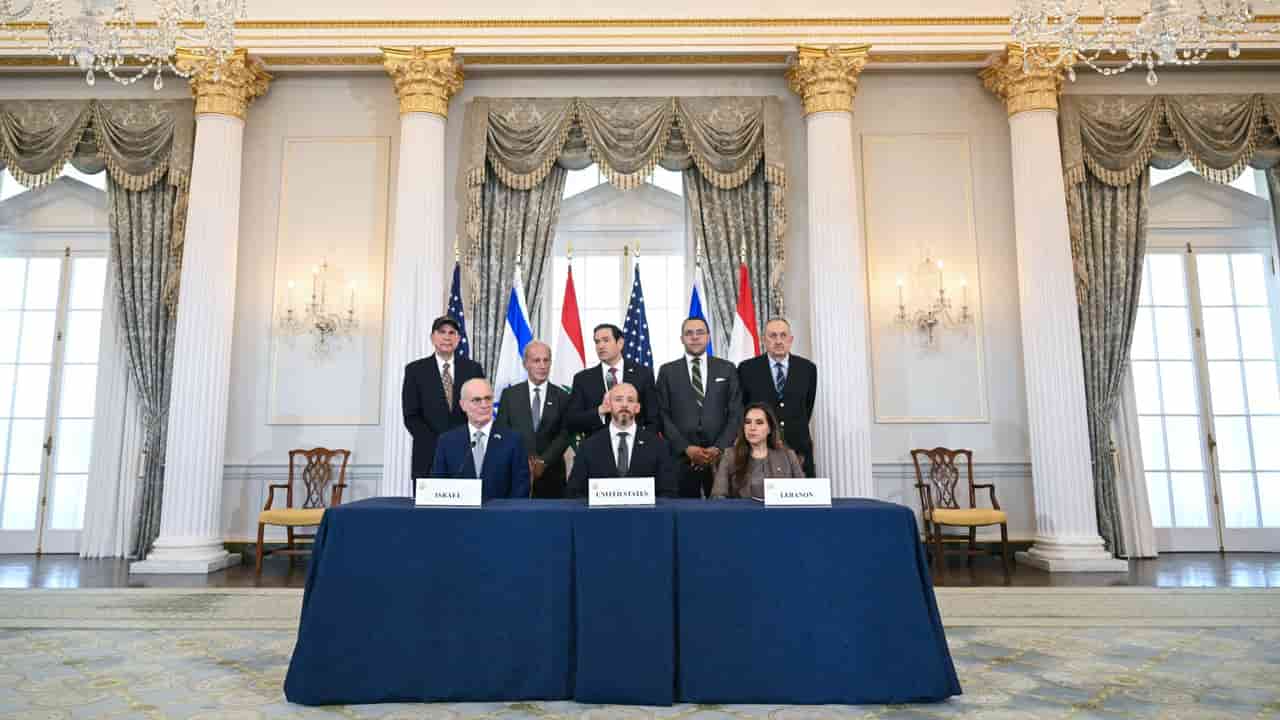
  • Lebanon and Israel signed a US-brokered framework agreement in Washington.
  • The agreement aims to establish a framework for lasting peace and security.
  • Hezbollah is not a party to the agreement and has protested it.
  • Lebanese President Joseph Aoun defended the deal, prioritizing negotiations over war.
  • The framework requires the Lebanese Armed Forces to restore sovereign authority pending disarmament of non-state groups.
  • A significant number of displaced residents remain unable to return to southern Lebanon due to damaged housing and security concerns.

Lebanese President Joseph Aoun has defended a recently signed framework agreement with Israel, emphasizing diplomacy as the only viable alternative to war and rejecting criticism that the deal undermines the country's sovereignty. The agreement, brokered by the U.S. and signed in Washington, aims to establish a framework for lasting peace and security between the two nations.

Despite the signing, Hezbollah supporters have protested the agreement, arguing that it does not make the withdrawal of Israeli troops from southern Lebanon contingent on the disarmament of Hezbollah. President Aoun warned against discord and discouraged public demonstrations, stating that Lebanon's dispute is with Israel as a sovereign state and that the framework does not relinquish legal, political, or field principles.

The 14-point framework includes affirmations of each state's right to live in peace and security, and a pledge to work towards the release of detainees and return of remains. It also states that the Lebanese Armed Forces will restore effective sovereign authority over all Lebanese territory, pending the verified disarmament of non-state armed groups. Lebanon has requested support from international and particularly Arab partners, under the leadership of the U.S., for implementation, and a U.S.-supported military coordination group will be established.

However, a report highlighted that the return of displaced residents to southern Lebanon remains significantly hampered. Over 61,000 housing units have been destroyed or damaged, leaving large parts of the region uninhabitable, with approximately 134,800 people still in shelters. The fear of renewed fighting and the lack of a lasting political settlement, sufficient reconstruction funding, and effective security guarantees are major obstacles to sustainable returns.

Israeli Prime Minister Benjamin Netanyahu has reiterated that Israeli forces will remain in southern Lebanon until Hezbollah disarms, underscoring the ongoing tensions.

Frequently asked questions

It is a 14-point agreement brokered by the U.S. that aims to establish a framework for lasting peace and security, affirming each state's right to live in peace and security, and outlining steps for the Lebanese Armed Forces to restore sovereign authority pending disarmament of non-state groups.

Hezbollah supporters are protesting the agreement, arguing it does not make Israeli troop withdrawal contingent on Hezbollah's disarmament.

Over 61,000 housing units have been destroyed or damaged, and the fear of renewed fighting remains a major obstacle, alongside a lack of a lasting political settlement and sufficient reconstruction funding.

What Happens Next

01Implementation of the framework agreement will be supported by a US-led military coordination group.
02Further negotiations are expected to address the disarmament of non-state armed groups.
03Efforts will continue to facilitate the return of displaced residents to southern Lebanon.

Get the newsletter.

Pick the topics you actually care about. We'll email when there's news worth your time, on the cadence you choose. Cancel any time from your account.

Cadence

How It Developed

Lebanon and Israel signed a framework agreement in Washington brokered by the US.
US Secretary of State Marco Rubio stated the agreement would establish a framework for lasting peace and security.
Limited fighting between Israeli forces and Hezbollah continued despite an existing ceasefire.
Hezbollah is not a party to the agreement and its withdrawal from southern Lebanon is unclear.
The framework agreement includes affirmations of each state's right to live in peace and security.
Both nations pledged to work towards the release of detainees and return of remains.
The agreement states the Lebanese Armed Forces will restore sovereign authority pending disarmament of non-state armed groups.
Lebanon requested support from international and Arab partners, led by the US, for implementation.

Sources

T1
Lebanon’s president defends Lebanon-Israel framework agreementMiddle East Eye
T2
Israel and Lebanon reach framework agreement - BBCbbc.com
T2
Lebanon's Aoun defends US-backed framework, says it preserves state ...arabnews.com
T2
Lebanese president defends framework agreement with Israelthestar.com.my

Related Stories

Israel to maintain indefinite troop presence in Gaza, Lebanon, Syria
1 Jul · 3:45 PM
Iran warns Israel against threatening its leader
1 Jul · 11:45 AM
Gaza interim administration discusses reconstruction, security with 'Board of Peace' advisors
1 Jul · 12:30 AM
Israeli settler group calls for seizing crops in occupied Syrian land
1 Jul · 11:10 AM
US and Gulf States Sanction Entities Linked to Hezbollah's Finances
30 Jun · 10:55 PM