President Volodymyr Zelensky proposed replacing a toppled Lenin statue in Kyiv with a monument to Cossack leader Ivan Mazepa, framing it as a move to restore historical justice and reject Russian narratives of betrayal.

The proposal to erect a monument to Ivan Mazepa signifies Ukraine's ongoing efforts to de-Russify its public spaces and reclaim its historical narrative, particularly in the context of the ongoing conflict with Russia. It highlights the deep historical roots of Ukrainian national identity and its struggle for independence.
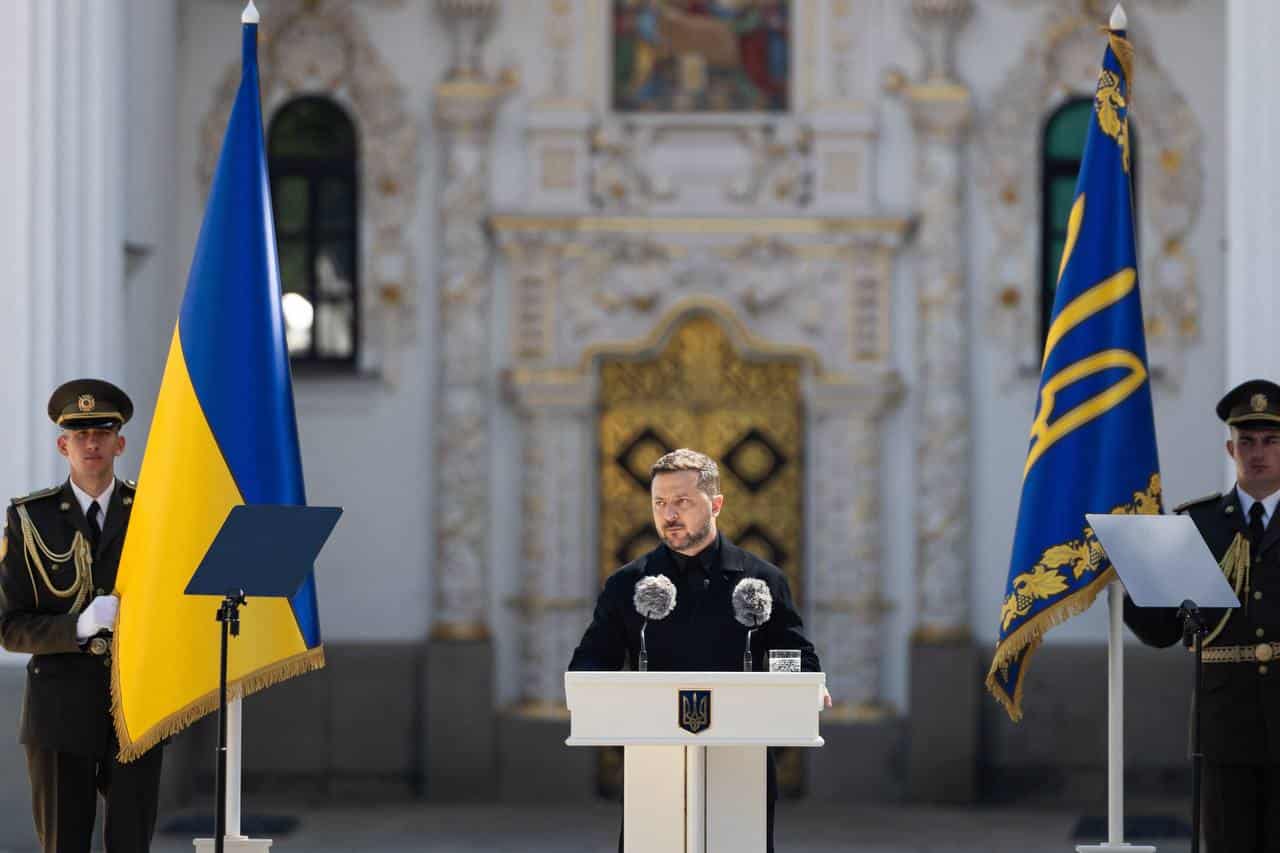
President Volodymyr Zelensky proposed on June 28, 2026, to erect a monument to the Cossack leader Ivan Mazepa in Kyiv, specifically at the site where a statue of Vladimir Lenin was removed during the EuroMaidan Revolution. Zelensky framed this initiative as a crucial step towards rectifying historical injustices and rejecting centuries-old Russian narratives that depicted Mazepa as a traitor.
Speaking during Constitution Day commemorations, Zelensky stated, "I am certain that where Lenin fell, Mazepa will stand firm." He presented a bust of Mazepa at the Kyiv Pechersk Lavra, a site significant to Mazepa, who financed numerous constructions and restorations within the monastery, contributing to its Ukrainian Baroque architecture.
Mazepa, who led the Cossacks in the late 17th and early 18th centuries, is increasingly viewed in Ukraine as a symbol of national independence. His historical alliance with Russian Tsar Peter I shifted to siding with Sweden during the Great Northern War in an effort to secure the Cossack Hetmanate's freedom from Russian influence. For centuries, Russian and Soviet historical accounts have portrayed him negatively, a narrative Zelensky asserted has now failed.
This proposal comes shortly after a Russian attack on June 15, 2026, which damaged the 975-year-old Kyiv Pechersk Lavra, causing a fire on the roof of the Dormition Cathedral. Ukraine has been actively removing Russian imperial and Soviet-era monuments since the full-scale invasion began, as part of a broader effort to dismantle symbols of Russian domination and reassert Ukrainian historical figures in public spaces.