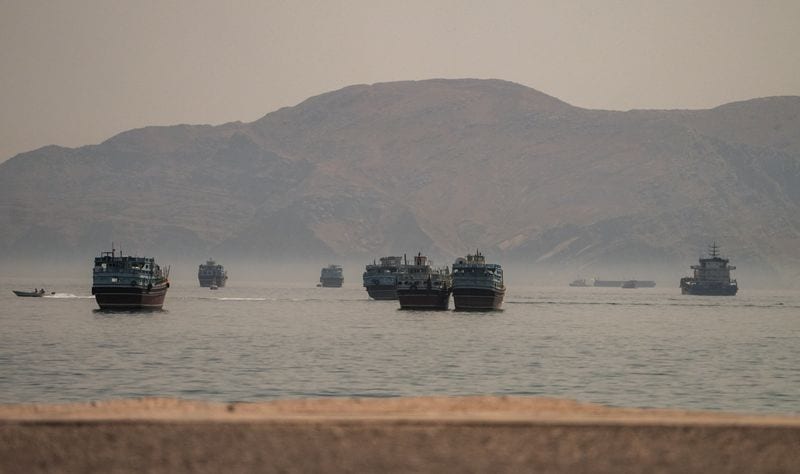
The U.S. military announced it had struck multiple targets in Iran, including surveillance infrastructure, communication systems, air defense sites, drone storage facilities, and minelayer capabilities, following an Iranian drone attack on the oil tanker Kiku in the Strait of Hormuz. U.S. Central Command stated that Iran had been given an opportunity to honor a ceasefire agreement but chose not to. The tanker, laden with over two million barrels of crude oil, sustained damage to its bridge, though all crew members were reported safe. Iran's state broadcaster reported explosions in Sirik, southern Iran, early Sunday local time. This escalation follows a similar exchange days prior, where an Iranian drone struck a merchant vessel off Oman, prompting U.S. retaliation. The incidents strain an uneasy ceasefire that followed a four-month-old conflict.
Iran's foreign ministry stated that the cargo ship was attacked because it was using an unauthorized route and that the retaliatory strikes qualified as a ceasefire violation by the US. Tehran also claimed it carried out more strikes against targets linked to American forces, blaming the "treaty-breaking US regime" for the situation. The US and Iran had agreed on June 17 to end hostilities under a 14-point memorandum of understanding, which included provisions for the safe passage of commercial vessels for 60 days. The Strait of Hormuz is a critical waterway for oil and gas shipments. In recent days, Trump had stated Iran had informed the US there would be "no tolls, no insurance costs and no other charges of any kind being sought or received" for vessels transiting the strait.