Key facts
- US forces struck Iranian coastal radar sites on Saturday.
US forces struck Iranian coastal radar sites on Saturday after shooting down four drones launched toward the Strait of Hormuz. Iran's Revolutionary Guard Corps claimed retaliation strikes on US bases and tankers, but US military reported intercepting most missiles. The incident occurred amidst ongoing negotiations between the US and Iran.
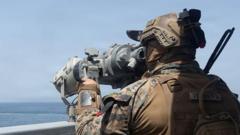
U.S. forces struck Iranian coastal radar sites on Saturday after shooting down four drones launched by Iran toward the Strait of Hormuz, according to U.S. Central Command. The U.S. military believes the drones were targeting regional maritime traffic. The strikes hit surveillance sites in Goruk and Qeshm Island, both located on the Strait of Hormuz. Iran's Revolutionary Guard Corps claimed to have targeted U.S. bases in the region with missiles in retaliation for U.S. strikes and fired on four tankers attempting to cross the strait without its permission. Kuwaiti air defences intercepted missile and drone attacks of undisclosed origin, while Bahrain experienced sirens and shelter advisories. The U.S. military stated seven missiles were intercepted or failed to reach their targets. This incident occurs amidst indirect negotiations between the U.S. and Iran for an interim deal to halt a three-month-old war, with Iran seeking access to oil revenue and sanctions waivers. U.S. President Donald Trump commented on Iran's remaining missile and drone capabilities, estimating about 21%-22% of its missiles are left. In a parallel conflict, Iran-aligned armed group Hezbollah has engaged in attacks on Israeli troops in southern Lebanon. The conflict has driven up oil prices and disrupted supply chains, pushing millions closer to hunger due to rising fuel and transport costs.
This escalation in the Strait of Hormuz, a critical global oil chokepoint, risks further disrupting maritime traffic and impacting global energy prices. It also complicates ongoing diplomatic efforts between the US and Iran.