Key facts
- A maritime body overseen by the US Navy is expanding a route through the Strait of Hormuz near Oman to facilitate traffic.
- Iran launched a drone attack targeting Bahrain, which hosts the US Navy's 5th Fleet.
- A ship in the Strait of Hormuz was struck, with suspicion falling on Iran.
- The US conducted overnight airstrikes on Iranian missile and drone sites in response to prior attacks.
- The US and Iran are in negotiations for a final accord to end their conflict, with an interim deal in place.
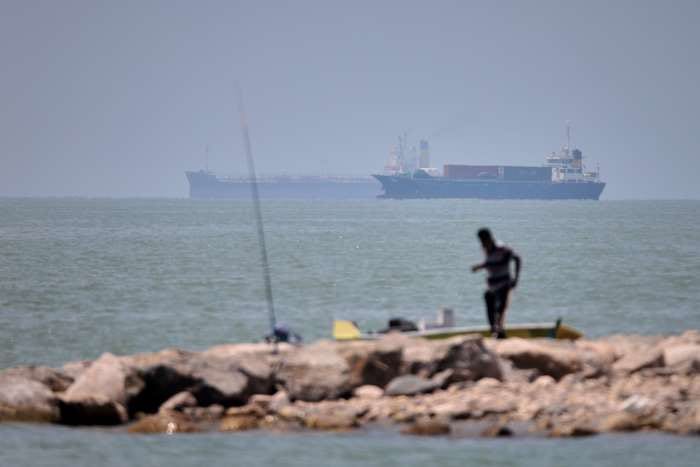
A maritime body overseen by the US Navy announced on Saturday that a route near Oman in the Strait of Hormuz is expanding to allow for both inbound and outbound traffic. This development occurs amidst escalating tensions between the US and Iran, including Iranian drone attacks on Bahrain and a ship strike within the strait, following US airstrikes on Iran.
Iran's paramilitary Revolutionary Guard claimed to have targeted US military locations after the overnight airstrikes, which were reportedly in response to an earlier Iranian drone attack on a ship. Bahrain's Foreign Ministry condemned the drone assault as a "flagrant threat to the security of citizens and residents," noting that the kingdom hosts the US Navy's 5th Fleet and recently hosted a meeting calling for an open strait.
The British military's United Kingdom Maritime Trade Operations center reported a tanker was attacked in the strait, though the crew was safe and no environmental damage occurred. Iran has insisted that ships must obey its orders and has warned of transit fees, a stance rejected by the US and Gulf Arab states who consider the strait an international waterway. US Vice President JD Vance warned that violence would be met with violence, as the US and Iran continue negotiations on an interim deal to end their conflict, including issues related to passage through the strait.