Key facts
- IAEA Director General Rafael Mariano Grossi stated inspectors will visit Iran's uranium enrichment sites.
- Grossi cited a signed US-Iran memorandum of understanding that explicitly states IAEA supervision of nuclear activities.
- Iran's Foreign Ministry spokesperson claimed inspectors would not examine sites struck by the US and Israel.
- The IAEA has been denied access to enrichment sites since Israel's 12-day war against Iran in June 2025.
- The US-Iran memorandum of understanding includes a commitment to lift sanctions tied to nuclear compliance, verifiable through inspections.
- Iran has reportedly closed the Strait of Hormuz again, citing ongoing fighting between Israel and Hezbollah.
International Atomic Energy Agency (IAEA) Director General Rafael Mariano Grossi has indicated that inspectors will be allowed to visit Iran's uranium enrichment sites, despite conflicting statements from both Washington and Tehran regarding the terms of a recent ceasefire deal. Grossi emphasized that a signed memorandum of understanding between the US and Iran leaves no room for ambiguity regarding IAEA supervision of nuclear activities.
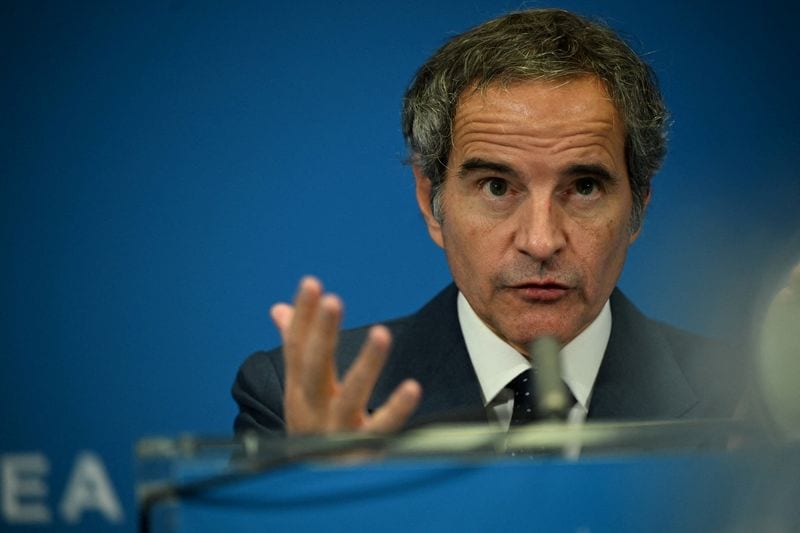
Speaking at a press conference in Fukushima, Japan, Grossi stated that while political statements are part of reality, the memorandum of understanding explicitly mandates IAEA supervision of nuclear material facilities. He confirmed that inspections "are going to happen," though the exact timing remains to be determined.
The deal, signed by US President Donald Trump and Iranian President Masoud Pezeshkian, commits to an "immediate and permanent termination of military operations" and establishes a 60-day window to resolve outstanding issues, primarily concerning Iran's nuclear program. However, access to enrichment sites has become a contentious point. Iran's Foreign Ministry spokesperson, Esmail Baghaei, contradicted earlier remarks by US Vice President JD Vance, stating that inspectors would not examine sites bombed by the US and Israel.
The IAEA has been denied access to these enrichment sites since Israel's 12-day war against Iran in June 2025. These sites are believed to hold enough highly enriched uranium for potential weapons construction. While Iran maintains its program is peaceful, non-proliferation experts worry about the potential relocation of stockpiles to undeclared locations. The IAEA has observed movement around a tunnel complex at Isfahan, where uranium enriched to 20% and 60% purity is believed to be stored, underscoring the urgency for access.
Grossi has previously stressed the necessity of IAEA inspections for any meaningful nuclear settlement, stating that without them, an agreement would be an "illusion." The memorandum of understanding includes Iran's reaffirmation of its commitment not to produce nuclear weapons and the US commitment to lifting sanctions and supporting a reconstruction fund of at least $300 billion, with sanctions relief contingent on nuclear compliance verified by inspections.
The fragile ceasefire is already facing challenges, with Iran reportedly closing the Strait of Hormuz again, citing ongoing fighting between Israel and Hezbollah in Lebanon as a violation of its agreement with the United States. The US military has denied this claim, and Hezbollah has rejected ceasefire arrangements, demanding a full Israeli withdrawal from Lebanon. Iran has indicated that a lasting settlement must include Lebanon, complicating both the nuclear track and the broader peace process.