Key facts
- Ukraine is employing a sustained campaign of drone strikes to isolate Crimea and disrupt Russian logistics.
- The strikes have led to fuel shortages, power outages, and a significant reduction in military cargo traffic.
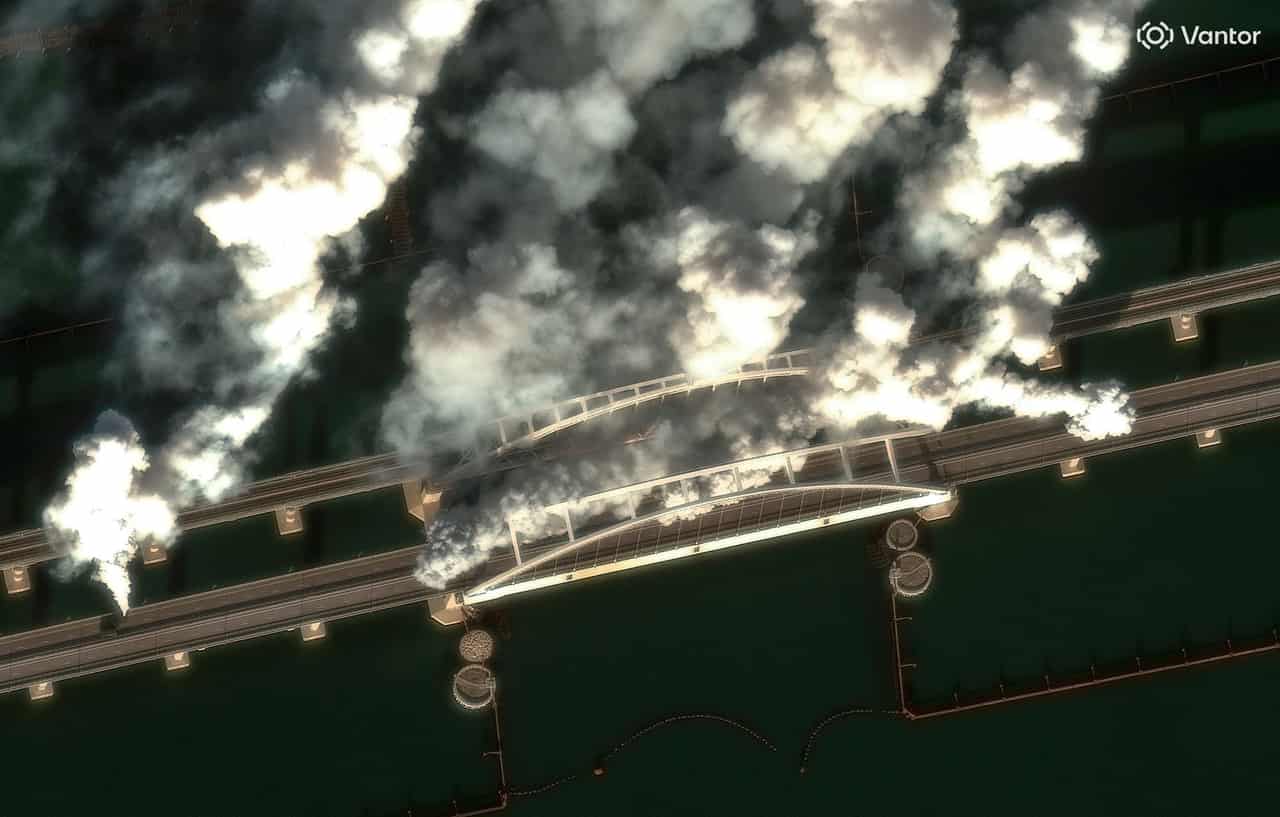
- Key infrastructure targeted includes bridges, ferries, fuel depots, and electrical substations.
- Russian authorities have implemented fuel sale bans and restrictions on business operating hours.
- Ukraine's strategy leverages new, inexpensive, domestically produced mid-range drones and loitering munitions.
Ukraine is intensifying its campaign to isolate the occupied Crimean peninsula by systematically targeting Russian logistics and critical infrastructure with drone strikes. This strategy, described by Ukrainian Defense Minister Mykhailo Fedorov as "logistics are being cut off. Crimea is being isolated," aims to make the peninsula untenable for Russian forces.
The current offensive marks a shift from sporadic attacks on high-value military targets to a sustained effort to sever supply lines. Since April, Ukraine has been striking Russian traffic along the "Novorossiya highway," ferries across the Kerch Strait, bridges connecting Crimea to occupied Kherson Oblast, and fuel depots and electrical infrastructure within Crimea itself.
These strikes have already had a significant impact. Following an attack on the oil terminal in Kerch, Russian occupation authorities imposed a total ban on fuel sales to civilians, restricting sales to government agencies. In Sevastopol, authorities mandated early closures for businesses to "conserve fuel." Further compounding the disruption, drone attacks on the Simferopol Power Station and Sevastopol's main electric substation on June 24 left large parts of the peninsula without power.
Ukraine's efforts are facilitated by a new fleet of relatively inexpensive, domestically produced mid-range drones and loitering munitions. The degradation of Russian air defense systems, a focus of Ukrainian attacks since 2022, has paved the way for these logistics-focused strikes. Military cargo traffic on key routes has reportedly decreased by 71% in the preceding two weeks, despite Russia's attempts to implement convoy systems and anti-drone measures.
Experts believe Russia will struggle to counter Ukraine's swarm of small, inexpensive drones, with the cost of Ukrainian drones significantly lower than Russian air defense munitions. This suggests the Ukrainian campaign is highly sustainable, with sufficient capacity for sustained strikes.