Key facts
- The Ukraine Recovery Conference (URC 2026) in Gdansk, Poland, attracted a record 7,500 attendees.
- Over 160 agreements valued at more than $10 billion were signed.
- Key sectors for investment included energy, infrastructure, and defense tech.
- A new EU reconstruction fund was launched with an initial capital injection of 220 million euros.
- A record risk-sharing agreement of 825 million euros was signed between EBRD and Privatbank.
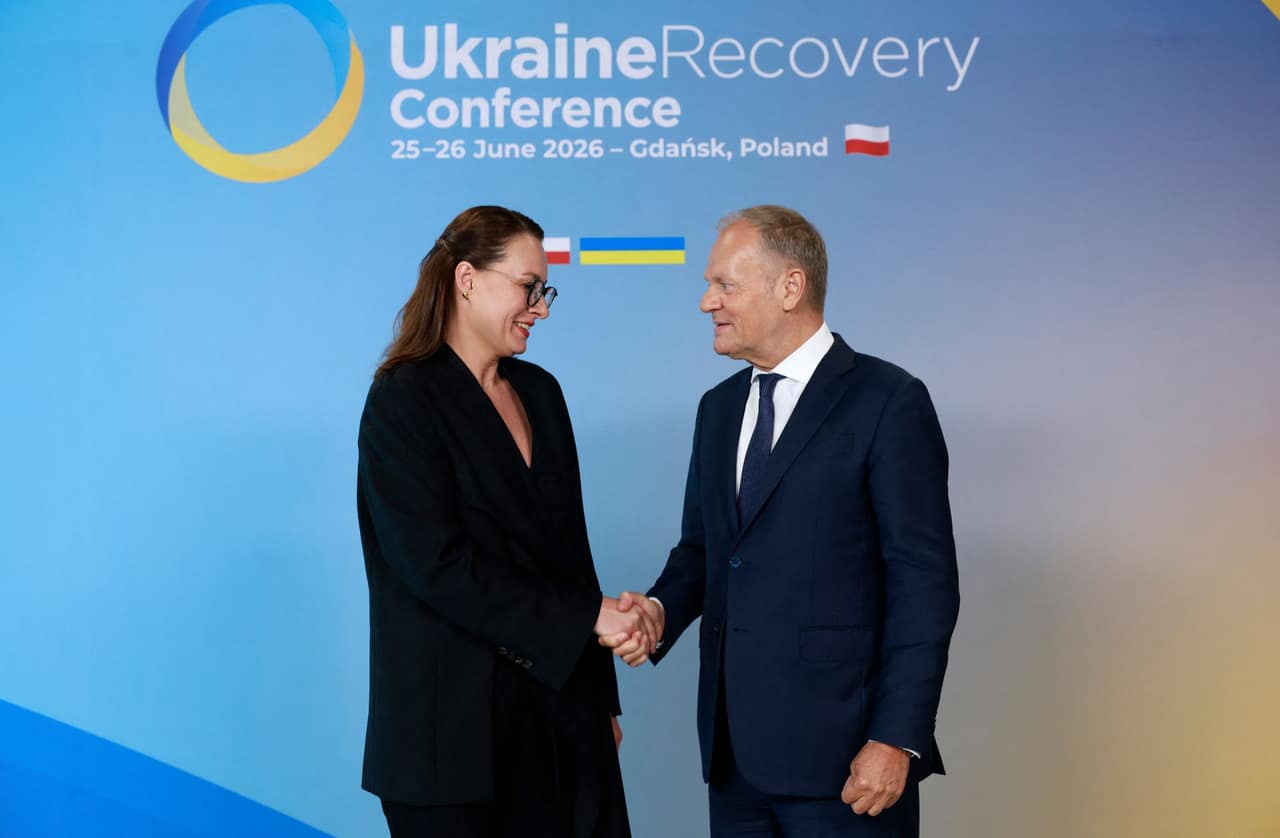
The Ukraine Recovery Conference (URC 2026) in Gdansk, Poland, saw a record turnout of 7,500 participants, including officials, business leaders, and entrepreneurs, focused on the economic revival of Ukraine. Despite a diplomatic spat between Ukrainian President Volodymyr Zelensky and Polish President Karol Nawrocki, which led to Zelensky's absence, the event proceeded with a strong emphasis on business and investment.
Hundreds of Polish businesses attended, and numerous agreements were signed, highlighting a collaborative spirit. Wojciech Kostrzewski, president of the Polish Business Roundtable, noted that the political tension was not visible at the conference, with all parties focused on mobilizing private capital and fostering business partnerships. Several key agreements were reached, including a notable deal in the defense tech sector between Ukrainian startup Skyfall and Polish state development bank Bank Gospodarstwa Krajowego for EU financing access. In the energy sector, Ukraine's Kovel Porto Industrial Park partnered with Polish energy company Hanplast for a solar power plant and energy storage system.
Overall, the conference facilitated over 160 agreements valued at more than $10 billion. Prime Minister Yuliia Svyrydenko announced a $3.4 billion conditional agreement with the World Bank and a 3.2 billion euro tranche from a larger loan. The discussions and deals were dominated by three key sectors: energy, infrastructure, and defense tech, Ukraine's fastest-growing industry. The Ukrainian government also presented its 18 'Economy of the Future' flagship investment projects.
The URC has evolved into a more pragmatic event, according to Gennadiy Chyzhykov, president of the Ukrainian Chamber of Commerce and Industry, serving as a crucial meeting point for businesses, European institutions, and financial organizations. The conference also addressed the critical issue of war-risk insurance, with international financial institutions announcing de-risking packages. The European Bank for Reconstruction and Development (EBRD) and Ukrainian state-owned bank Privatbank signed a record 825 million euro risk-sharing agreement. Ukraine's economy minister, Oleksii Sobolev, expressed optimism that the war-risk insurance challenge is largely resolved, citing a new de-risking framework between the U.S. International Development Finance Corporation (DFC) and MIGA, the World Bank's insurance arm.
Notable deals included nearly $2 billion in energy sector agreements, with state-run Naftogaz securing $300 million from the U.S. Export-Import Bank for equipment. The dual-use sector attracted 343 million euros in agreements from EU partners, supporting companies that produce goods for both military and civilian use. Infrastructure projects garnered a 470-million-euro package from the European Investment Bank for healthcare facilities, affordable housing, and business support. New investment frameworks, including a $5 billion public-private partnership portfolio and the EU's reconstruction flagship fund with an initial 220 million euro capital injection, were also introduced.