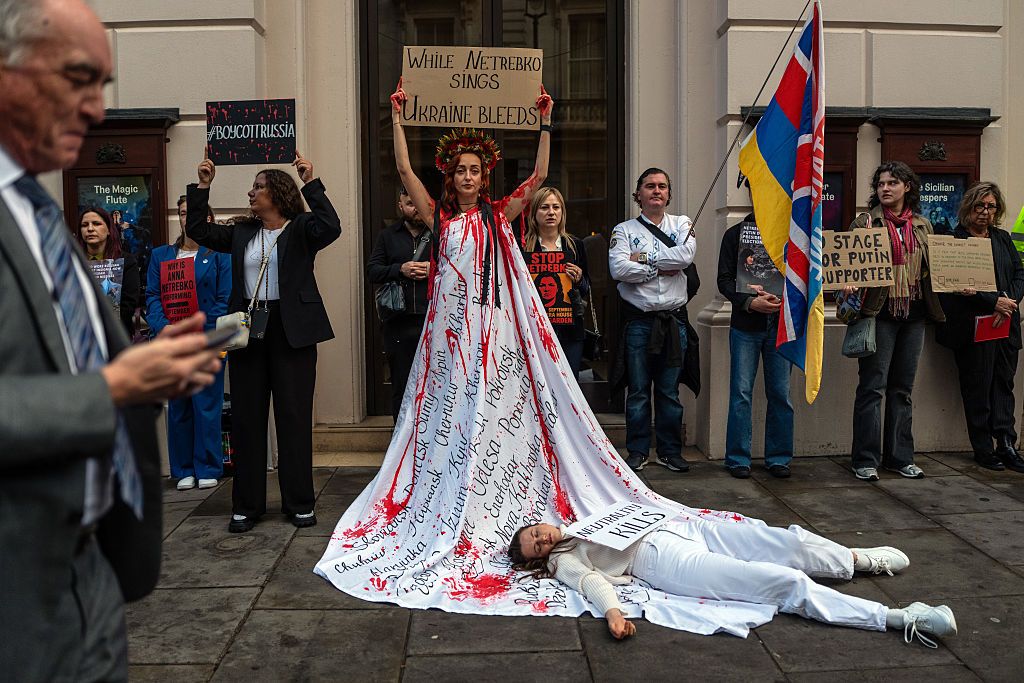
Key facts
- Ukraine and Moldova are taking a significant step toward European Union membership on June 15.
- Russian opera star Anna Netrebko is scheduled to perform in Luxembourg on the same day.
- Ukraine's embassy has voiced concerns about Netrebko's performance due to her past associations with the Russian government.
- The Philharmonie Luxembourg defended the decision, stating it is a 'place of dialogue'.
- EU foreign ministers are considering measures to increase pressure on Russia in cultural and sporting arenas.
As Ukraine and Moldova advance their European Union accession process on June 15, Russian opera star Anna Netrebko is scheduled to perform in Luxembourg, a juxtaposition that highlights ongoing debates about cultural engagement with Russia.
Ukraine's embassy to Belgium and Luxembourg publicly expressed concern over Netrebko's planned concert, citing her long-standing association with the Russian political and cultural establishment and her past support for President Vladimir Putin. The embassy stated that continuing to collaborate with Russian artists while the war persists is "deeply painful" for Ukrainians and called for a review of the event's circumstances.
The Philharmonie Luxembourg, however, defended its decision, describing itself as a "place of dialogue" and asserting that Netrebko's selection does not constitute a political statement. The venue also noted that Netrebko had spoken out against the invasion in 2022, though she did not explicitly condemn Putin and argued against demanding artists denounce their homeland.
Concurrently, EU foreign ministers are set to discuss measures to increase pressure on Russia in the cultural sphere, including its participation in international events. A proposal from Lithuania suggests EU countries should more actively discourage Russian participation in major cultural and sports events, potentially through national measures like visa cancellations or denial of overflight permits.
Following these discussions, Ukraine and Moldova will attend an intergovernmental conference, marking a formal step in Ukraine's EU membership bid. Netrebko's performance, meanwhile, is advertised as drawing from German, French, and Russian musical traditions.
Luxembourg is not alone in hosting Netrebko; she is slated to perform in other European cities. The opera singer has attempted to distance herself from past pro-Kremlin statements, including a 2009 comment about being "unambiguously for Russia" and a 2014 donation to an opera house in Russian-occupied Donetsk, where she was photographed with a pro-Russian politician holding a flag of Russian occupation authorities.
The broader trend of Russian artists with pro-Kremlin ties returning to Western stages is evident elsewhere, such as Russia's participation in the Venice Art Biennale and the allowance of Russian athletes to compete under their national flag in some international sports organizations. The European Commission has urged cultural organizations to align with democratic values and reject the instrumentalization of culture by aggressor states, while acknowledging that cultural decisions remain national matters.