All NewsEducationTV
Equities & FundsCrypto & Digital AssetsAI & TechnologyBusiness & CorporateUS Politics & PolicyGeopolitics & Global RiskMacro, Rates & FXCommodities & EnergyEuropean Politics & MarketsAsia-PacificReal Estate & Property
Story archiveAll categories
← All Stories

Turkey urges Iran to halt attacks on Kurdish groups

Created at 31 Jul · 1:16 PM1 source↑ Market-relevant
IN SHORT

Turkey has conveyed a message to Iran urging it to cease attacks on Kurdish groups in the region. Ankara is concerned that further Iranian action could push these groups towards Israel and undermine Turkey's own peace talks with the Kurdistan Workers' Party (PKK).

✉Newsletter

PiQ Daily

Pick your topics. Get only what matters, on your cadence.

Key Numbers

six monthstimeframe for former PKK militants to return to Turkey

Who's Involved

Cevdet Yilmaz
Turkish Vice President who visited Tehran
Masoud Pezeshkian
Iranian President who hosted Yilmaz
Benjamin Netanyahu
Israeli Prime Minister whose plan was discussed
Donald Trump
US President who indirectly suggested Turkey's considerations
Marco Rubio
US Secretary of State quoted on Netanyahu's plan
Mehmet Alaca
Turkish expert on Iraq
KDP
Ruling party in Iraq's Kurdistan region
PDKI
Democratic Party of Iranian Kurdistan, reportedly set to lead proposed effort
PUK
Patriotic Union of Kurdistan in Iraq
Turkey urges Iran to halt attacks on Kurdish groups

↳ Why This Matters

The geopolitical maneuvering between Turkey, Iran, and Israel over Kurdish groups in the region has significant implications for regional stability, Turkey's internal peace process with the PKK, and the broader Iran-Israel rivalry.

Key facts

  • Turkey has urged Iran to halt attacks on Kurdish groups in the region.
  • Ankara fears further Iranian action could push Kurdish groups towards Israel.
  • Turkey is concerned about the impact on its peace talks with the PKK.
  • A US-Israeli plan for an armed Kurdish insurrection in Iran was reportedly discussed.
  • Senior Turkish officials visited Tehran to convey these messages.

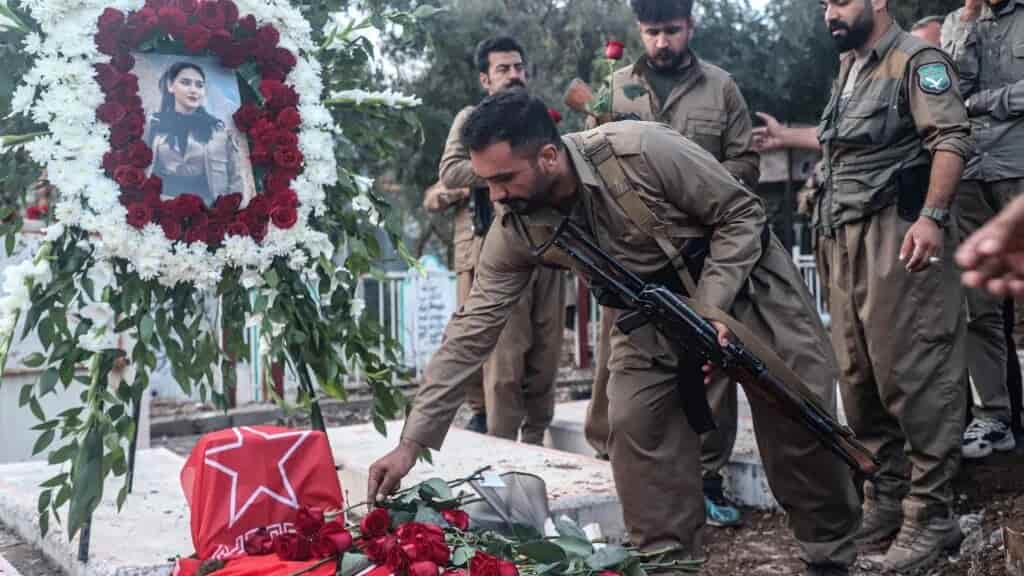
Turkey has conveyed a message to Iran urging it to cease attacks on Kurdish groups in the region, expressing concern that further Iranian action could push these groups towards Israel and undermine Turkey's own peace talks with the Kurdistan Workers' Party (PKK).

During a visit to Tehran, Turkish Vice President Cevdet Yilmaz met with Iranian President Masoud Pezeshkian. Pezeshkian reportedly thanked Turkey for its role in thwarting an Israeli plan to incite an armed Kurdish insurrection in western Iran. Senior Turkish officials had previously communicated to their US counterparts that this Israeli plan was unrealistic and posed a threat to Turkey's national security.

Ankara's current concern stems from the potential for increased Iranian military pressure on Kurdish groups in Iran and Iraq to inadvertently push them towards aligning with Israel. This development could jeopardize Turkey's ongoing peace process with the PKK, a group present in Iraq. The Turkish government is preparing legislation to allow non-violent former PKK militants to reintegrate into society within six months, a process that requires regional stability.

Sources familiar with the matter indicated that a US-Israeli plan also involved the Peshmerga, the military forces of Iraq's semi-autonomous Kurdistan region, joining an uprising, as Washington reportedly distrusted the capabilities of the PDKI, the Iranian Kurdish group expected to lead the effort. However, Kurdish leaders were reportedly hesitant to trust the US, citing past experiences in Syria.

Mehmet Alaca, a Turkish expert on Iraq, stated that increased Iranian military pressure could push Iranian Kurdish opposition groups like the PDKI, Komala, and PAK closer to the West, particularly Israel. He warned that this could transform Iraqi Kurdistan into a new front in the Iran-Israel rivalry, destabilize the balance between Iraq's KDP and PUK, and provide Tehran with justification for expanding its influence. Iran has been bombarding PDKI camps in northern Iraq since late February.

Alaca also noted that Turkey has been working to mitigate the impact of Iranian influence in northern Iraq by engaging with the PUK. He emphasized that for Turkey, the most critical aspect is its peace process and the new security architecture it aims to establish post-PKK. The extension of the Iran-Israel rivalry into Iraqi Kurdistan and the resurgence of the Kurdish issue in regional power struggles would directly threaten Turkey's long-term security calculations.

Frequently asked questions

Turkey is concerned that Iran's attacks could push Kurdish groups towards Israel and undermine Turkey's own peace process with the PKK.

The plan reportedly involved fomenting an armed insurrection by Kurdish groups in western Iran, with potential involvement from the Peshmerga forces.

Turkey is courting the Patriotic Union of Kurdistan (PUK) to minimize the destabilizing impact of Iranian influence in northern Iraq.

The Turkish government plans to introduce legislation that would allow non-violent former PKK militants to return to Turkey within six months.

What Happens Next

01The Turkish government plans to introduce draft legislation in parliament regarding former PKK militants.
02Further Iranian military actions against Kurdish groups are anticipated.

Get the newsletter.

Pick the topics you actually care about. We'll email when there's news worth your time, on the cadence you choose. Cancel any time from your account.

Cadence

How It Developed

Turkey's Vice President Cevdet Yilmaz visited Tehran and met with Iranian President Masoud Pezeshkian.
Pezeshkian thanked Turkey for helping to prevent an Israeli plan for an armed Kurdish insurrection in Iran.
Senior Turkish officials conveyed a message to Tehran to stop attacking Kurdish groups.
Ankara is concerned that further Iranian action against Kurdish groups could push them towards Israel.
Turkey is invested in peace talks with the Kurdistan Workers' Party (PKK).
The Turkish government plans to introduce legislation for former PKK militants to return to Turkey.
Iranian Kurdish opposition groups could be pushed closer to the West, particularly Israel, by increased Iranian military pressure.
Iran has bombarded PDKI camps in northern Iraq since late February.

Sources

T1
Turkey urges Iran to halt attacks on Kurdish groupsMiddle East Eye

Related Stories

Iran's Araqchi warns Bulgaria, Cyprus over US military base use
30 Jul · 2:31 PM
Iraq denies knowledge of US-Saudi strikes on its territory
30 Jul · 2:51 PM
Drone strikes reported on Iraq's Erbil, Sulaymaniyah, and Dohuk
31 Jul · 3:20 AM
Iran claims drone strikes on US facilities in Kuwait and Jordan
31 Jul · 4:06 AM
Iran-US tensions rise as Hamas disarmament deal faces hurdles
31 Jul · 6:16 AM