Key facts
- South Korea has established a task force to identify country-specific cooperation needs in the Middle East.
- The task force aims to support South Korean companies' participation in post-conflict reconstruction efforts.
- Foreign Minister Cho Hyun stated South Korea is perceived as a reliable partner by Middle Eastern nations.
- The U.S. and Iran signed an MOU to extend their ceasefire for 60 days, paving the way for further negotiations.
- South Korea is in discussions with the U.S. regarding nuclear cooperation, including potential nuclear submarine capabilities and uranium enrichment rights.
- A senior ministry official addressed speculation about China's stance on North Korea's nuclear program.
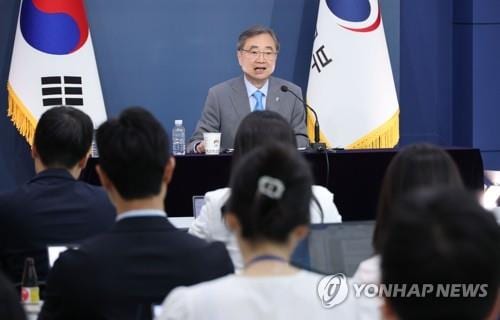
The South Korean government has established a dedicated task force to identify country-specific cooperation needs in the Middle East, aiming to facilitate the participation of South Korean companies in post-conflict reconstruction efforts. Foreign Minister Cho Hyun emphasized that South Korea's responses to recent crises have reinforced its image as a reliable partner in the region.
This initiative comes in the wake of a memorandum of understanding signed between the United States and Iran to extend their ceasefire for 60 days, during which negotiations will occur to address nuclear and other issues toward a final peace deal. Cho pledged cooperation with the U.S. and the international community to ensure this agreement fosters lasting peace and stability.
Regarding maritime security, Cho stated that South Korea is closely monitoring conditions and the safety of Korean ships and crew members in the Strait of Hormuz, coordinating with Tehran for a potential phone call with Iranian Foreign Minister Abbas Araghchi. Two South Korean-operated vessels have already transited the waterway since the agreement, reducing the number of related ships in the area.
In parallel, a senior South Korean ministry official indicated that Seoul and Washington are nearing an agreement on key nuclear cooperation issues this year, including South Korea's pursuit of nuclear submarines and capabilities for uranium enrichment and spent fuel reprocessing. The official noted that the substance of the agreement is more critical than its form and expressed a clear goal of reaching a swift resolution.
The official also addressed speculation surrounding China's role concerning North Korea's nuclear program, dismissing claims that Beijing is condoning it. The remarks followed Chinese President Xi Jinping's recent visit to Pyongyang, where the denuclearization of the Korean Peninsula was not publicly mentioned. The official suggested China's stance should be viewed within the broader context of its relationship with North Korea and the growing ties between Pyongyang and Moscow, warning against a deepening alignment among North Korea, China, and Russia and stressing the importance of trilateral cooperation among South Korea, China, and Japan.
On North Korea's denuclearization, the official confirmed that Seoul and Washington remain largely aligned on President Lee Jae Myung's phased approach proposal to U.S. President Donald Trump, with ongoing coordination through working-level consultations.