Key facts
- Anti-migrant protests in South Africa are driven by frustrations over unemployment, crime, and weak economic growth.
- Thousands of African migrants have left South Africa due to fears of violence, potentially causing labor shortages.
- Migrants are crucial in sectors such as farming, construction, hospitality, retail, and the informal economy.
- Foreign-owned spaza shops are a significant part of South Africa's informal economy.
- Remittance outflows from South Africa more than tripled between 2016 and 2024.
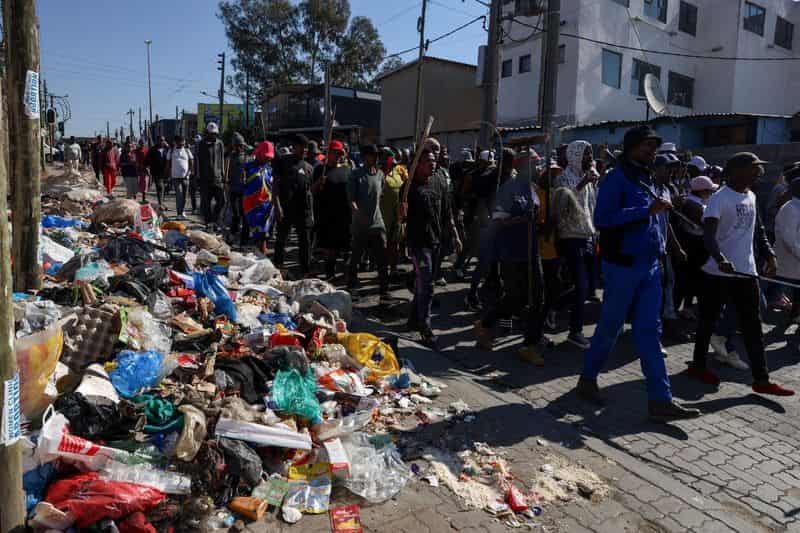
Anti-migrant protests in South Africa, fueled by high unemployment, crime, and years of weak economic growth, are raising concerns about potential economic repercussions. Economists warn that the departure of thousands of foreign workers could negatively impact businesses and labor markets, contrary to the aims of the anti-migrant campaigners.
The surge in anti-migrant sentiment culminated in a nationwide march on June 30, leading to fears of violence and prompting thousands of African migrants to leave the country. This exodus could create labor shortages in sectors that have historically relied on foreign labor, including construction, farming, delivery services, and retail, while also undermining the informal economy.
Mpho Lenoke, a lecturer at North-West University, noted that migrants often fill vacancies in sectors difficult to staff, such as farming, construction, hospitality, retail, and the informal sector. International experience suggests that restricting migrant labor can lead to unintended economic consequences. The protests have already disrupted parts of the retail sector, particularly foreign-owned spaza shops, which are integral to the informal economy.
Shoprite Group's grocery delivery platform, Sixty60, experienced disruptions, with fewer than a quarter of its drivers being South African. The World Bank has lowered its 2026 growth forecast for South Africa to 1.0%, with unemployment standing at nearly one-third in the first quarter. A study by the UN's International Labour Organization (ILO) indicated that increased immigrant participation in the workforce can correlate with rising employment opportunities for South African-born workers.
Susanna Deetlefs of ACLED highlighted that protests can disrupt economic activity through looting and business closures, leading to supply chain disruptions, job losses, and reduced access to goods and services. While investors have reacted calmly so far, they acknowledge the protests as a new risk factor. South Africa is a significant source of remittances for the region, with remittance outflows more than tripling between 2016 and 2024 to over 19 billion rand ($1.16 billion), primarily to neighboring countries like Zimbabwe, Lesotho, Malawi, and Mozambique.