Key facts
- Russia has received additional ballistic missiles from North Korea and is preparing for more troops, according to President Zelensky.
President Volodymyr Zelensky stated that Russia has received additional ballistic missiles from North Korea and is preparing for more troops, citing deepening military ties. He noted Russia's increasing reliance on Pyongyang due to Ukrainian long-range strikes, which he said threaten global security.
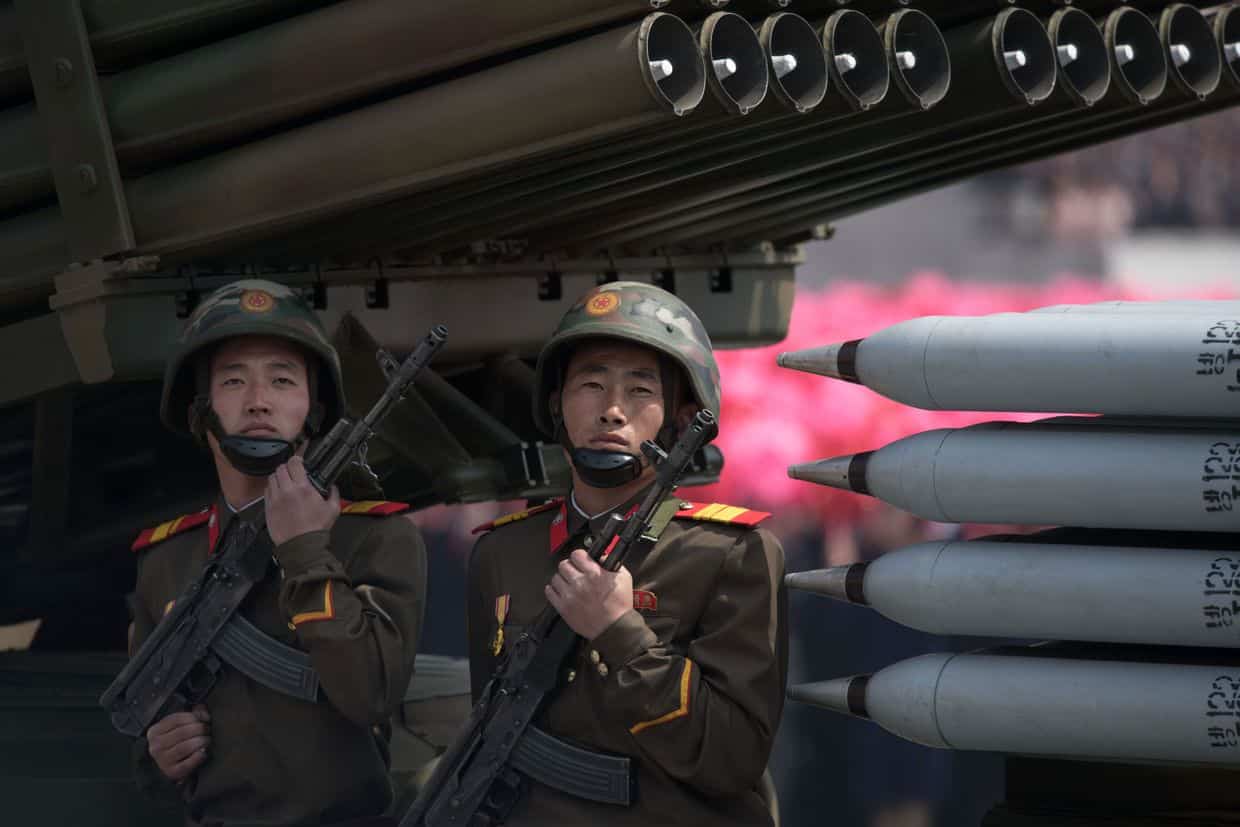
The deepening military alliance between Russia and North Korea, involving missile and troop transfers, escalates regional tensions and poses a significant threat to global security by potentially enhancing Pyongyang's military capabilities and emboldening its actions.
Russia has received additional ballistic missiles from North Korea and is preparing to host more North Korean troops, according to Ukrainian President Volodymyr Zelensky. In an evening address on Aug. 10, Zelensky stated that Russia's increasing reliance on Pyongyang is a consequence of its growing vulnerability to Ukrainian long-range strikes, which can now reach thousands of kilometers into Russian territory.
"This is the first time in Russian history that they no longer have a secure strategic rear," Zelensky said. "And this is the first time they cannot wage war without supplies from North Korea." He argued that Russia's willingness to depend on North Korean support threatens global security, as Pyongyang can improve its defense capabilities through collaboration with Russian forces.
Zelensky also warned that North Korea's missile strikes against Ukraine pose a threat to Japan, South Korea, the Philippines, and other countries, as each attack provides an opportunity for North Korean forces to refine their weapons and tactics. Previously, on July 25, Zelensky had stated that Russia was preparing to receive an additional 30,000 troops from North Korea.
Ukraine's military intelligence agency (HUR) later informed Reuters that a North Korean ballistic missile unit had established positions in Russia's Voronezh Oblast, near the border with Ukraine's Luhansk Oblast. This unit is believed to comprise six launchers and 120 ballistic missiles, with Russian forces having likely already received 40 of them. Since the full-scale invasion began in 2022, Pyongyang and Moscow have deepened their military cooperation, with North Korea supplying ammunition, heavy weaponry, and personnel. Russian forces have deployed North Korean KN-23 and KN-24 short- and medium-range ballistic missiles during attacks on Ukraine. The first confirmed use of a North Korean missile by Russia occurred during an attack on Kharkiv on January 2, 2024.
Zelensky also noted on July 30 that a North Korean missile likely killed six family members in Kryvyi Rih during a recent Russian assault. North Korean troops have also engaged Ukrainian forces alongside Russian soldiers. Ukraine has stated that approximately 12,000 North Korean soldiers participated in Russia's 2024 counteroffensive in Kursk Oblast, an operation aimed at pushing Ukrainian forces out of the region. According to HUR, North Korean personnel sustained extremely high losses during this counteroffensive.