Key facts
- An event on adapting to extreme heat at London Climate Week was cancelled because the venue was too hot.
- The cancellation occurred during a heatwave that saw Britain reach a provisional record June high temperature.
- UN Secretary-General Antonio Guterres called for capital markets to view resilience as an asset and for governments to fund adaptation projects.
- Global heat-related deaths have risen 23% since the 1990s to an average of 546,000 per year.
- The UK's Climate Change Committee estimates around £11 billion per year is needed for adaptation, warning of over 10,000 heat-related deaths annually by 2050.
- Asian countries are identified as being among the most at risk from climate change.
London's eighth annual climate week was marked by an event cancellation due to extreme heat, highlighting the immediate impacts of climate change. An event at the London School of Economics dedicated to discussing extreme heat impacts had to be called off because the nearly century-old venue, relying on natural ventilation, became too hot for public health.
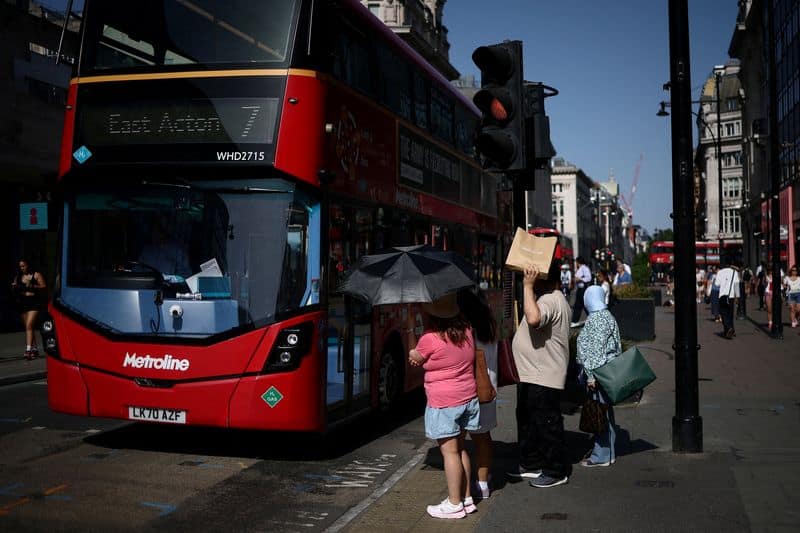
This incident occurred as Britain experienced a provisional record June high temperature, prompting the government to issue an extreme heat warning and leading to school closures. Chris Anderson, a climate expert at Practical Action, noted the irony of an event aimed at helping vulnerable people adapt to heat being cancelled in a wealthy country.
Helen Clarkson, CEO of Climate Group, stated that the heatwave demonstrated how scientific predictions are becoming reality, with more extreme weather events expected. Over 75,000 attendees participated in 1,300 events during the week, focusing on accelerating climate action and building resilience to extreme weather like heatwaves, droughts, floods, and storms, particularly in developing countries least equipped to manage them.
UN Secretary-General Antonio Guterres urged capital markets to recognize resilience-building as an asset and called on governments to increase funding for such projects, suggesting a tax on windfall profits from fossil fuel producers. The urgency is underscored by a Lancet report indicating a 23% rise in global heat-related deaths since the 1990s, averaging 546,000 annually, with many occurring in developing nations.
The UK's Climate Change Committee has deemed current preparations inadequate, estimating an annual investment of around £11 billion is required to address the issue, and warning that heat-related deaths in the UK could surpass 10,000 per year by 2050.
Speakers, including UN Secretary-General Guterres, British minister Ed Miliband, and the leader of Palau, used the hot weather as a backdrop to urge faster action on global warming. Executives from Danone and Unilever mentioned investments in reducing carbon and water use in agriculture. Bertrand Millot, head of sustainability at Canadian pension fund La Caisse, emphasized that Asian countries are among the most at risk and need to prepare for survival.