Key facts
- Canadian Defence Minister David McGuinty discussed the Global Combat Air Programme (GCAP) with Japanese Defence Minister Shinjiro Koizumi.
- Canada is interested in learning more about the GCAP, a joint fighter jet project by Japan, Britain, and Italy.
- The GCAP aims to field a next-generation stealth fighter by 2035.
- Potential future partners for GCAP have been suggested, including Canada, Saudi Arabia, and Germany.
- A competing European fighter project, FCAS, has collapsed due to disputes between Airbus and Dassault Aviation.
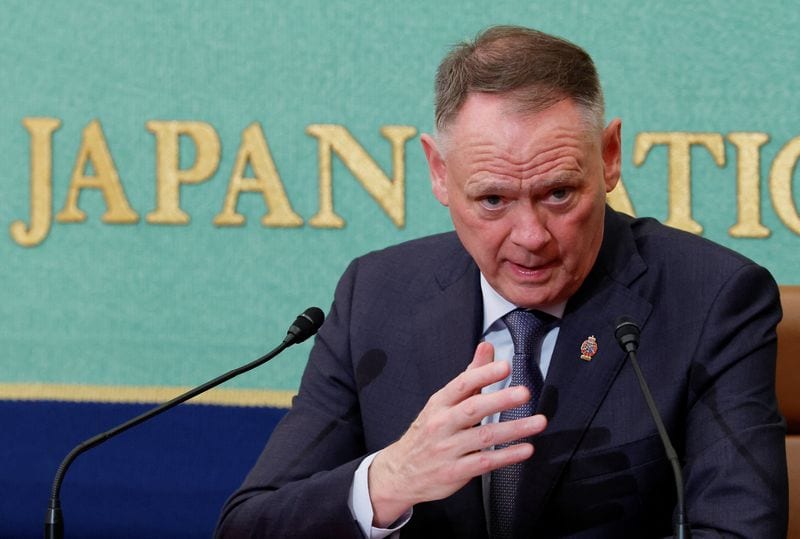
Canadian Defence Minister David McGuinty stated on Thursday that he discussed the Global Combat Air Programme (GCAP) fighter jet initiative with his Japanese counterpart, Shinjiro Koizumi. McGuinty described the program as a "promising initiative" and expressed Canada's interest in learning more about it.
The GCAP, launched in 2022 by Japan, Britain, and Italy, aims to develop and field a next-generation stealth fighter by 2035. The project is led by BAE Systems of Britain, Mitsubishi Heavy Industries of Japan, and Leonardo of Italy.
Canada's potential interest comes as the GCAP program attracts attention from new partners, while a rival European fighter project has collapsed. Any Canadian involvement would mark the program's first expansion beyond its founding members. Officials in Rome and executives at Leonardo have previously mentioned Canada, Saudi Arabia, and Germany as potential future partners or observers, though any expansion would require the agreement of the three founding nations.
GCAP is one of two major Western sixth-generation fighter projects, the other being the U.S. Air Force's Next Generation Air Dominance (NGAD) program. A competing European effort, the Future Combat Air System (FCAS), which was being developed by France, Germany, and Spain, has reportedly collapsed due to disputes between Airbus and Dassault Aviation.