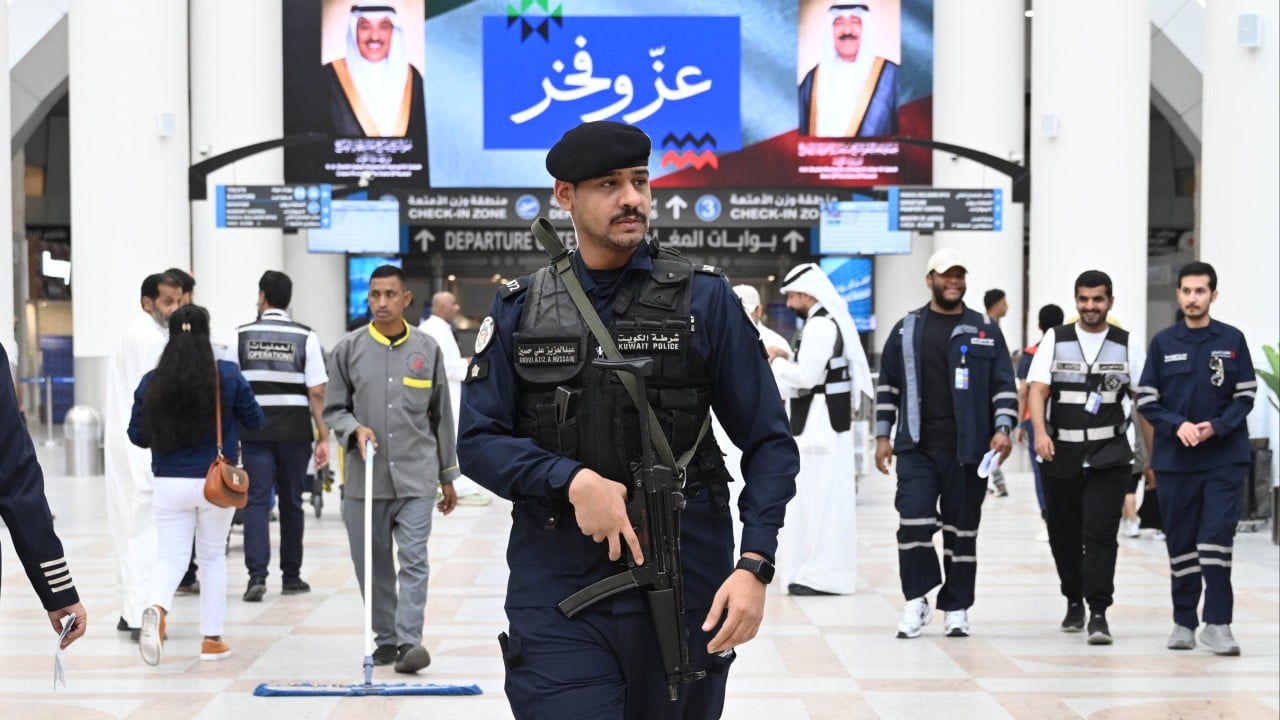
Kuwaiti air defenses intercepted hostile missile and drone attacks on Wednesday, with the army stating that any explosions heard were a result of interceptions. The incident occurred shortly after Iranian media reported explosions near Qeshm Island, and Bahrain's interior ministry announced a warning siren had been sounded. The United States reported shooting at a tanker heading toward Iran. This marks a flare-up in hostilities, with diplomatic talks between Iran and the U.S. showing little progress despite a tentative initial agreement to halt the war. The conflict, which began on February 28, has significantly impacted global energy prices due to the closure of the Strait of Hormuz. Israel has continued strikes in Lebanon despite a partial ceasefire, causing displacement and ongoing tension. A shipping vessel was struck in Iraq's Umm Qasr port, with Iran's Revolutionary Guards claiming responsibility in retaliation for a U.S. attack. The crisis is also hindering life-saving aid to various regions due to increased transport costs and supply chain disruptions. Flights to the UAE and Kuwait were affected, and Bahrain closed its airspace following the attack. An Iranian drone and missile attack also struck Kuwait's international airport, causing injuries and forcing flight diversions, with severe damage reported to the T1 building. Iran's foreign ministry condemned US strikes on an Iranian tanker and Qeshm island, stressing direct responsibility of Kuwait and Bahrain rulers for permitting attacks and reserving the right to defend itself against any country facilitating future US attacks. The IRGC launched ballistic missile attacks targeting US military bases across the region, including Ali Al Salem Air Base in Kuwait, in retaliation for US actions. Regional tensions spread to Bahrain, Saudi Arabia, and the UAE, with air raid sirens sounding at US personnel facilities. US Central Command conducted self-defense operations, including strikes on Qeshm Island. Iran rejected the US justification, warning that any nation enabling US military operations against Iranian territory could face consequences. One person was killed in an Iranian attack targeting civilian facilities in Kuwait, including the international airport and diplomatic missions, the foreign ministry said on Wednesday. The strike marks an escalation for the oil-rich Gulf country, which had seen relative calm since a ceasefire in the Iran war was announced on April 8. Iran had launched a salvo of missiles and drones at Kuwait — a close U.S. ally — as well as at other Gulf states. The early morning attack on Kuwait International Airport injured several people and forced authorities to divert flights, the state news agency reported. The attack caused "severe damage" to the airport's Terminal 1 building, it said, citing the General Civil Aviation Authority. Kuwait Airways said it would reschedule its Wednesday flights. Shortly afterwards, the civil aviation authority said the country's flagship carrier had resumed flights from Terminal 4, after evaluating damage and taking safety measures. Earlier, the U.S. military said two Iranian missiles fired at Kuwait fell short or broke apart mid-flight, while three missiles launched at Bahrain were intercepted by U.S. and Bahraini forces. A further wave of Iranian drones targeting U.S. forces in Kuwait failed to hit their intended targets, Central Command said in a post on X, adding that Iranian ballistic missiles fired toward regional neighbours did not strike their targets. In response, U.S. forces carried out strikes on Qeshm Island and intercepted multiple Iranian ballistic missiles and drones. The Islamic Revolutionary Guard Corp claimed an Iranian strike on a US base in Kuwait triggered air defenses which hit the country's international hub. The IRGC stated that a US Patriot missile, launched to defend a regional military base, caused the destruction of Kuwait International Airport's Terminal 1 after failing to intercept Iranian missiles. This missile exchange followed an American attack on a tanker en route to Kharg Island, which Washington said was violating its blockade against Iran. At least one person died in the attack on the terminal and other facilities, according to Kuwait's foreign ministry, which condemned Iran's "aggressive attacks" and warned Kuwait reserves its right to respond.