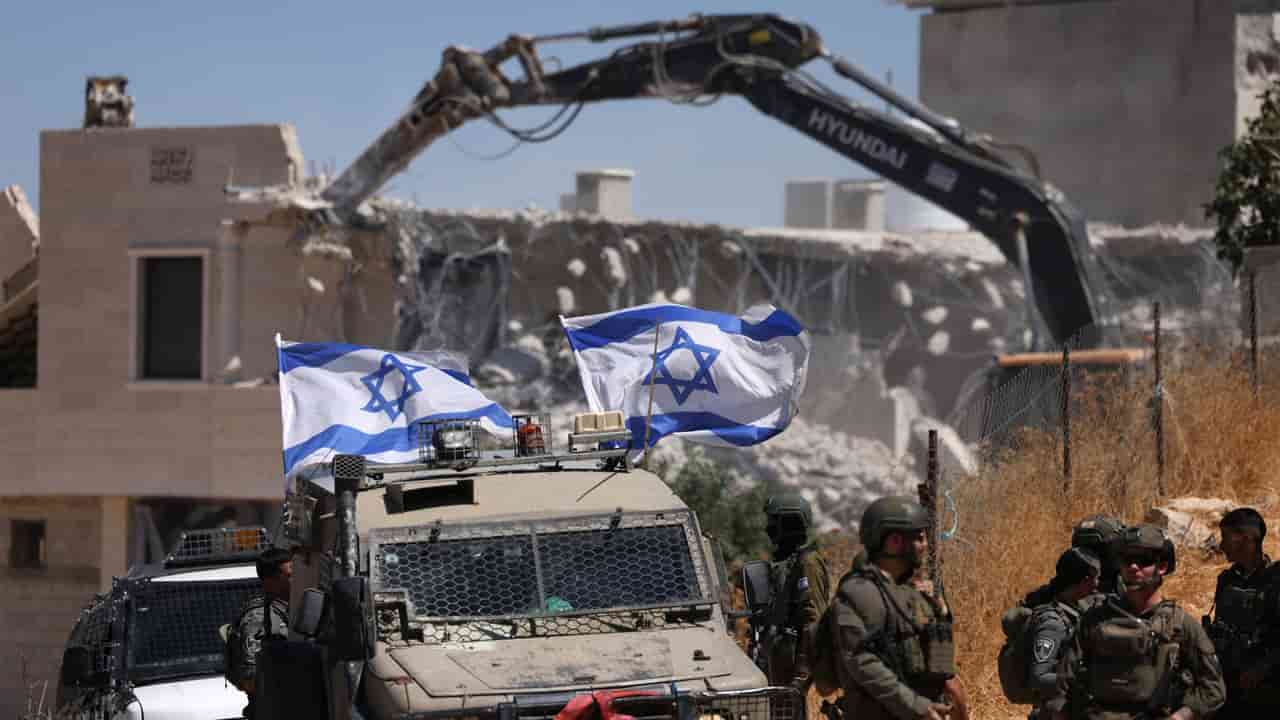
Israeli forces demolish Palestinian home in occupied West Bank
IN SHORT
Israeli forces demolished a two-story Palestinian home in Hebron, leaving two families, including children and elderly residents, homeless. The demolition was reportedly carried out due to a lack of Israeli-issued building permits.
Key Numbers
two-storybuilding demolished
twofamilies left homeless
threehomes issued stop-work orders
55,048Palestinian structures razed as of 2022
2,000Palestinian homes demolished in West Bank in Gaza war months
Who's Involved
Israeli forces
demolished Palestinian home and issued stop-work orders
al-Atrash family
homeowner of demolished two-story building
Israeli Committee Against House Demolitions
estimated 55,048 Palestinian structures razed by 2022
Amnesty International
describes house demolitions as collective punishment
↳ Why This Matters
The demolition of Palestinian homes in the occupied West Bank is a contentious issue, with critics labeling it a violation of international law and a tactic to displace Palestinian populations and expand Israeli settlements.