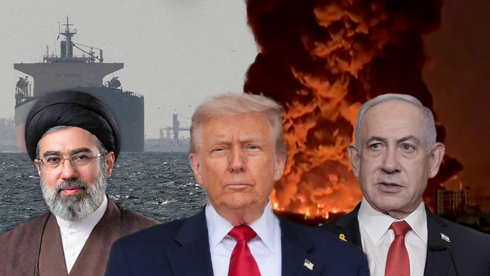
Israeli political sources are expressing significant concern over the potential implications of an emerging memorandum of understanding between the United States and Iran. These sources fear that any agreement, even an interim one, could diminish Washington's leverage over Tehran, making it more difficult to curb Iran's nuclear ambitions, ballistic missile programs, and regional influence, particularly concerning Hezbollah.
Reports indicate that Washington and Tehran are nearing an initial understanding, mediated by Pakistan and Qatar. This document of principles is expected to pave the way for more detailed negotiations lasting between 30 to 60 days. However, Israeli officials are apprehensive that such a process could grant Iran valuable time and strategic maneuvering room, potentially allowing it to preserve or rebuild critical capabilities. There is also a concern that a future U.S. administration might be less aligned with Israeli interests, leaving Israel with less freedom to act against a renewed Iranian threat.
From Israel's perspective, a partial deal that stops the current conflict without dismantling Iran's nuclear infrastructure or curbing its missile and drone programs would be insufficient. Officials are particularly worried about a 'sunset clause' that could allow Iran to resume certain nuclear activities after a specified period. Israel is reportedly pushing for additional clauses to prevent this, including a full prohibition on uranium enrichment during the sunset period and the dismantling of key nuclear facilities.
Iran's apparent willingness to engage in negotiations seems driven by a desire to halt the current conflict and secure an American commitment to its cessation on all related fronts. Hardline elements in Tehran reportedly recognize that continued economic pressure and potential strikes could severely damage the regime's stability. For the U.S., an interim arrangement could offer a diplomatic achievement while deferring the most contentious issues. However, Israeli officials view postponement as a tactic that has historically benefited Iran. The U.S. and Israel are reportedly coordinating their strategies, including contingency plans for strikes if negotiations fail, though Prime Minister Netanyahu reportedly maintains direct communication with President Trump due to trust issues with certain envoys.
Israeli opposition leader Yair Lapid stated that the emerging agreement with Iran fails to deliver on any of Israel’s stated war objectives. In a post on X, Lapid said the deal would leave Tehran’s leadership and military capabilities intact. "The regime survives, the missile program remains in place, and Iran can rebuild its nuclear program," he wrote. Lapid blamed Prime Minister Benjamin Netanyahu for the outcome, saying the agreement exposed Israel’s dependence on Washington. "This is a complete failure by Netanyahu, and it turns us into a client state that receives instructions regarding its national security," he added.