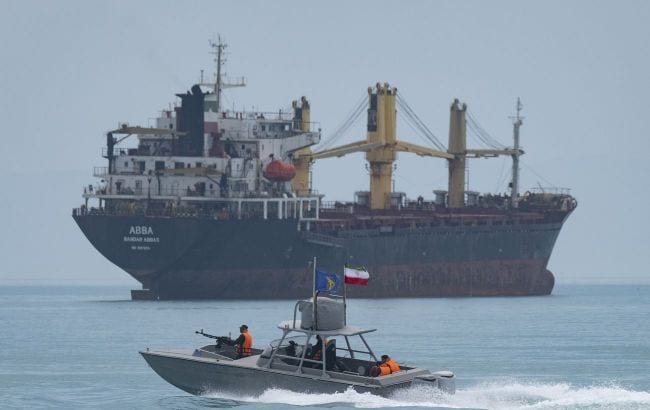
Iran and the United States have issued competing claims regarding control over the Strait of Hormuz, a critical global waterway. Hossein Taeb, the head of Iran's Basij paramilitary unit, stated that the strait is "under Iran's control and management." Iran's joint military command, Khatam al-Anbiya Central Headquarters, further asserted that no vessel can transit the Strait of Hormuz without Tehran's permission.
These assertions follow a claim made by US President Donald Trump that the United States has "total control" of the strategic waterway. Taeb suggested that the United States had attempted to undermine the Islamic Republic's regional standing by initiating conflict in the Strait of Hormuz, and claimed the US was defeated despite Iran lacking a significant air force or navy. He added that Iran is committed to ensuring complete security.
Senior military and political official Rasoul Sanaei-Rad indicated that Iran would not reopen the strait unless the United States fulfills its obligations under a temporary agreement. He stated that the US cannot unilaterally restore freedom of navigation through the strait. Previously, Tehran had effectively closed the strait after a war began on February 28, impacting the transport of approximately one-fifth of the world's oil and liquefied natural gas supplies. The United States subsequently imposed a naval blockade on Iranian vessels and ports. A temporary agreement reached in June, establishing a permanent ceasefire and calling for the restoration of freedom of navigation, collapsed weeks later when Iran resumed limited attacks on vessels, accusing them of violating the deal. This led the United States to resume strikes on Iran's southern provinces.