Key facts
- The European Union is pursuing a strategic partnership with Brazil to secure critical mineral supplies.
- The EU aims to help Brazil develop its refining capacity and move up the supply chain.
- The partnership emphasizes sustainable practices and local processing of minerals.
- Viridis Mining and Minerals is a key company involved in a pilot project in Minas Gerais.
- The EU seeks to reduce its dependence on China for critical minerals.
The European Union is actively seeking to establish Brazil as a strategic partner in its global effort to diversify critical mineral supplies, according to EU Commissioner for International Partnerships Jozef Sikela. During a visit to a rare earth research and processing center in Minas Gerais, Brazil, Sikela told Reuters that the EU is offering a deal designed to benefit Brazil's development goals.
The EU's strategy emphasizes sustainable business practices and local processing of minerals, aligning with Brazil's ambition to export higher-value processed materials rather than raw ore. Sikela highlighted that Brazil holds the world's second-largest reserves of critical minerals and that the partnership aims to move Brazil up the supply chain into more profitable production.
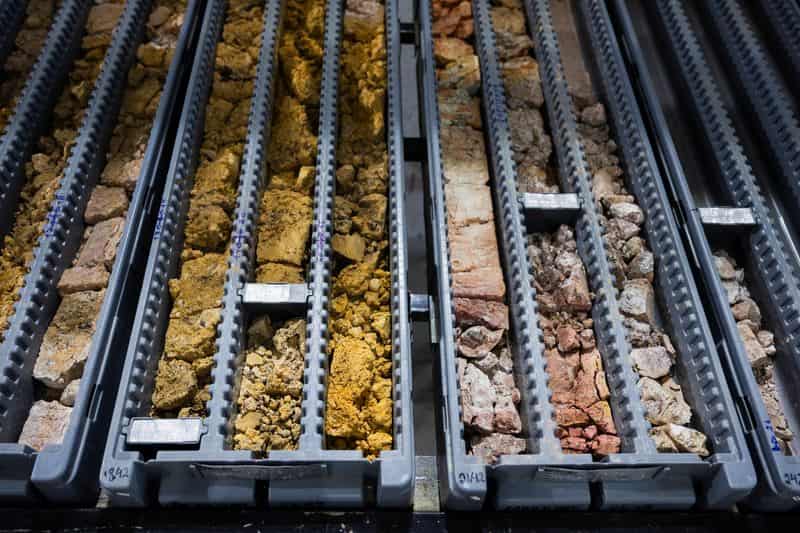
This collaboration could involve purchase agreements for the EU to secure supplies, while Brazil would gain access to new technologies and refining capacity. Viridis Mining and Minerals, an Australian company with a pilot project in Poços de Caldas, Minas Gerais, is a key player in this initiative. Its pilot plant can process 100 kilograms of ore per hour, producing up to 2.92 kg of mixed rare earth carbonate (MREC) annually. Viridis plans a significant investment of $360 million for a commercial plant capable of producing 15,000 tons of MREC per year from 2028.
A non-binding letter of intent has been signed between Viridis and Belgian chemicals company Solvay for the supply of MREC, with potential for broader technological processing support. Viridis CEO Rafael Moreno indicated that talks with the EU are advanced and a Solvay deal could be finalized by the end of July.
The EU's move comes amid a global race for rare earths and critical minerals, as Europe and the U.S. aim to reduce their reliance on China, the dominant producer. Sikela stated that the EU's strategy is to reduce dependencies across global supply chains, a goal prompted by recent shocks like the pandemic and the war in Ukraine, and that this concern extends beyond China alone. The EU also views projects involving other critical minerals in Brazil, such as nickel and lithium, as priorities and plans to advance a memorandum of understanding with the Brazilian government.