Key facts
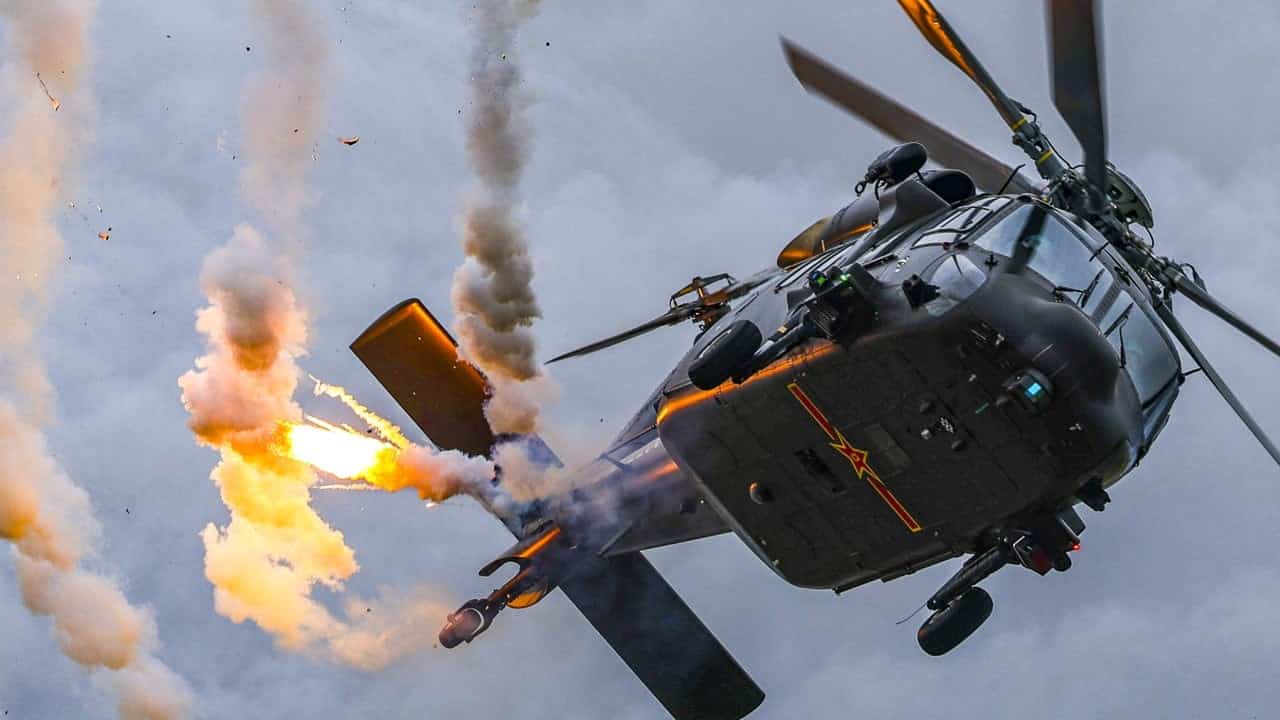
- China's Z-20 helicopter family, including the new Z-20T assault variant, aims to bridge technological gaps with Western military aviation.
- The Z-20T, unveiled at the 7th China Helicopter Expo, is designed for integrated assault, fire support, and tactical mobility.
- The helicopter features domestically produced WZ-10 turboshafts and advanced fly-by-wire controls.
- China's rotary-wing modernization is scaling in quantity and mission breadth, impacting regional military planning.
- The Z-20T's design shows influence from the U.S. Black Hawk but incorporates indigenous innovations and modularity.
China's Z-20 helicopter family, including the newly unveiled Z-20T assault variant, represents a significant advancement in the nation's military aviation capabilities, aiming to close the technological gap with Western powers. The Z-20, which bears a striking resemblance to the U.S. Sikorsky UH-60 Black Hawk, features key differences such as five main rotor blades and two front cabin windows. China's reliance on a limited fleet of imported Black Hawk variants for high-altitude operations has historically been a defense gap.
The Z-20T, revealed at the 7th China Helicopter Expo in Tianjin, is a heavily armed version designed for integrated assault, fire support, and tactical mobility. It builds upon the Z-20's advanced fly-by-wire controls and five-bladed rotor, incorporating assault-optimized hardpoints and sensors. Powered by domestically produced WZ-10 turboshafts, the Z-20T is tailored for challenging 'hot-and-high' operations. The development of naval variants of the Z-20 further signals a converging air-assault and sea-control architecture.
Doctrinally, the Z-20T is intended to operate in coordinated 'hunter-killer' teams with attack helicopters and drones, utilizing advanced systems for precision strikes and troop insertions. This modernization effort, expected to mature rapidly between 2025 and 2027, signals to regional planners that China's rotary-wing capabilities are scaling significantly in both quantity and mission breadth, potentially compressing warning timelines for various scenarios.