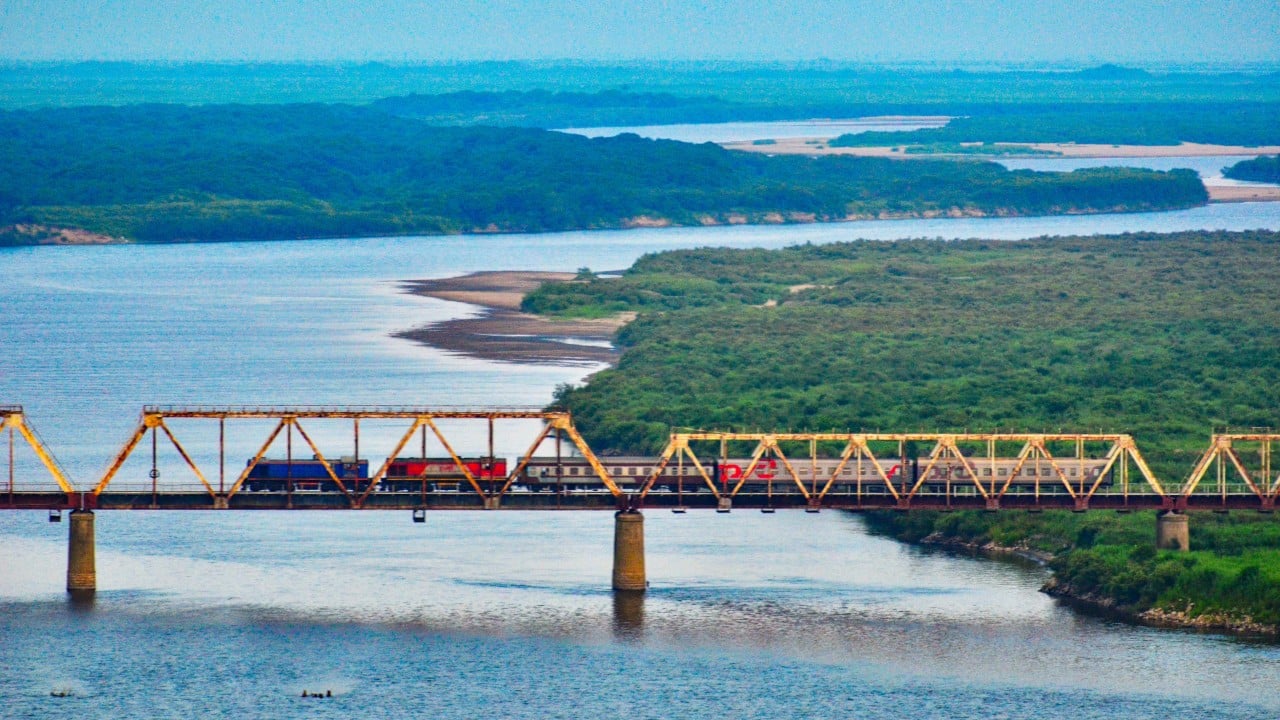
Key facts
- The Tumen River, forming a border between China, North Korea, and Russia, is a key point of contention.
- China seeks direct access to the Sea of Japan through a specific stretch of the Tumen River.
- Recent summits between leaders of China, Russia, and North Korea did not result in public agreements on the river.
- Analysts interpret the silence in official statements as a sign of North Korean and Russian caution towards Chinese influence.
The Tumen River, a natural border between China, North Korea, and Russia, has become a focal point in regional diplomacy, particularly concerning China's long-held ambition for direct access to the Sea of Japan. This waterway, known as Duman or Tuman River in Korea, presents a unique geopolitical challenge as a specific section blocks China's access to open waters. Beijing has been actively seeking agreements with its neighbors to allow Chinese vessels to navigate this stretch, a goal that has seen some tentative positive signs from Moscow recently.
However, the silence surrounding the Tumen River in official statements following a recent summit between the leaders of China, Russia, and North Korea suggests that progress remains elusive. Analysts interpret this lack of mention as an indication of continued apprehension in Pyongyang and Moscow regarding the extent of China's growing influence in the region. This wariness is particularly notable given Russia's deepening ties with North Korea, spurred by the ongoing conflict in Ukraine, which has led to increased cooperation, including alleged North Korean arms shipments to Russia.
Reports indicate Russia has been coordinating potential deals with China and North Korea to allow Chinese ships passage through a seventeen-kilometer segment of the Tumen River to the Rason Special Economic Zone on the Pacific coast. This initiative, reportedly discussed following meetings between Russian President Vladimir Putin and Chinese President Xi Jinping, and later between Putin and North Korean leader Kim Jong-Un, could offer China a strategic advantage. Russia's need for investment and supply lines due to the Ukraine war has made it more amenable to economic concessions, potentially positioning China to strengthen its role in the Arctic and other regions from which it has historically been excluded by Russia.
Further complicating the border dynamics, investigations have revealed the establishment of numerous makeshift river crossings between China and North Korea, facilitating the movement of vehicles and sensitive machinery. These operations, involving the construction of temporary dirt bridges across the Yalu River, are designed to obscure transactions and provide China with plausible deniability regarding potential sanctions violations. Satellite analysis has tracked construction over an eighteen-month period across a significant border stretch, identifying multiple such crossings.