Key facts
- The Trump administration has dropped its legal challenge to a ruling that blocked its executive order freezing federal permitting and leasing for wind projects.
- The US Court of Appeals for the First Circuit dismissed the appeal after the Justice Department filed a motion for voluntary dismissal.
- A previous ruling by a US District Court Judge had found the executive order unlawful, calling the ban on wind projects "arbitrary and capricious."
- Clean energy production is projected to reach a record 79.7 GW in 2026, despite policy hurdles.
- A separate federal court recently restored a key tax-credit pathway for wind and solar developers, overturning a Treasury rule.
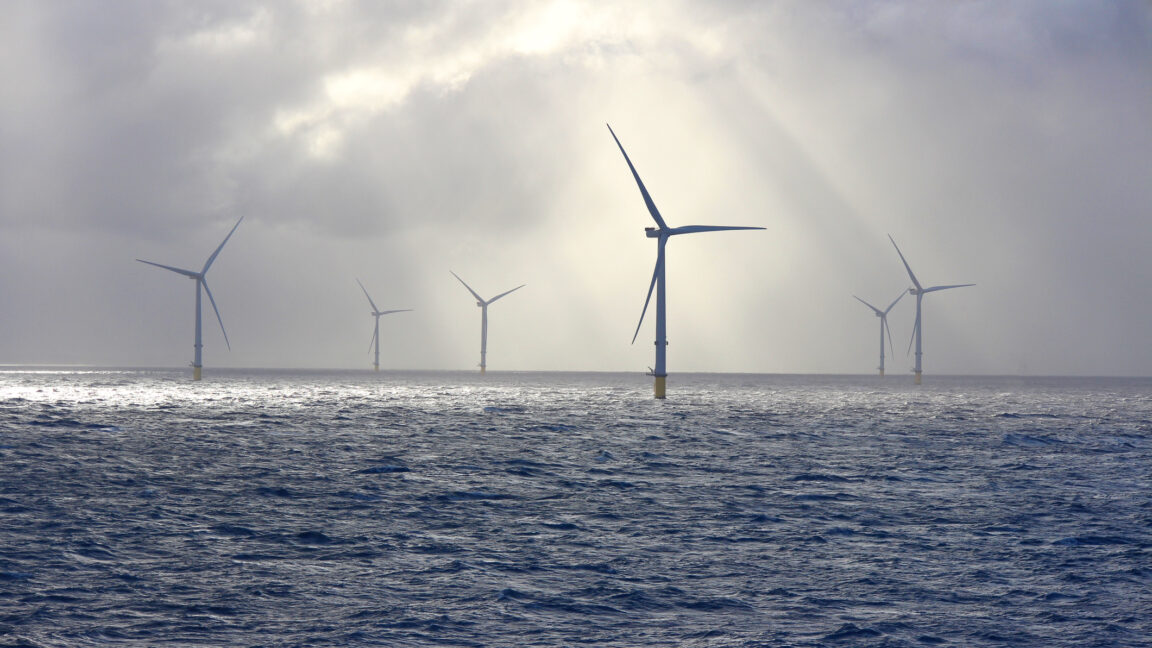
The Trump administration has officially abandoned its legal efforts to block wind energy projects across the United States, withdrawing its challenge to a court ruling that had previously invalidated an executive order freezing federal permitting and leasing for such projects. This decision marks a significant legal victory for states and environmental groups advocating for the energy transition.
The US Court of Appeals for the First Circuit dismissed the case after the Justice Department filed a motion for voluntary dismissal on June 10. The original challenge was brought by a coalition of attorneys general from 17 states and Washington, DC, led by New York Attorney General Letitia James. This action upholds a December 8 ruling by US District Court Judge Patti Saris, who had declared President Trump’s January 2025 executive order unlawful, deeming the ban on wind projects "arbitrary and capricious" and beyond the president's authority.
Environmental and wildlife advocacy groups welcomed the development. Nancy Pyne, a senior advisor to the Sierra Club, stated that renewable energy continues to grow despite opposition. She highlighted renewable energy as an affordable solution for lowering costs and protecting health and the environment, contrasting it with the rising bills faced by consumers.
This legal setback for the administration occurs as clean energy production experiences a surge. A report from the Environmental Defense Fund and Atlas Public Policy projects a record 79.7 GW of clean power to come online in the US in 2026. Despite some project cancellations, the pipeline remains robust with 222 GW planned or under construction, and developers planning to invest an estimated $377 billion by 2031. The country already has 471 GW of clean power online, with 51.6 GW added in 2025.
Just a week prior to this ruling, another federal court reinstated a crucial tax-credit pathway for wind and solar developers. The US District Court for the District of Columbia overturned a Treasury rule from August 2025 that had complicated developers' ability to secure federal tax credits by requiring a higher percentage of project costs to be spent upfront. Judge Colleen Kollar-Kotelly ruled that the administration lacked a sound reason for the change.
David Villagrana, lead counsel for clean energy tax solutions at EDF, noted a strong correlation between anti-renewable policies from the Trump administration and project cancellations, citing administrative delays as a significant hurdle for development. He cautiously welcomed the overturning of the revised tax credit rule, acknowledging the possibility of an appeal.
The EDF-Atlas report also indicated a substantial increase in natural gas projects, with planned and under construction capacity rising by 20.7 GW in the first quarter of 2026. Fossil fuels now represent 27 percent of planned capacity, a threefold increase. Jon Gordon, senior policy director at Advanced Energy United, expressed concern over this surge in natural gas, noting that new plants will likely be in service for over 30 years and that the administration's focus on fossil fuels is a major driver.
Gordon also pointed out that economics increasingly favor clean energy, as gas plant construction costs have nearly doubled, while solar and battery costs have decreased. The EDF-Atlas report found that a significant majority of clean power capacity is located in districts represented by Republicans, though factors like land cost and interconnection policies are key drivers of growth, rather than purely partisan considerations, according to Abe Silverman of Johns Hopkins University.